

Can I Babysit at 13 What You Need to Know
Can I Babysit at 13 What You Need to Know

Thirteen is younger than most people picture when they think "babysitter," but it's also the age when a lot of kids start asking the question. And plenty of parents are asking right alongside them. The short answer is: yes, a 13-year-old can babysit in most situations across the United States. But the longer answer involves state guidelines, maturity checks, and some practical preparation that makes the difference between a safe experience and a stressful one. Here's what you actually need to know before anyone takes on that responsibility.
No Federal Law Sets a Minimum Age to Babysit
There is no federal law in the United States that sets a minimum age to babysit. None. That surprises a lot of people, including parents who assume there must be some national rule on the books.
What does exist at the federal level is child labor law — and those laws govern paid employment, not informal caregiving arrangements between neighbors or family friends. A 13-year-old watching the kids next door on a Saturday afternoon falls entirely outside the scope of federal employment regulations.
So where does the confusion come from? Mostly from mixing up two different things: the age at which a child can be left home alone, and the age at which a child can supervise others. States sometimes issue guidance on both, and people blend them together. They're related, but they're not the same rule.
The practical result is that babysitting age requirements are set at the state level — and even then, most states offer recommendations rather than hard legal minimums. Parents and teens are left to make judgment calls, which is both freeing and a little nerve-wracking.
One common mistake here: assuming that because there's no law against it, there's no risk. The absence of a legal minimum doesn't mean any 13-year-old is automatically ready. Readiness and legality are two separate questions.
What Age Each State Recommends for Babysitting
Because there's no single national standard, the rules vary significantly depending on where you live. Most states publish home alone guidelines through their child welfare agencies, and some extend that guidance to cover babysitting specifically. A handful have written policies. Most don't.
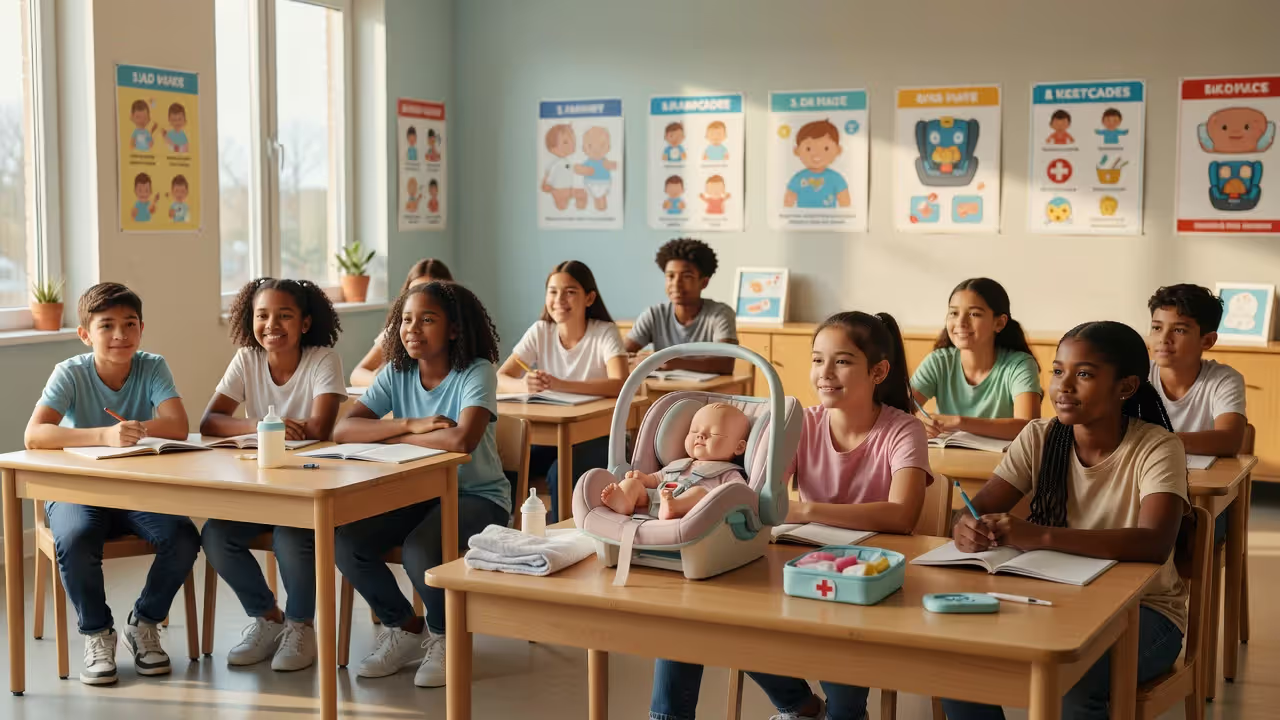
Author: Madeline Ashcroft;
Source: colorfulpagescoalition.org
States With Specific Written Guidelines
A small number of states have published explicit minimum age recommendations for babysitting. Illinois, for example, recommends that babysitters be at least 14 years old. Maryland suggests a minimum of 13 for babysitting, with additional guidance that the child being watched should be old enough to handle brief periods without direct supervision. Kansas and Oregon have published home-alone guidelines that imply similar age ranges for unsupervised caregiving.
These aren't criminal statutes. A 12-year-old babysitting in Illinois won't be arrested. But these guidelines do carry weight — especially if something goes wrong and a parent's judgment is called into question.
| State | Recommended Minimum Babysitting Age | Recommended Minimum Home-Alone Age | Source or Issuing Body |
| Illinois | 14 | 14 | Illinois DCFS |
| Maryland | 13 | 8 | Maryland Department of Human Services |
| Oregon | 12–13 | 10 | Oregon DHS |
| Kansas | 10–12 (light supervision) | 10 | Kansas DCF |
| North Carolina | 8 (home alone) / 11–13 (babysitting) | 8 | NC Division of Social Services |
| Colorado | No set minimum | 12 | Colorado DHS |
| Texas | No set minimum | No set minimum | Parental judgment advised |
| California | No set minimum | No set minimum | Parental judgment advised |
| New York | No set minimum | No set minimum | Parental judgment advised |
| Florida | No set minimum | No set minimum | Parental judgment advised |
States That Leave It to Parental Judgment
The majority of states — including California, Texas, New York, and Florida — have no written minimum age for babysitting. They leave it entirely to parental discretion. That puts the responsibility squarely on the hiring parent and the teen's own parent to make a reasonable call.
In those states, "reasonable" is the operative word. If something goes wrong and a child is harmed, the question courts and child protective services ask is whether a reasonable adult would have made the same decision. A 13-year-old watching a 2-year-old in a state with no minimum age isn't automatically protected just because no law was broken.
How to Tell If a 13-Year-Old Is Ready to Babysit
Age is a starting point, not a finish line. The pattern I see most often is parents focusing on the number — 13, 14, whatever — and skipping the actual readiness conversation. That's backwards.
Babysitting readiness comes down to a few core areas. Can the teen stay calm under pressure? Not just "seems mature," but genuinely doesn't panic when a toddler falls and starts crying. Can they follow instructions without needing hand-holding? Do they know when to call for help — and actually do it instead of trying to handle everything alone?

Author: Madeline Ashcroft;
Source: colorfulpagescoalition.org
Here's a simple before/after comparison. Before readiness training: a 13-year-old freezes when a child chokes on food and doesn't know the Heimlich maneuver or when to call 911. After readiness training: the same teen knows exactly what to do, has the emergency numbers memorized, and stays calm because they've practiced the scenario. Same age. Completely different outcome.
Signs a 13-year-old is ready to babysit:
- They've successfully cared for younger siblings for short periods
- They can manage their own schedule and responsibilities without reminders
- They stay calm during unexpected situations (power outage, minor injury, upset child)
- They know basic first aid and can describe what to do in an emergency
- They ask good questions before a job starts — not just "what time do I get paid?"
Signs they might need more time:
- They get easily frustrated or overwhelmed
- They rely heavily on their phone for entertainment and lose track of surroundings
- They've never been responsible for anyone but themselves
What a 13-Year-Old Babysitter Should Know Before Starting
Preparation is everything. A 13-year-old who shows up with a mental checklist is more trustworthy than a 16-year-old who wings it.
Before the first job, a young babysitter should know the basics of first aid — how to handle a cut, a burn, choking, and when to call 911 versus handling something at home. They should have a written list of emergency contacts: parents' cell numbers, a nearby neighbor, and the local poison control number (1-800-222-1222 in the US).
House rules matter more than people think. Where are the medications kept? Are any foods off-limits due to allergies? What's the bedtime routine? What's the TV policy? Getting these answers before the parents leave avoids a lot of awkward texting at 8 p.m.
Difficult situations come up. A child refuses to go to bed. A stranger knocks at the door. A kid says they feel sick. The babysitter should know in advance: don't open the door for anyone unexpected, don't give any medication without parent permission, and text the parents immediately if something feels wrong. Not after trying to handle it alone. Immediately.

Author: Madeline Ashcroft;
Source: colorfulpagescoalition.org
How Old the Children Being Watched Should Be
This one doesn't get talked about enough. The age of the babysitter matters — but so does the age gap between the babysitter and the child being cared for.
A 13-year-old watching a 10-year-old? That's barely babysitting. The age gap is too small for meaningful supervision. Most child development experts suggest a minimum 4–5 year difference for the arrangement to work safely. So a 13-year-old is most appropriate watching children ages 7 and under.
Infants and toddlers are a different story. They require constant attention, can't communicate distress clearly, and can escalate from fine to dangerous in seconds. Most professionals recommend that teens under 15 avoid sole responsibility for infants under 12 months unless they've had specific infant care training.
The number of children also matters. One calm 6-year-old is very different from three kids under age 5. More children means more variables, more noise, more risk. A 13-year-old babysitter should start with one child in a familiar environment before taking on bigger groups.
Babysitting Courses and Certifications for Young Teens

Author: Madeline Ashcroft;
Source: colorfulpagescoalition.org
Certification isn't legally required anywhere in the US. But it changes everything about how hiring parents perceive a young teen.
The American Red Cross offers a Babysitter's Training course designed specifically for 11–15 year olds. It covers first aid, CPR basics, how to handle emergencies, and how to manage children's behavior. The course typically runs 6–8 hours and can be completed in person or online. Completion comes with a certificate that teens can show to potential clients.
Local options exist too. The YMCA, community centers, and some hospitals run babysitting readiness programs. Some are free. Some cost $20–$50. Either way, the investment pays off fast — a certified 13-year-old can reasonably charge $12–$15 per hour in most US markets, compared to $8–$10 for someone with no training.
Adolescents thrive when they're given real responsibility matched to their developmental stage. A teen who takes on caregiving with proper preparation isn't just earning money — they're building the kind of competence and confidence that shapes who they become.
— Ginsburg Kenneth
Beyond the paycheck, certification builds genuine confidence. Teens who've practiced emergency scenarios don't freeze when something goes wrong. That's not a small thing. That's the whole point.
FAQ: Babysitting Age and Readiness Questions Answered
A 13-year-old can absolutely babysit — but "can" and "should" depend on the individual teen, the specific situation, and the preparation they've done beforehand. The age is a starting point. Maturity, training, and a realistic understanding of what the job actually demands are what make it work.
Related Stories

Read more
Read more

The content on this website is provided for general informational and educational purposes only. It is intended to explain concepts related to parenting, child development, family caregiving, adoption, fostering, and child safety.
All information on this website, including articles, guides, and examples, is presented for general educational purposes. Outcomes may vary depending on individual family circumstances.
This website does not provide professional medical, psychological, or legal advice, and the information presented should not be used as a substitute for consultation with qualified pediatricians, child psychologists, or family counselors.
The website and its authors are not responsible for any errors or omissions, or for any outcomes resulting from decisions made based on the information provided on this website.