
When Should Newborn Photos Be Taken for the Best Results
When Should Newborn Photos Be Taken for the Best Results

Every parent knows the feeling — you're staring at this tiny, perfect person and thinking, "I need to capture this forever." But newborn photography has a narrow window, and missing it means missing poses, expressions, and a sleepy softness that simply won't come back. Knowing when should newborn photos be taken isn't just a scheduling detail. It's the difference between images that stop your heart and ones that are just... fine.
The good news? The timing is predictable. And if you plan ahead, you won't miss it.
The Ideal Age Window for Newborn Photography
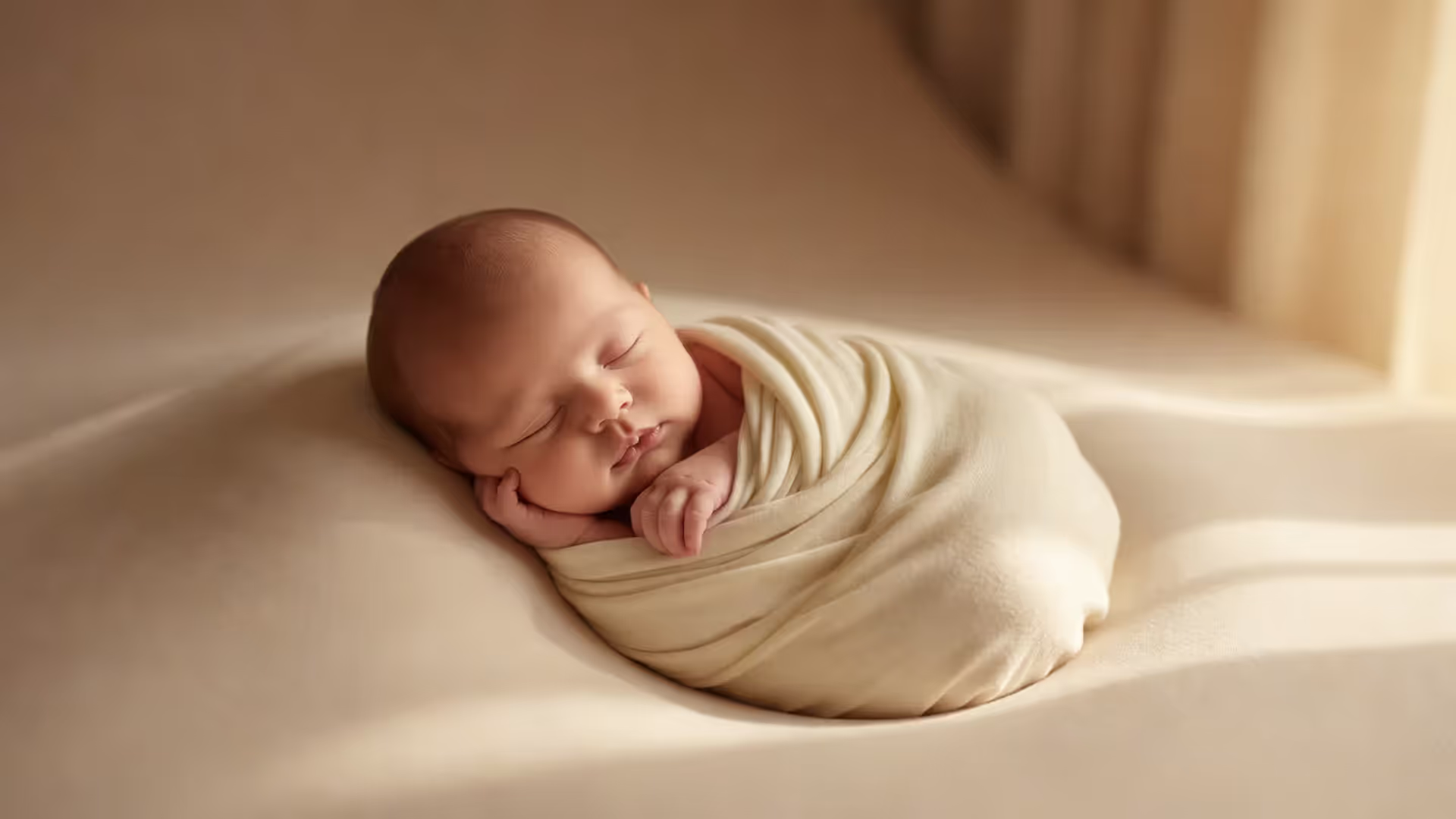
The sweet spot for newborn photos is between 5 and 14 days old. That's the core answer, and it matters more than most parents realize. During this window, your baby still curls naturally into the fetal position, sleeps deeply for long stretches, and has that unmistakable fresh, soft look that defines classic newborn imagery.
The neonatal period, as defined by the American Academy of Pediatrics, covers the first 28 days of life — but not all of those days are equal for photography. Days 5 through 14 are the prime zone. Before day 5, many babies still have peeling skin, residual swelling, or jaundice that can affect their appearance. After day 14, the window starts closing fast.
Why the First Two Weeks Matter Most
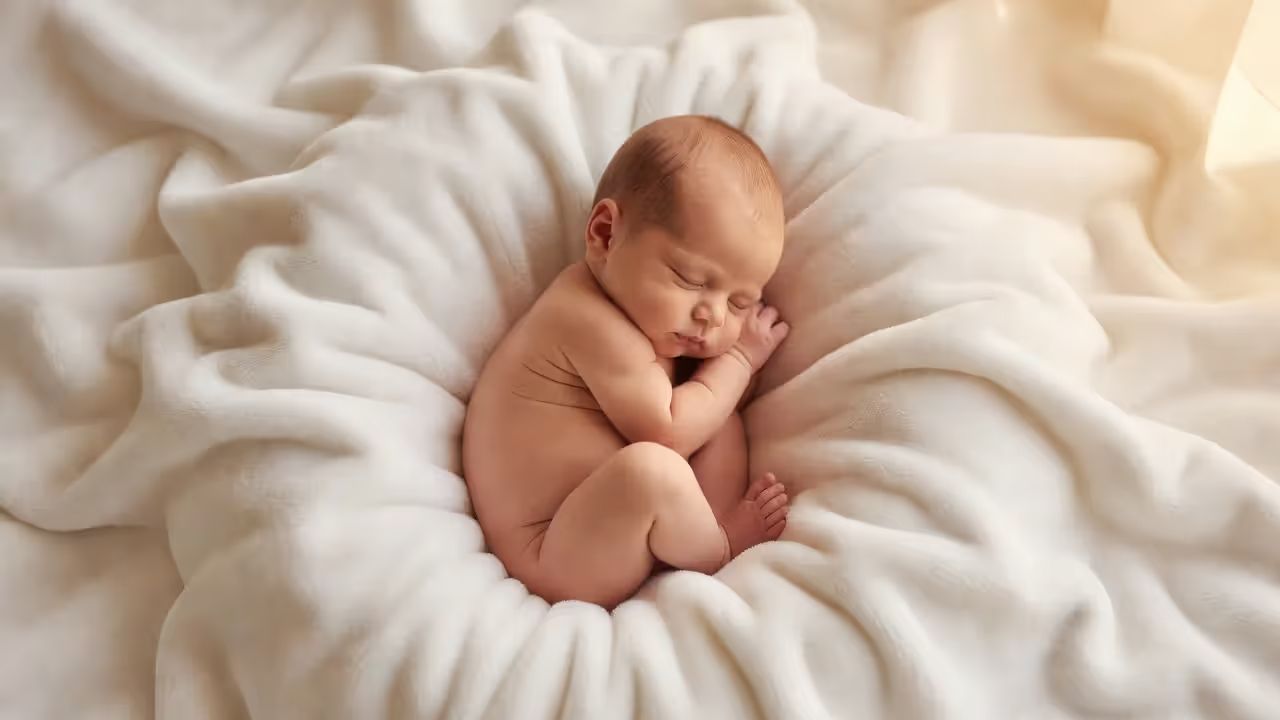
Newborns in the first two weeks are still in what photographers call the "curly" phase. Their bodies naturally fold into compact, rounded shapes — the same positions they held in the womb. That's what makes those iconic tucked-chin, hands-under-chin poses possible without any forcing or discomfort.
Sleep depth also peaks in this window. A 7-day-old baby can sleep through gentle repositioning, soft lighting adjustments, and even a mild temperature change in the studio. That cooperation is everything in newborn photography. You simply can't replicate it later.
Author: Garrett Willowmere;
Source: colorfulpagescoalition.org
What Changes After Day 14
After the two-week mark, babies start becoming more alert — which sounds like a good thing, but it works against posed newborn photography. They startle more easily, resist being curled, and spend less time in the deep sleep that makes posing safe and smooth. By three weeks, a session that might have taken 2 hours could stretch to 4 or more, with far fewer usable shots.
By four weeks, most photographers will tell you honestly: the newborn window has passed. It's not impossible to shoot at that age, but it's a different kind of session. The images look different too.
How Newborn Posing and Sleep Affect Timing
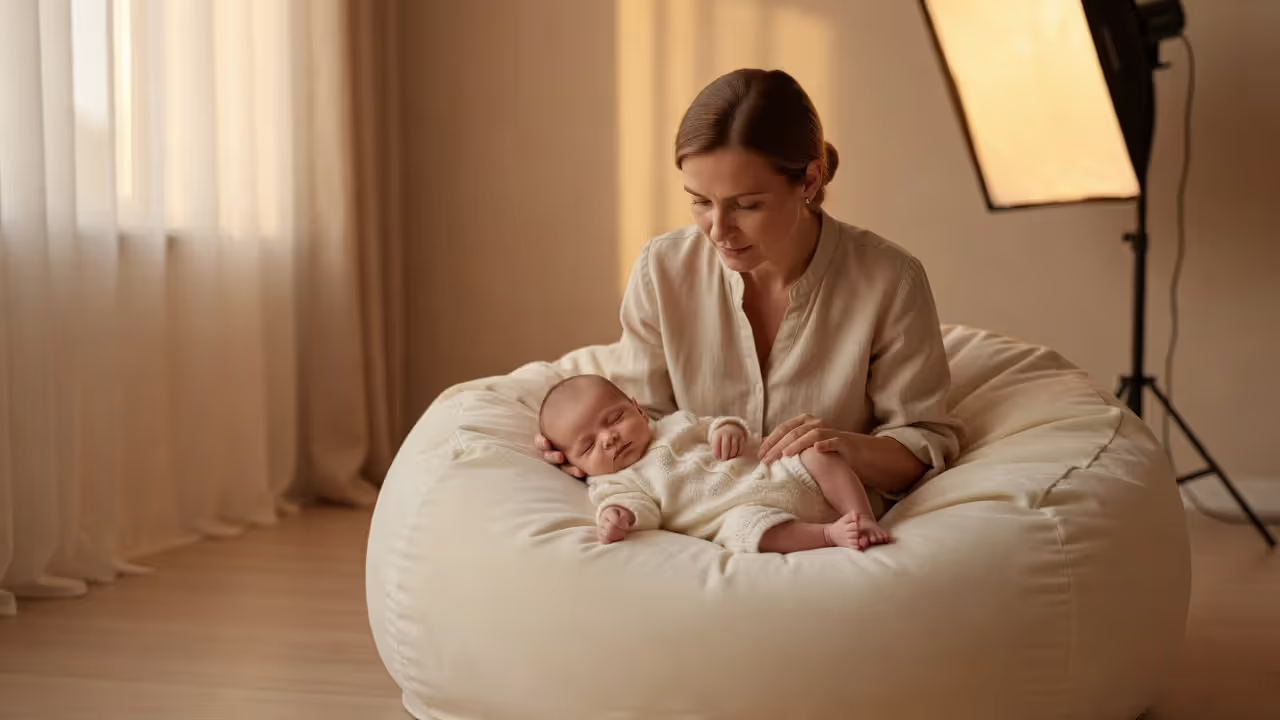
The best time for newborn photos isn't just about age in days — it's about your baby's natural rhythms. Most professional newborn photographers prefer to schedule sessions in the morning, typically between 9 a.m. and noon. Babies tend to be calmer and sleepier in the morning after an early feeding, and natural window light is softer and more flattering in the first half of the day.
A well-fed baby is a sleepy baby. Most photographers will ask you to feed your newborn right before the session starts, then keep them slightly warm throughout. That combination — full belly, warm environment, gentle handling — triggers the deep sleep that makes the whole session work.
The pattern I see most often is that parents who schedule afternoon sessions end up with fussier babies and longer sessions. Morning slots fill up fast with experienced photographers for a reason.
Newborn photography timing also intersects with your own recovery. At 5 to 7 days postpartum, you're exhausted. But waiting until you "feel ready" often means pushing past the ideal window. Most parents say the session itself is actually energizing — seeing your baby through a photographer's lens is something else entirely.
Author: Garrett Willowmere;
Source: colorfulpagescoalition.org
When to Book Your Newborn Photographer During Pregnancy
Here's where most parents get caught off guard: scheduling newborn photos should happen during your second trimester, ideally between weeks 20 and 28. Not after the birth. Not in the third trimester when you're overwhelmed. During pregnancy, when you still have bandwidth.
The reason is simple. Experienced newborn photographers — the ones whose work you've saved to your phone — book out 2 to 4 months in advance. In major metro areas like New York, Los Angeles, or Chicago, some photographers are fully booked 5 to 6 months out. If you wait until after your baby arrives, you're likely to find that your top choices are unavailable during that critical 5-to-14-day window.
When you book, most photographers will hold a tentative due date and confirm the actual session date once your baby arrives. You typically pay a deposit to hold the spot, and the session gets scheduled within the first week postpartum. That system works well — as long as you've booked early enough to have a spot to hold.
Don't wait for the baby shower. Don't wait until the third trimester "just to be safe." Book when you're in your second trimester, and you'll thank yourself later.
How Birth Complications or Early Arrival Can Shift Your Timeline
Premature births and NICU stays change the math entirely. If your baby arrives early, the standard "5 to 14 days old" rule doesn't apply the same way. Most professional newborn photographers recommend waiting until your baby has been home for at least 1 to 2 weeks before scheduling a session — regardless of their actual age in days.
For premature babies, many photographers use corrected age rather than chronological age when planning the session. A baby born at 34 weeks who is now 3 weeks old may still be in the ideal posing window relative to their development. Talk to your photographer about this directly. A good one will know how to adjust.
NICU stays also mean your baby has been through a lot. Their skin may still be sensitive, and they may need more time to regulate temperature and sleep cycles outside a clinical environment. There's no rush. The priority is always your baby's health and comfort first.
If you booked a photographer during pregnancy and your baby arrives early, reach out immediately. Most photographers who specialize in newborns are experienced with these situations and will work with you to reschedule without penalty.
Newborn Photo Timing by Session Type
Not all newborn sessions work the same way. The best time for newborn photos depends partly on which type of session you're planning. Here's a direct comparison:
| Session Type | Recommended Age | Location | Avg Duration | Best For | Booking Lead Time |
| Fresh 48 / Hospital Session | 0–48 hours | Hospital room | 1–2 hours | Candid, documentary-style first moments | 2–4 months before due date |
| In-Home Lifestyle Session | 1–4 weeks | Your home | 2–3 hours | Natural, relaxed family moments | 2–3 months before due date |
| Studio Posed Session | 5–14 days | Photographer's studio | 2–4 hours | Classic posed newborn portraits | 3–5 months before due date |
Hospital or Fresh 48 Sessions
Fresh 48 sessions happen within the first 48 hours of birth, while you're still in the hospital. These aren't posed — they're documentary. The photographer captures skin-to-skin moments, tiny fingers wrapped around yours, the chaos and tenderness of those first hours. The images are raw and emotional in a way that studio shots aren't.
You don't need to worry about baby being "ready" for this type of session. They're fresh. That's the whole point.
Studio Posed Sessions

Author: Garrett Willowmere;
Source: colorfulpagescoalition.org
Studio sessions are what most people picture when they think of newborn photography. Babies curled into bowls, wrapped in soft fabric, posed on textured surfaces. These require the deepest sleep and the most flexibility — which is exactly why they need to happen in that 5-to-14-day window.
Studio sessions also take the longest. Plan for 2 to 4 hours, with time built in for feedings, diaper changes, and soothing. A rushed session produces rushed results.
Common Mistakes Parents Make When Scheduling Newborn Photos
Author: Garrett Willowmere;
Source: colorfulpagescoalition.org
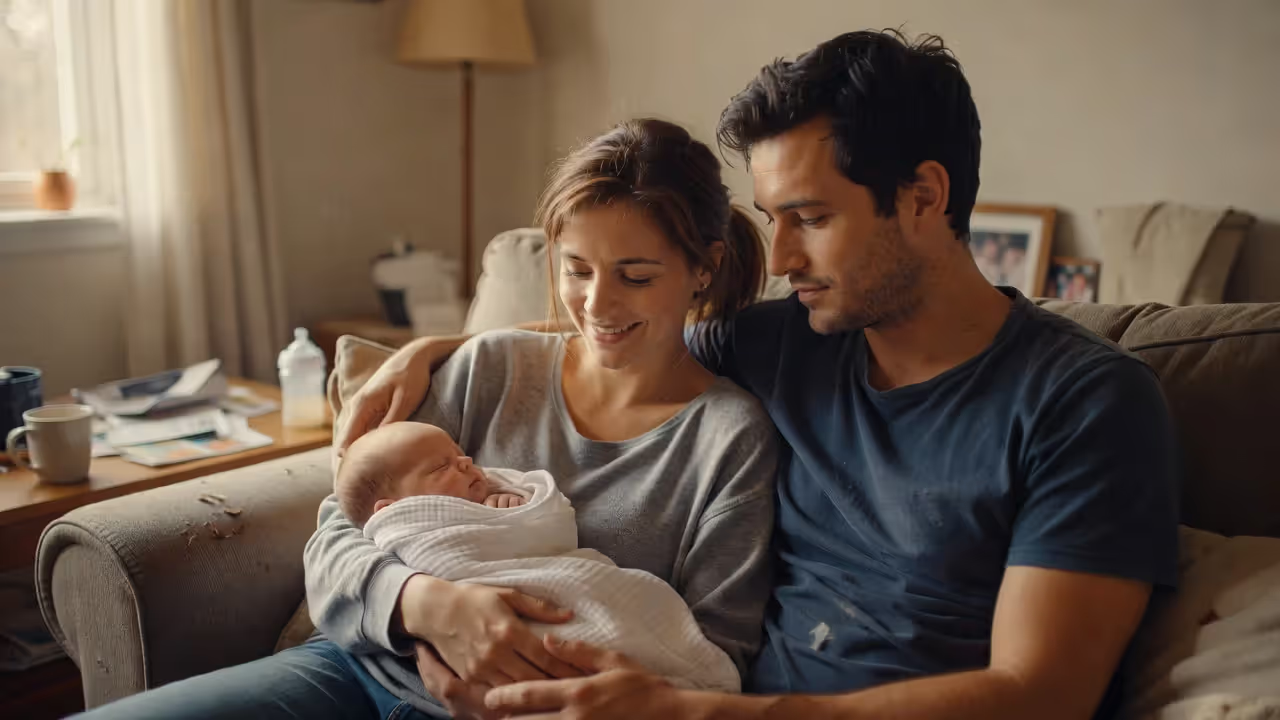
The most common mistake? Waiting until after the birth to book. By the time you're home, exhausted, and finally thinking about photos, the photographers you wanted are gone. Book during pregnancy. Full stop.
The second mistake is assuming any photographer can do newborn work. Newborn photography is a specialty. It requires specific training in safe posing, temperature regulation, and working with very young infants. Always ask whether a photographer has formal newborn safety training before booking.
Third: skipping the Fresh 48 because it "feels too soon." Those first 48 hours are unrepeatable. Even if you also plan a studio session, consider adding a hospital session. The two sets of images tell completely different stories.
A counterintuitive one: thinking a longer session means better photos. More time doesn't equal more images. A 4-hour session with a fussy 3-week-old will produce fewer usable shots than a 2-hour session with a sleepy 8-day-old. Age and timing matter more than session length.
And finally — don't forget to eat before the session. You'll be there for hours. So will your photographer. Everyone needs fuel.
The first ten days are truly magical for photography. Babies are still in that dreamy, curled state — they haven't yet discovered that the world is loud and bright. That sleepy compliance is fleeting, and once it's gone, it's gone forever.
— Geddes Anne
FAQ: Newborn Photography Questions Answered
The window for newborn photos is short — but it's also predictable. Book your photographer during pregnancy, aim for that 5-to-14-day sweet spot, and choose a session type that fits your family's style. Whether you go for a posed studio session, a raw Fresh 48, or a relaxed morning at home, the images you get during those first weeks will be ones you return to for the rest of your life. Don't let the timing slip by accident. It's one of the few things in early parenthood you can actually plan.
Related Stories
Read more

Read more

The content on this website is provided for general informational and educational purposes only. It is intended to explain concepts related to parenting, child development, family caregiving, adoption, fostering, and child safety.
All information on this website, including articles, guides, and examples, is presented for general educational purposes. Outcomes may vary depending on individual family circumstances.
This website does not provide professional medical, psychological, or legal advice, and the information presented should not be used as a substitute for consultation with qualified pediatricians, child psychologists, or family counselors.
The website and its authors are not responsible for any errors or omissions, or for any outcomes resulting from decisions made based on the information provided on this website.