
Consequences for Not Doing Chores at Home
Consequences for Not Doing Chores at Home

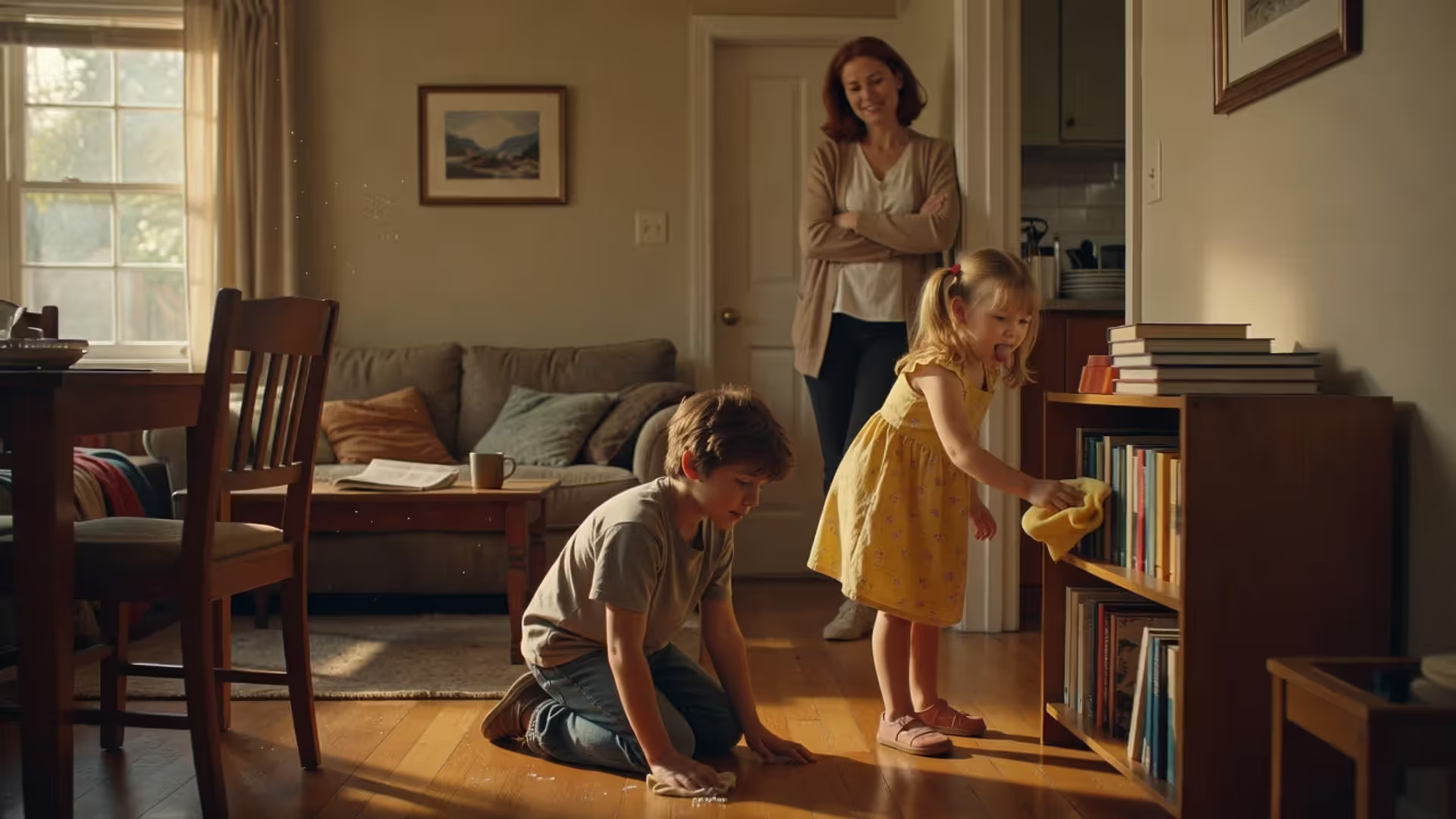
Chores don't do themselves. And when kids skip them, something has to happen — otherwise, the expectation becomes meaningless. The challenge most parents face isn't knowing that consequences matter. It's knowing which ones to use, how to apply them without turning every evening into a standoff, and how to stay consistent when life gets busy. This guide breaks it all down: why chore expectations exist, what actually happens when kids dodge them, and how to respond in ways that build real accountability rather than just short-term compliance.
Why Chore Expectations Matter for Kids
Chores aren't just about a clean house. They're one of the earliest, most consistent ways kids learn that they're part of something bigger than themselves.
Research from the University of Minnesota found that children who did chores starting around age 3 or 4 were more likely to have better relationships, academic success, and career achievement in their 20s than peers who didn't have chore responsibilities. That's a long runway — but the habits start early.
Setting clear chore expectations for kids also teaches time management, follow-through, and the basic concept that effort produces results. These aren't abstract life skills. They show up in homework habits, team sports, friendships, and eventually in jobs.
A common mistake here is framing chores as punishment. If kids only get assigned tasks when they've misbehaved, they'll never see chores as a normal part of household life. Chores work best when they're presented as a standing responsibility — not a consequence in themselves.

Author: Olivia Brackenridge;
Source: colorfulpagescoalition.org
What Happens When Kids Don't Do Chores
Skipping a chore once isn't a crisis. But a pattern of avoidance — especially without any follow-through from parents — creates real problems at multiple levels.
Short-Term Effects on the Household
The most immediate effect is practical: the work doesn't get done. Someone else picks it up, usually a parent. That shift sends a clear message to the child — skip it, and someone else will handle it.
Over time, this erodes the family dynamic. Resentment builds. Siblings who do complete their chores notice when others don't face consequences. It becomes a fairness issue fast.
There's also a credibility cost for parents. If you say "clean your room before dinner" and nothing happens when it doesn't get done, your words carry less weight the next time. Kids are sharp. They track follow-through.
Long-Term Effects on Child Development
The pattern I see most often is kids who were never held accountable for chores struggling with basic self-management as teenagers and young adults. Not because they're lazy — but because they never built the habit of doing something they didn't feel like doing.
Chore accountability for children builds what psychologists call "effortful control" — the ability to act on a plan even when motivation is low. Without it, kids can struggle with procrastination, difficulty finishing tasks, and low frustration tolerance. These aren't dramatic outcomes. They're quiet ones that compound over years.
Types of Consequences for Not Doing Chores
There are three main approaches parents use, and they work best in combination rather than in isolation.
Natural Consequences
A natural consequence is what happens on its own when a chore doesn't get done — no parent intervention required. If a child doesn't put their laundry in the hamper, their clothes don't get washed. They wear a wrinkled shirt. That's it.
Natural consequences are powerful because they're not arbitrary. The connection between action and outcome is obvious. Kids can't argue that the consequence is unfair, because it came from reality, not from a parent's decision.
The limitation? Natural consequences don't always exist or work quickly enough. A 7-year-old who doesn't help clear the table doesn't immediately experience a meaningful consequence unless you create one.
Logical Consequences
Logical consequences are parent-applied, but they're directly tied to the chore that was skipped. If your child didn't take out the trash, they take it out the next day — plus they handle the recycling too. The consequence makes logical sense relative to the behavior.
This approach keeps the focus on responsibility rather than punishment. You're not grounding them for a week over a missed chore. You're extending or adding related responsibility until the original task is completed.
Privilege-Based Consequences
This is the most commonly used approach and the one most parents default to. No screen time until chores are done. No going to a friend's house if the room isn't clean. No allowance if tasks were skipped.
Privilege-based consequences work well when they're applied consistently and the connection between the chore and the privilege is clear. The mistake is making the consequence too large or too vague. "You're grounded for a month" over a missed chore loses proportion fast.

Author: Olivia Brackenridge;
Source: colorfulpagescoalition.org
How to Enforce Chores Without Constant Battles
Enforcing chores at home doesn't have to mean daily arguments. But it does require consistency — and that's where most parents struggle.
The single most effective strategy is deciding on consequences before the conflict happens. Sit down when everyone's calm and agree on what happens if a chore isn't done. Write it down if needed. When the rule is pre-established, you're not inventing punishments in the moment, and kids can't claim the consequence came out of nowhere.
Follow-through matters more than the severity of the consequence. A small, consistent consequence beats a dramatic one that only gets applied sometimes. Kids learn from patterns, not from occasional big reactions.
Chore accountability for children also improves when kids have some ownership over the system. Let them choose between two chores. Let them pick what time they'll do it. A little autonomy goes a long way in reducing resistance.
One more thing: don't negotiate after the fact. If the rule is no TV until the dishes are done, hold that line even when it's inconvenient. Caving once teaches kids that persistence pays off.
Age-Appropriate Chore Consequences by Stage
What works for a 4-year-old won't land the same way with a 15-year-old. Chore consequences for kids need to match their developmental stage to be meaningful.
| Age Stage | Typical Chore | Suggested Consequence for Non-Completion | Consequence Type |
| Toddlers (2–4) | Picking up toys | Parent redirects and completes together; no solo play until done | Logical |
| Elementary (5–9) | Setting the table | No screen time until chore is done; redo if done poorly | Privilege-based |
| Tweens (10–12) | Vacuuming or dishes | Lose weekend privilege (e.g., friend's house); add extra task | Logical + Privilege-based |
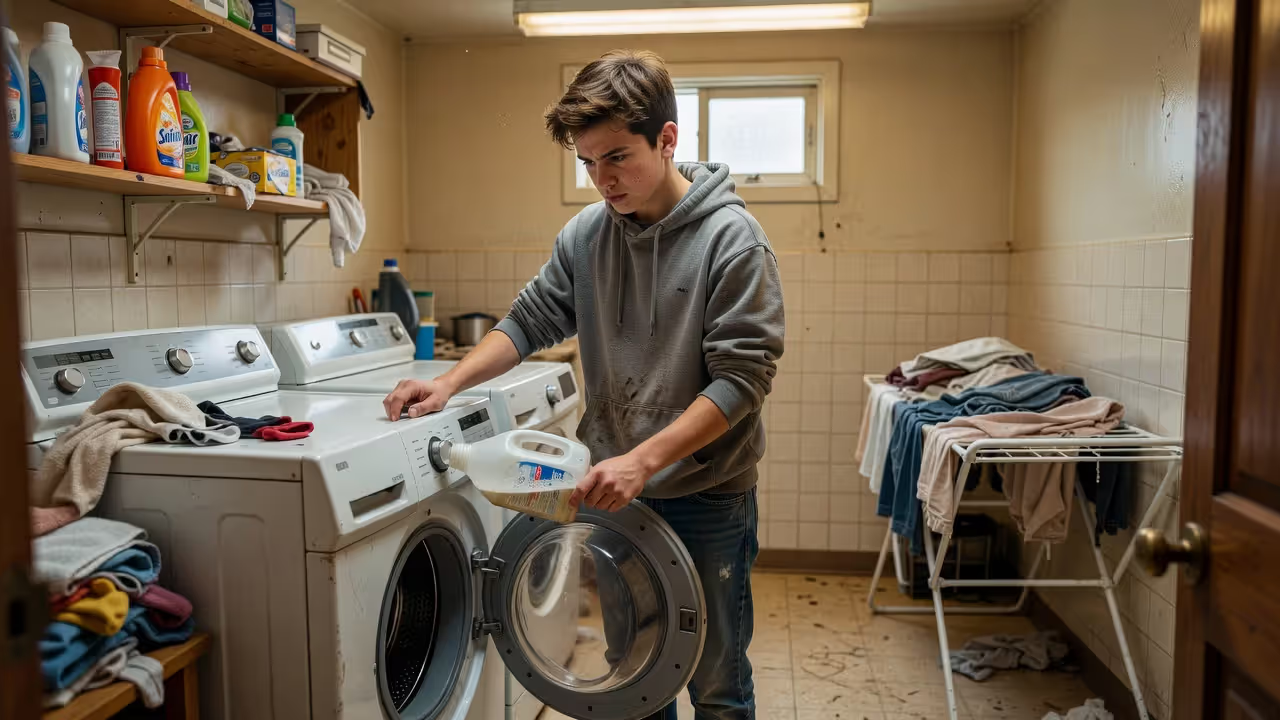
| Teens (13–17) | Laundry, trash, yard work | Reduced allowance; no car use or social plans until complete | Natural + Privilege-based |
For toddlers, the goal isn't really accountability — it's habit formation. Keep it simple and low-stakes. By elementary school, connecting chores to privileges that kids actually care about starts to work well. Tweens respond to social consequences. Teens? Natural consequences hit hardest. Let their laundry pile up. Let them figure it out.
Author: Olivia Brackenridge;
Source: colorfulpagescoalition.org
Common Mistakes Parents Make When Enforcing Chores
The biggest one? Doing the chore yourself when the child doesn't.
It's faster. It's easier. And it completely undermines the system. When you step in and do the task, the child learns that waiting you out is a viable strategy.
Over-threatening is the second most common trap. "If you don't clean your room, you'll lose your phone for a month." Then a month passes and the phone comes back anyway. Now the child knows threats aren't real. Keep consequences proportionate and follow through every time.
Inconsistency kills chore systems faster than anything else. If consequences happen three times out of ten, kids will test you the other seven. Consistency doesn't mean being harsh — it means being predictable.
One counterintuitive point: nagging actually makes kids less likely to do chores independently. Every reminder you give is one less chance for them to remember on their own. Set a deadline, state the consequence once, and then step back.

Author: Olivia Brackenridge;
Source: colorfulpagescoalition.org
Ways to Motivate Kids to Do Chores Proactively
Consequences are reactive. Motivation is preventive. Both matter, but the goal is to need consequences less often over time.
Chore charts work well for elementary-age kids. Visual tracking — stickers, checkboxes, a simple whiteboard — makes progress concrete. Kids like seeing completion. It's satisfying in a way that verbal praise alone isn't.
Allowance tied to chores creates a direct, tangible link between effort and reward. If your child skips a chore, they don't earn that portion of their allowance. Simple. No drama. The consequence is built into the system.
For motivating kids to do chores long-term, intrinsic motivation matters more than external rewards. Help kids connect chores to identity: "You're the kind of person who takes care of your space." That framing, repeated consistently, starts to stick around ages 9 to 12.
Short time limits help too. "You have 15 minutes to get this done" is less overwhelming than an open-ended expectation. Many kids — especially those with attention challenges — do better with a timer running than with a vague deadline.
Children need to feel that they belong and are significant. When they contribute to the family through chores, they develop a sense of capability and connection — and when there are consistent, respectful consequences for not contributing, they learn that accountability is part of belonging.
— Nelsen Jane
FAQ: Chore Consequences for Kids Questions Answered
Building a chore system that actually works takes time, and it won't be perfect from day one. But the parents who stick with it — who apply consequences calmly and consistently, who don't do the work for their kids, and who gradually shift toward motivating rather than enforcing — end up with kids who carry those habits into adulthood. That's the real payoff. Not a clean kitchen tonight, but a capable, accountable person down the road.
Related Stories

Read more

Read more




The content on this website is provided for general informational and educational purposes only. It is intended to explain concepts related to parenting, child development, family caregiving, adoption, fostering, and child safety.
All information on this website, including articles, guides, and examples, is presented for general educational purposes. Outcomes may vary depending on individual family circumstances.
This website does not provide professional medical, psychological, or legal advice, and the information presented should not be used as a substitute for consultation with qualified pediatricians, child psychologists, or family counselors.
The website and its authors are not responsible for any errors or omissions, or for any outcomes resulting from decisions made based on the information provided on this website.