

Parenting Styles in Different Cultures Explained
Parenting Styles in Different Cultures Explained

Every family has rules. But where those rules come from — and what they're trying to achieve — varies enormously depending on where in the world you're raising a child. Parenting styles in different cultures aren't just interesting to compare. They reveal deep assumptions about what children are, what they need, and what kind of adults they should become. Some cultures prize early independence. Others center family loyalty above everything else. And many fall somewhere in the middle, blending old traditions with new realities. Understanding these differences isn't about judging anyone's approach. It's about seeing the bigger picture of how humans raise their young.
What Shapes Parenting Beliefs Across Cultures
Before comparing regions, it helps to understand what drives the differences in the first place. Parenting beliefs by culture don't appear out of nowhere. They're shaped by religion, economics, history, and one of the most studied dimensions in cross-cultural psychology: the individualism versus collectivism spectrum.
In highly individualist societies — think the US, Australia, or Northern Europe — children are typically encouraged to develop a strong sense of self. Independence is a virtue. Expressing your opinion at the dinner table is a good thing. In collectivist cultures, by contrast, the group comes first. Family harmony, respect for elders, and fulfilling social roles matter more than personal preference.
Religion plays a significant role too. In many parts of the Middle East and South Asia, Islamic or Hindu teachings directly inform how discipline, modesty, and gender roles are handled. In predominantly Catholic Latin American households, concepts like sacrifice, obedience, and community responsibility are woven into everyday parenting. Neither approach is inherently better. They're responses to different environments and value systems.
Economics shapes parenting more than people admit. Families in lower-income settings often rely on older siblings to help raise younger ones, creating a natural hierarchy and shared responsibility model. Wealthier households can afford to invest heavily in one-on-one child development. How culture affects parenting is rarely just about tradition — it's also about what's practical and possible.
There is no single universal standard for good parenting. What counts as sensitive and responsive caregiving differs across cultures.
— Keller Heidi
That framing matters. It means we shouldn't walk into this comparison with a ranked list in mind.
Western vs. Eastern Parenting Approaches Compared
The contrast between Western and Eastern parenting is probably the most discussed in cultural differences in parenting research. And it's real — but it's also more nuanced than headlines suggest.
Authoritative Parenting in Western Households
In the US and much of Western Europe, the dominant ideal is authoritative parenting: warm but firm, structured but flexible. Parents set clear rules, explain the reasoning behind them, and encourage kids to push back respectfully. The goal is raising a self-sufficient adult who can think critically and advocate for themselves.
American parents, for instance, tend to prioritize their child's happiness and self-esteem in ways that might seem indulgent to parents in other cultures. A 2023 Pew Research study found that 55% of US parents said being happy was among the most important traits they wanted their children to have — ranking above obedience or hard work. That's a telling data point.
The common mistake here? Assuming "authoritative" means permissive. It doesn't. Western authoritative parenting still involves real structure. The difference is that children are treated as participants in that structure, not just subjects of it.
Collectivist Values in East Asian Parenting
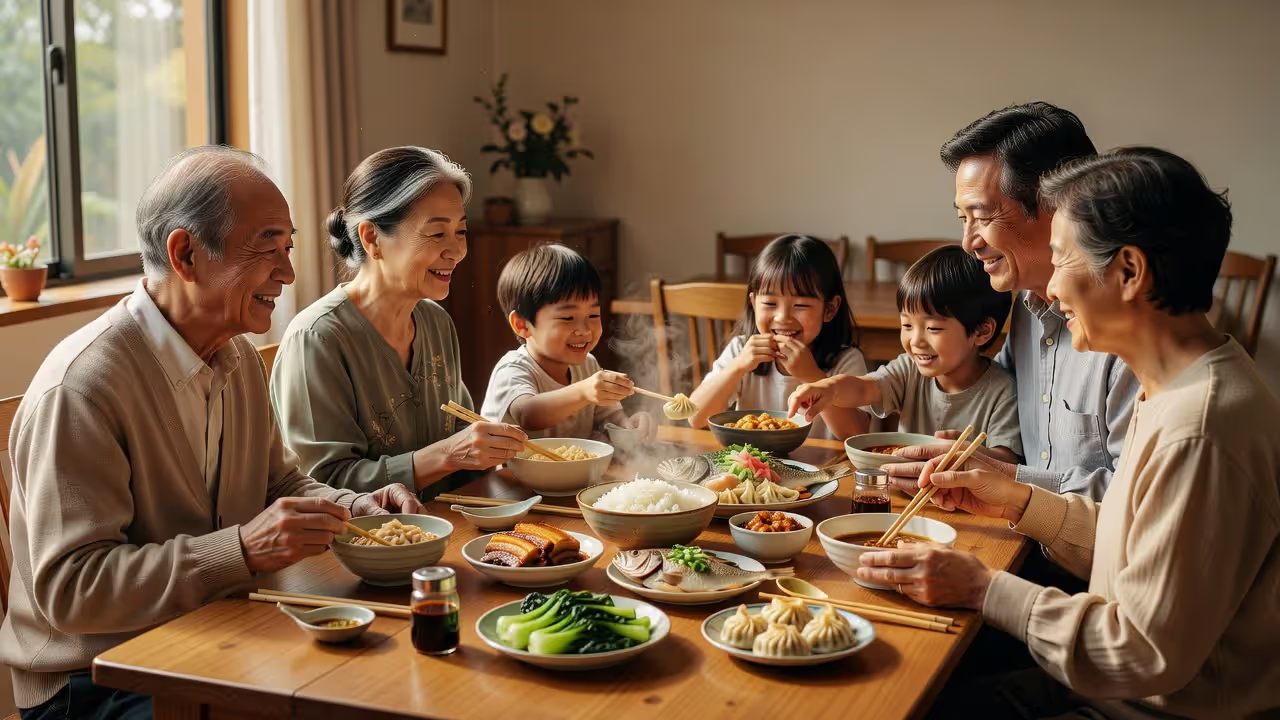
East Asian parenting — particularly in China, Japan, South Korea, and Vietnam — tends to emphasize academic achievement, respect for authority, and family duty. The stereotype of the "tiger mom" exists for a reason, but it flattens a much more complex reality.
Yes, academic pressure is high. South Korean students, for example, routinely spend 10+ hours a day in school and private tutoring academies called hagwons. But the motivation behind this pressure isn't cruelty. It's deeply rooted in Confucian values — the belief that education is the path to a good life, and that parents who push their children hard are expressing love, not control.
Parenting across cultures looks different even within East Asia. Japanese parenting emphasizes group harmony and emotional restraint, while Chinese parenting (at least in urban areas) has shifted significantly over the past two decades toward blending traditional expectations with Western-style emotional support.
Author: Rebecca Thornfield;
Source: colorfulpagescoalition.org
Here's a quick comparison across major cultural regions:
| Region | Primary Parenting Style | Attitude Toward Independence | Discipline Approach | Role of Extended Family | Academic Pressure Level |
| US / Western Europe | Authoritative | High — encouraged early | Explanation-based, low physical | Limited, nuclear family focus | Moderate |
| East Asia | Authoritarian-leaning | Low in childhood, grows with age | Strict, achievement-oriented | Moderate — grandparents involved | Very high |
| Latin America | Authoritative + communal | Moderate — family loyalty first | Mixed; respeto-based | High — central to daily life | Moderate |
| Sub-Saharan Africa | Communal / traditional | Moderate | Community-enforced norms | Very high — village model | Variable by region |
| South Asia | Authoritarian to authoritative | Low to moderate | Parental authority strong | Very high — multigenerational | High |
| Scandinavia | Permissive-authoritative | Very high — autonomy-centered | Non-punitive, dialogue-based | Low to moderate | Low to moderate |
The pattern I see most often is that regions with high extended-family involvement also tend to have lower emphasis on individual child autonomy — not because they value children less, but because the community itself serves as the developmental container.
How Latin American Families Approach Child-Rearing
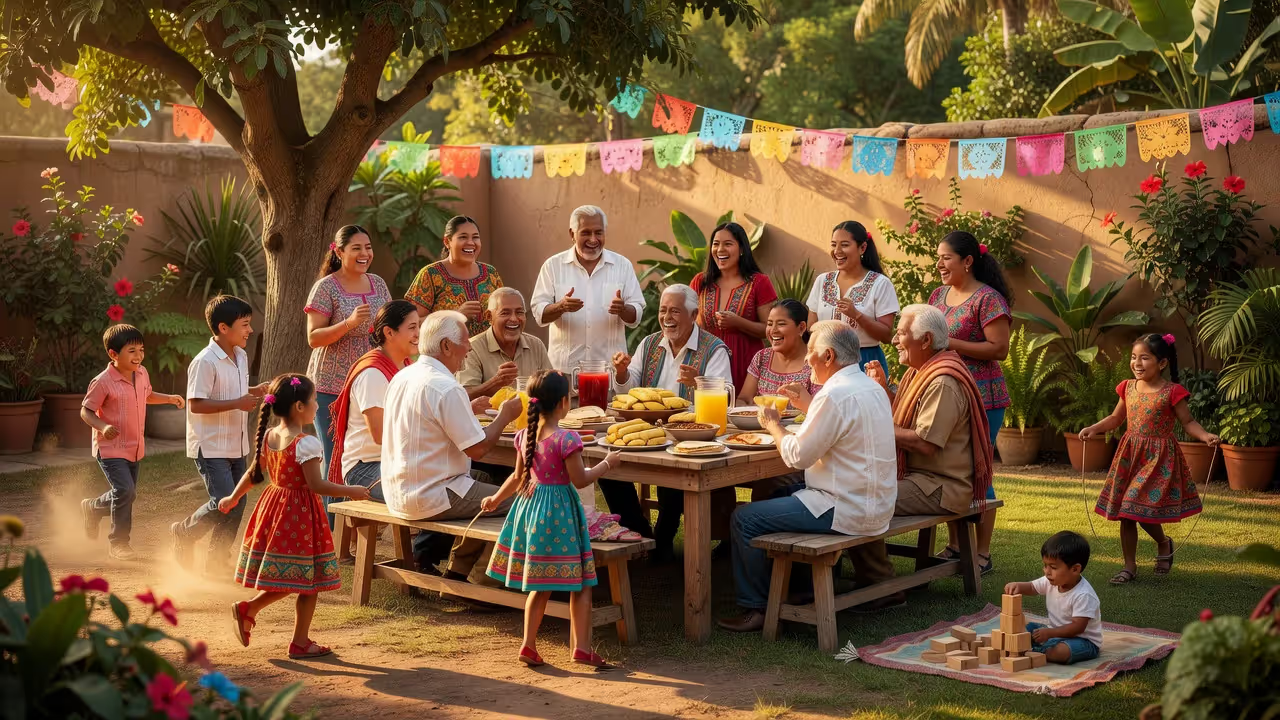
Latin American parenting is built around a concept called familismo — the deep, structural importance of family as the primary unit of identity and support. This isn't just about loving your family. It means your decisions, your success, and your struggles are fundamentally shared with your extended family network.
Cultural parenting practices in Latin households often involve grandparents, aunts, uncles, and godparents (padrinos) playing active roles in a child's upbringing. It's not unusual for three generations to live under one roof, or at least within a few blocks of each other. Children grow up understanding that they're part of something larger than themselves.
Respeto is another cornerstone. Children are expected to show deference to adults — not out of fear, but out of genuine cultural respect for experience and age. A child who talks back to an elder isn't being confident; they're being disrespectful. That's a meaningful distinction.
Discipline norms vary across Latin American countries, but in many households, there's a clear parental authority structure. Rules exist and are enforced. At the same time, warmth and physical affection are abundant. Hugs, kisses, and verbal expressions of love are constant. The combination of firm authority and high warmth actually aligns closely with what developmental psychologists would call authoritative parenting — just expressed through a collectivist lens.
Author: Rebecca Thornfield;
Source: colorfulpagescoalition.org
African Parenting Traditions and Community Involvement
The Zulu phrase "umuntu ngumuntu ngabantu" translates roughly to "a person is a person through other persons." That philosophy sits at the heart of many traditional parenting approaches across Sub-Saharan Africa.
In much of Africa, child-rearing is genuinely communal. The "it takes a village" model isn't a metaphor — it's a description of how things actually work. Neighbors, extended family members, and community elders all share responsibility for a child's upbringing. Correcting a child in public isn't overstepping; it's expected.
This communal model produces children who tend to be highly socially aware, respectful of community norms, and comfortable in group settings. The trade-off — if you can call it that — is less emphasis on individual self-expression, at least in early childhood.
Traditional parenting approaches differ significantly across African regions. West African parenting (Nigeria, Ghana) often involves strict discipline and high academic expectations, especially in urban areas. East African parenting (Kenya, Ethiopia) tends to blend traditional communal values with increasing exposure to global parenting norms. Southern African families are often navigating the tension between indigenous traditions and post-apartheid modernization.
One counterintuitive point: despite the stereotype of harsh discipline in some African parenting traditions, studies consistently find that children raised in high-warmth communal environments show strong emotional resilience and social competence.
How Culture Affects Parenting Around Milestones
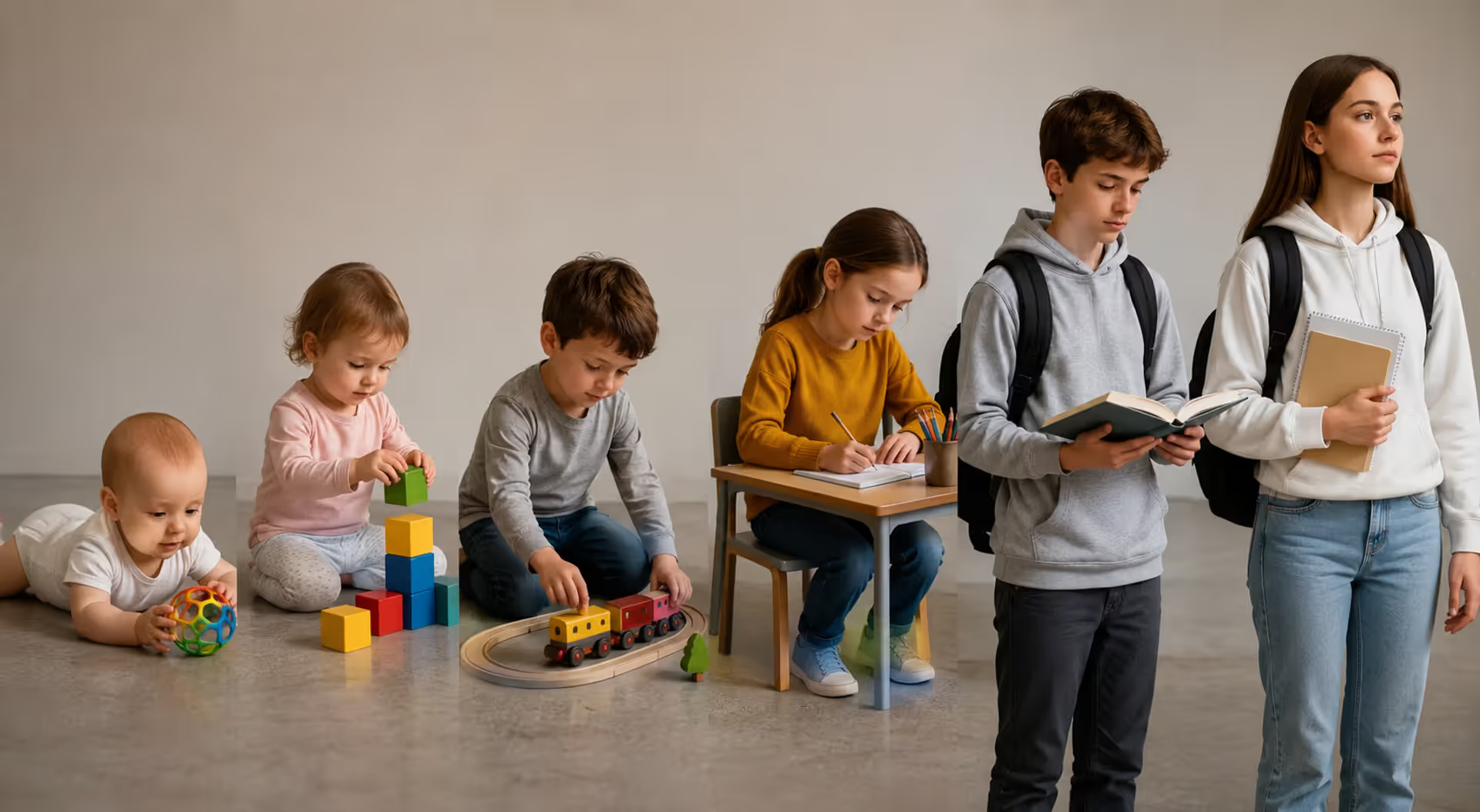
Child development milestones look different depending on where you are. And how culture affects parenting becomes especially visible when you compare expectations around sleep, independence, education readiness, and emotional expression.
Sleep is a clear example. In the US, getting a baby to sleep independently in their own room is often treated as a developmental goal — sometimes a source of parental pride. In Japan, co-sleeping (called kawaii) is the norm well into childhood and is seen as emotionally healthy, not a crutch. In many African and Latin American households, shared sleep is practical and natural. The idea of a baby sleeping alone in a separate room would seem strange, even neglectful, to many parents worldwide.
Independence milestones vary just as much. American parents typically celebrate a toddler's insistence on doing things themselves. German parents are known for encouraging outdoor independence — children as young as 6 walk to school alone in many German cities. Meanwhile, in South Asian households, children are often kept closer to home for longer, with independence coming through academic achievement rather than physical autonomy.
Emotional expression is another flashpoint. Western parenting — particularly in the US — tends to validate and name children's emotions openly. "You're feeling frustrated right now, and that's okay." East Asian parenting often emphasizes emotional regulation and restraint over open expression, which isn't emotional suppression — it's a different model of emotional maturity.
For parents wanting to understand the science behind these differences, developmental psychology offers a useful framework for thinking about how environment shapes child outcomes across cultures.

Author: Rebecca Thornfield;
Source: colorfulpagescoalition.org
Common Misconceptions About Cultural Parenting Practices
Parenting beliefs by culture get oversimplified constantly. It's worth pushing back on a few of the most common ones.
The "tiger mom" label is probably the most damaging. Amy Chua's 2011 book put the phrase into the cultural vocabulary, but it flattened the enormous diversity within Asian parenting. Not all Chinese parents are academically demanding to the point of harshness. Not all Korean parents send their kids to hagwons. Many East Asian parents — especially younger generations and those who've immigrated to Western countries — actively blend high expectations with emotional warmth and flexibility.
Another misconception: that strict parenting is inherently harmful. Research on this is genuinely complicated. In some cultural contexts, authoritarian parenting (high control, lower warmth) produces worse outcomes. But in communities facing significant external stressors — poverty, discrimination, neighborhood violence — higher parental control is often associated with better child outcomes, not worse ones. Context matters enormously.
And don't assume that "Western" parenting is automatically more progressive or effective. Scandinavian parenting, which emphasizes radical child autonomy and non-punitive discipline, produces some of the highest childhood wellbeing scores in the world. But it also exists within a social safety net that most American families don't have access to. You can't just copy the model without the infrastructure.
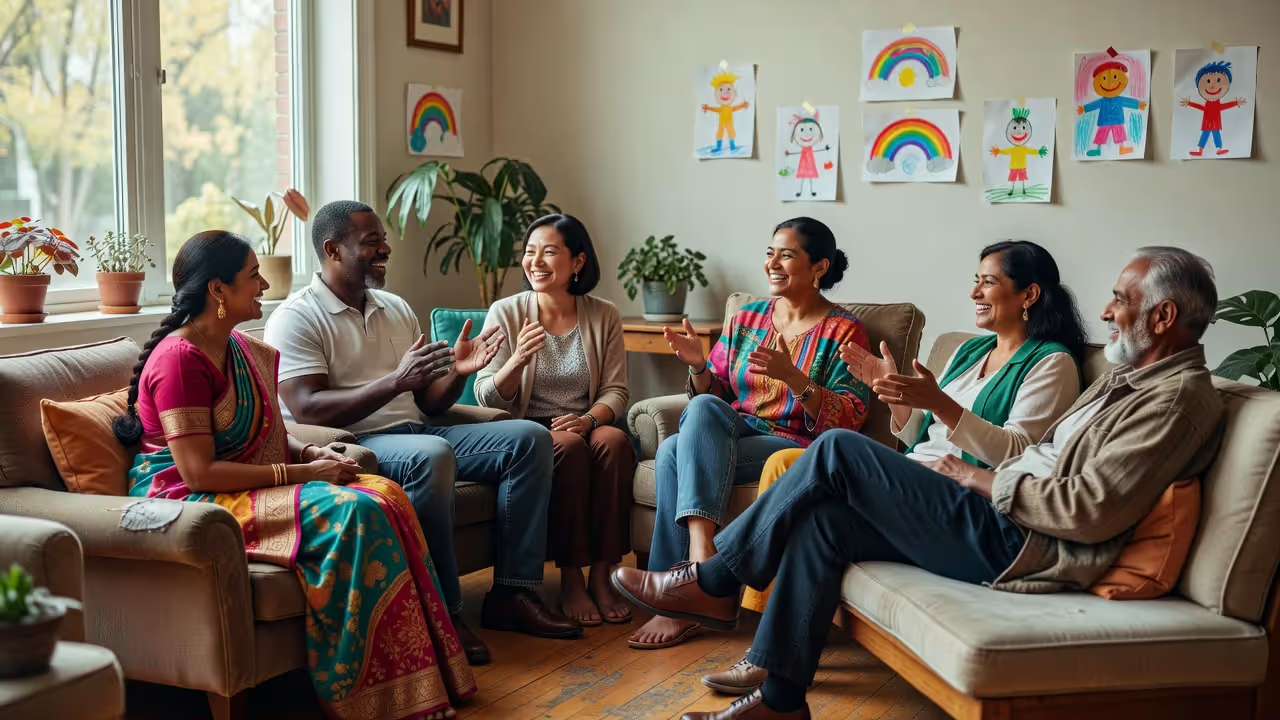
Cultural parenting practices are also not static. They evolve. What a Nigerian grandmother considers normal parenting looks different from what her daughter in Lagos does today, which looks different again from what her granddaughter in Atlanta does. Migration, education, and media all reshape traditions across generations.
Author: Rebecca Thornfield;
Source: colorfulpagescoalition.org
FAQ: Parenting Styles Across Cultures Questions Answered
Parenting across cultures is one of the most revealing lenses we have for understanding what different societies truly value. There's no perfect system. Every culture gets some things right and struggles with others. What's clear is that children thrive when they're raised with consistency, warmth, and a sense of belonging — whether that belonging is defined by the individual family or the broader community. Knowing how other cultures approach child-rearing doesn't require you to change your own approach. But it might make you think harder about why you do what you do.
Related Stories

Read more

Read more


The content on this website is provided for general informational and educational purposes only. It is intended to explain concepts related to parenting, child development, family caregiving, adoption, fostering, and child safety.
All information on this website, including articles, guides, and examples, is presented for general educational purposes. Outcomes may vary depending on individual family circumstances.
This website does not provide professional medical, psychological, or legal advice, and the information presented should not be used as a substitute for consultation with qualified pediatricians, child psychologists, or family counselors.
The website and its authors are not responsible for any errors or omissions, or for any outcomes resulting from decisions made based on the information provided on this website.