
Blended Family Examples and What They Look Like in Real Life
Blended Family Examples and What They Look Like in Real Life

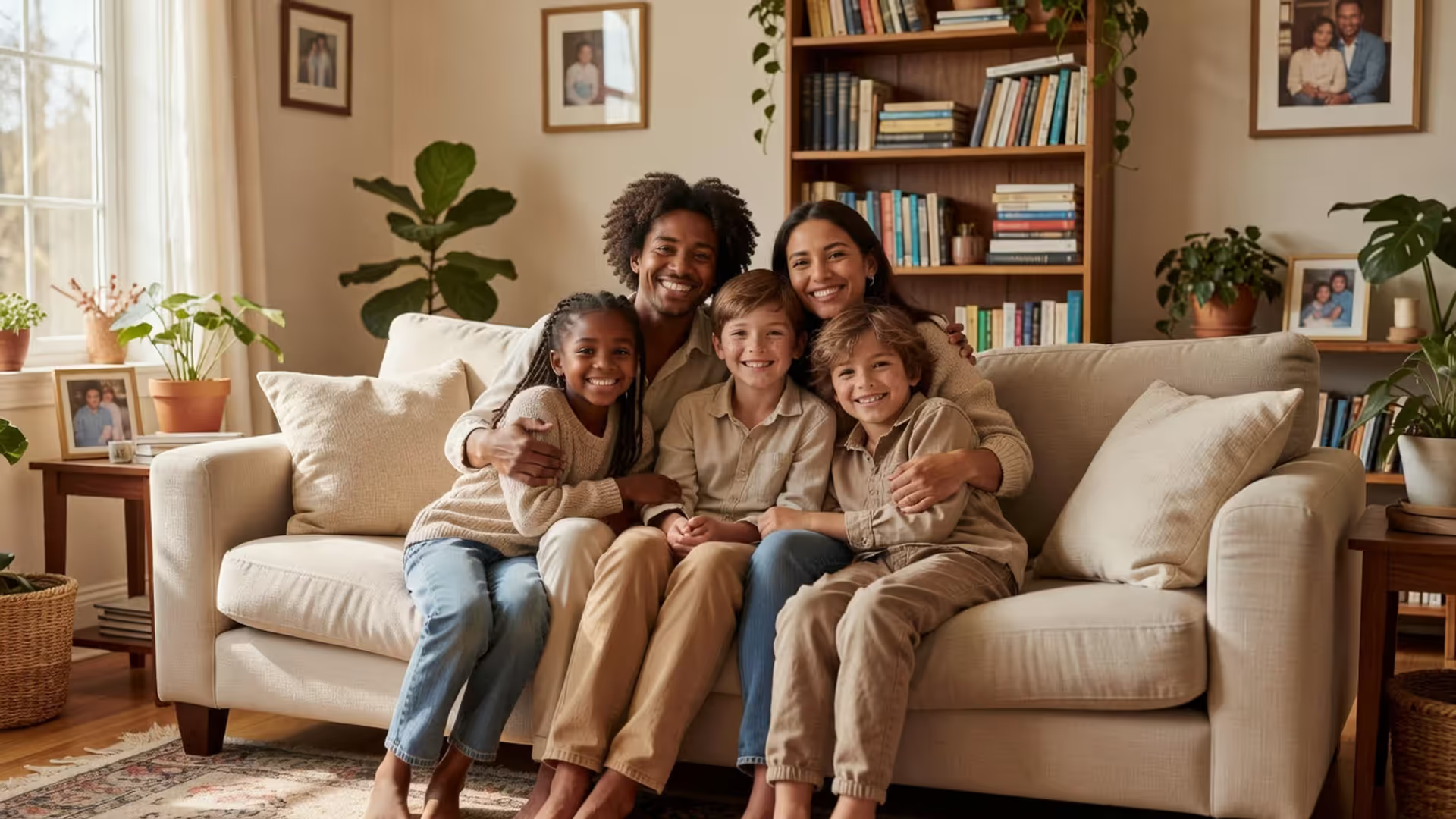
Families don't always look the way they used to. Two parents, two kids, one house — that picture fits fewer and fewer American households every year. Today, millions of people grow up with stepparents, half-siblings, or two sets of households that all count as home. These are blended families, and they're far more common than most people realize.
What Is a Blended Family
A blended family is a household where at least one partner brings a child or children from a previous relationship into a new family unit. The new couple may be married or cohabiting, and the household often includes children from one or both partners' prior relationships — sometimes alongside new children born to the couple together.
The term itself has been around since the 1970s, though the family structure it describes is as old as human history. Remarriage after a spouse's death was the norm for centuries. Today, the more common path involves divorce or separation, followed by a new partnership. You'll also see it called a stepfamily — the two terms are largely interchangeable, though "blended family" has become the more widely used phrase in everyday conversation.
The blended family definition hinges on one key element: children from a prior relationship are present. That's what separates it from a nuclear family or a remarried couple without kids. The blended family meaning also implies a process — two separate family histories merging into something new, with all the complexity that brings.
Author: Rebecca Thornfield;
Source: colorfulpagescoalition.org
How a Blended Family Forms
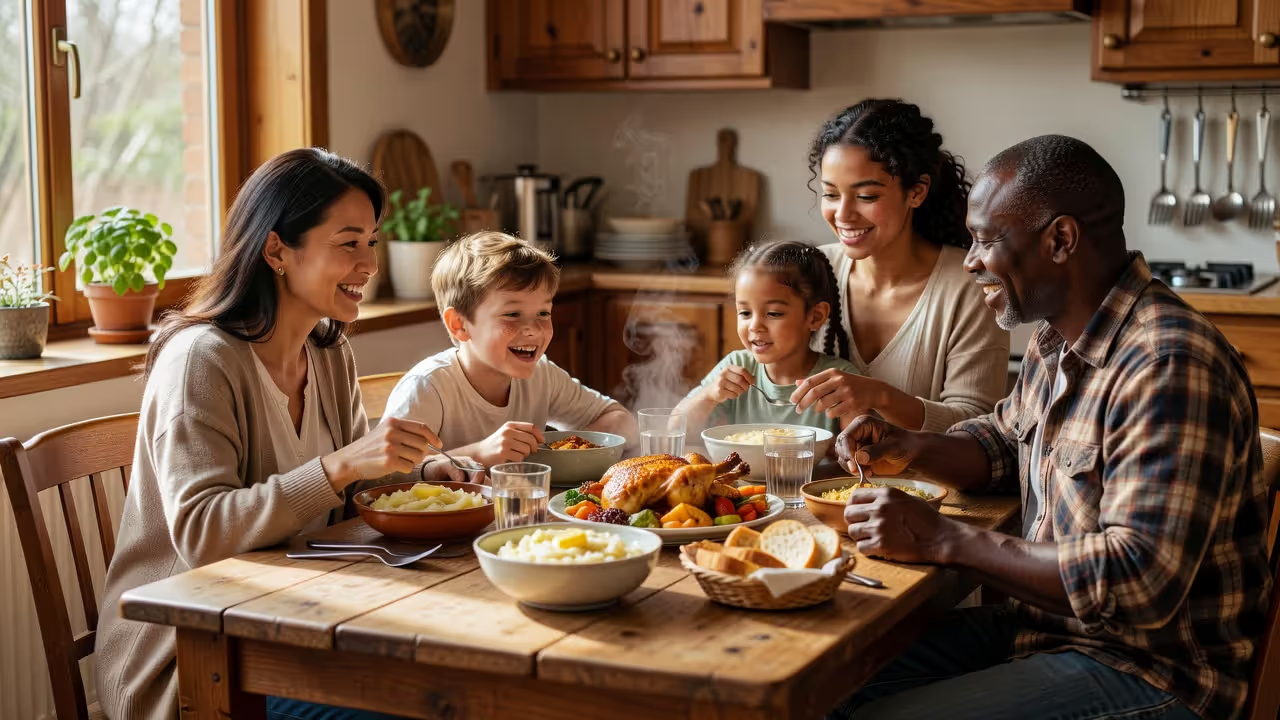
Most blended families start with a breakup. A couple divorces or separates, one or both partners raise children as a single parent for a period, and then one of them enters a new serious relationship. When that new partner moves in or they get married, a blended family is born.
But that's not the only path. Some blended families form after the death of a spouse. Others form when a couple who never married splits up and one partner later remarries. And some form through adoption — a stepparent legally adopting a partner's child, or a couple adopting a child who joins siblings already in the home.
The transition period matters a lot here. Kids who've spent years in a single-parent household have adjusted to a certain rhythm. Introducing a new adult — and possibly new stepsiblings — disrupts that. It doesn't mean the outcome is bad. It just means the adjustment takes real time and intention.
One common mistake families make: rushing the "blending." Moving in together quickly, expecting instant bonding, or pushing kids to call a stepparent "Mom" or "Dad" before they're ready. The families that tend to do better are the ones that let relationships build naturally over months, not weeks.
Common Types of Blended Families
The structure of a blended family varies widely. Here are the three most common configurations.
Stepparent Families
This is the most straightforward type. One partner has children; the other doesn't. The new partner becomes a stepparent to those kids. The biological parent retains primary custody, and the stepparent takes on a supportive parenting role — though the degree of that involvement varies enormously depending on the family.
In some households, the stepparent functions almost like a co-parent. In others, they're more of a supportive adult figure while the biological parent handles discipline and major decisions. Neither approach is wrong. What matters is that everyone's on the same page.
Families With Half-Siblings
When both partners bring children from previous relationships, or when the new couple has a child together, half-siblings enter the picture. These kids share one biological parent but not both. They may or may not live together full-time, depending on custody arrangements.
Half-sibling dynamics can be genuinely warm and close — or complicated. A lot depends on age gaps, how much time they spend together, and whether the adults actively encourage those relationships.
Co-Parenting Households
This type doesn't always get grouped under "blended family," but it fits the blended family structure in a real way. Here, children move between two households — one with their biological parent and a new partner, and one with the other biological parent, who may also have a new partner. The child effectively has two blended families at once.
Co-parenting households require a level of coordination between adults who may not get along well. When it works, kids benefit from having more caring adults in their lives. When it doesn't, the child often ends up in the middle.
Author: Rebecca Thornfield;
Source: colorfulpagescoalition.org
Real-Life Blended Family Examples
Here are four realistic scenarios — not celebrity stories, just the kind of situations you'd actually encounter.
Example 1: The Stepparent Household Maria has two kids, ages 8 and 11, from her first marriage. She remarries Tom, who has never had children. Tom becomes a stepfather. He's present at school events, helps with homework, and takes the kids to weekend activities. But when it comes to discipline, Maria takes the lead. Tom and Maria have agreed on that boundary — at least for the first couple of years.
Example 2: Two Sets of Kids, One Household David has a 10-year-old son from a previous relationship. His new wife, Sandra, has a 7-year-old daughter and a 12-year-old son. All three kids live with David and Sandra full-time, while spending every other weekend with their respective other parents. The three kids are stepsiblings to each other — no shared biological parent. They share a home, chores, and a dinner table. Some weeks it works smoothly. Some weeks it doesn't.
Example 3: Half-Siblings in the Mix Kevin and Lisa have been together for three years. Kevin has a 9-year-old daughter from a prior relationship who lives with them half the time. Lisa has no children from before. They now have a 2-year-old son together. The 9-year-old and the 2-year-old are half-siblings — they share Kevin as a biological parent. The older child has had to adjust to a new baby in the house and a new family identity. That adjustment has been real, but it's coming along.
Example 4: The Co-Parenting Network Angela and her ex-husband both remarried. Angela's new husband has two kids of his own. Her ex's new wife also has a child. Their shared daughter, now 13, moves between both homes and has relationships with four adults who all function as parental figures to varying degrees. She has stepsiblings at both houses. It's complex. But with consistent communication between the adults, it's working.
Author: Rebecca Thornfield;
Source: colorfulpagescoalition.org
How Blended Family Structure Affects Daily Life
The blended family structure shapes almost everything — from who makes school decisions to how holidays get divided. And the legal side of things is often more complicated than families expect.
Stepparents typically have no automatic legal rights over their stepchildren. They can't consent to medical treatment, sign school forms, or make emergency decisions unless they've been granted legal authority — either through adoption or a specific legal arrangement. This catches a lot of families off guard.
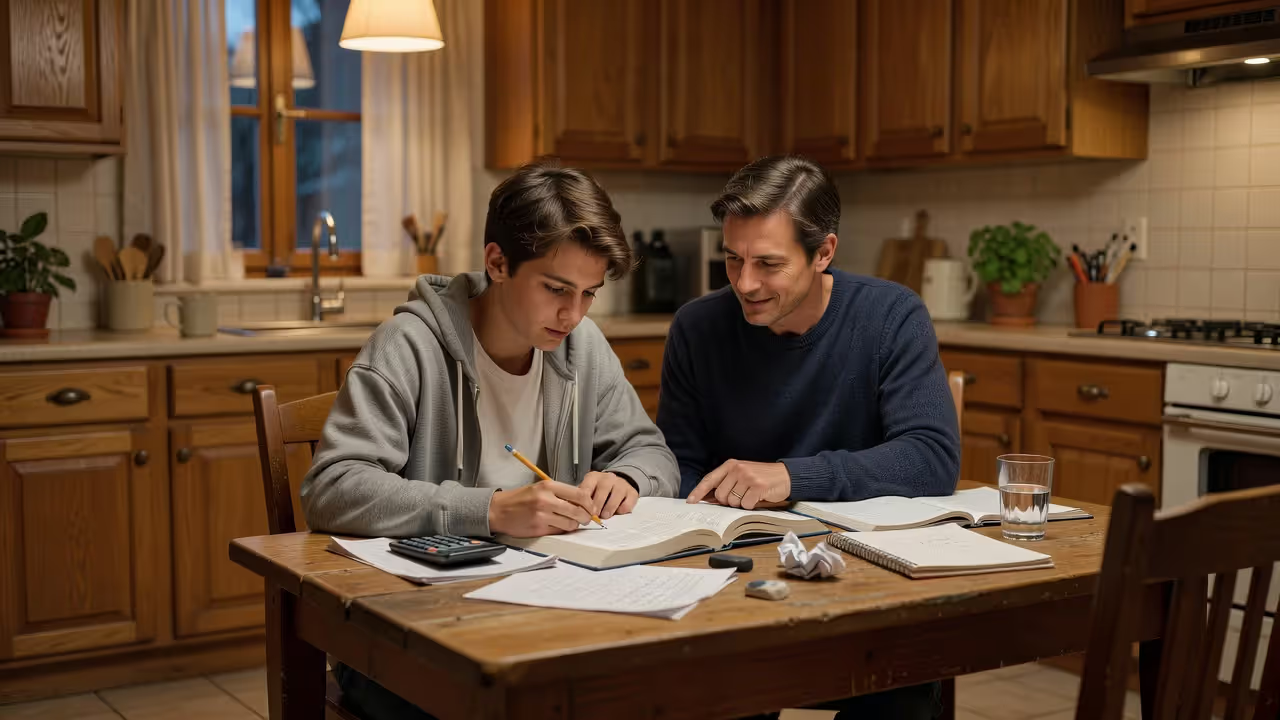
Parenting roles need to be defined early. Who handles discipline? Who attends teacher conferences? What happens when the stepparent and biological parent disagree? The pattern I see most often is that families who talk through these roles before conflicts arise handle the day-to-day far better than those who figure it out in the middle of a fight.
Household rules are another pressure point. Kids who grew up in different households have different norms. Bedtimes, screen time, chores, language — all of it can clash. Setting shared expectations early, and being willing to revisit them, makes a measurable difference.
Emotionally, blended family life involves a lot of loyalty conflicts for kids. A child who bonds with a stepparent may feel like they're betraying the other biological parent. That's not a sign something is wrong — it's a normal part of the adjustment process.
Challenges Blended Families Commonly Face
Author: Rebecca Thornfield;
Source: colorfulpagescoalition.org
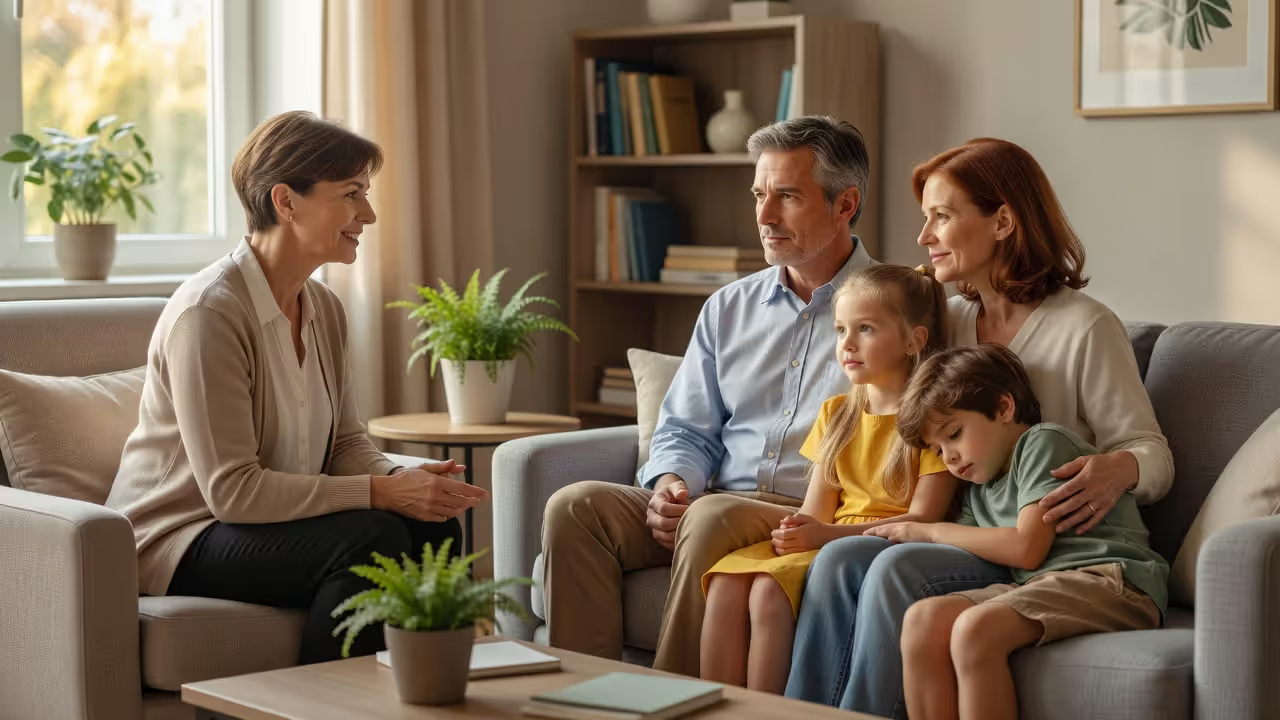
No family structure is without friction. Blended families have their own specific pressure points.
Discipline disagreements are near the top of the list. A stepparent who disciplines a stepchild too quickly often gets pushback — from the child, and sometimes from the biological parent who feels their authority is being undermined. Going too slow and staying completely hands-off creates a different problem: the stepparent never becomes a real part of the family.
Financial planning across two households is genuinely hard. Child support, shared custody costs, splitting holiday travel, and managing different income levels between households — these aren't small logistics. They require real planning, and sometimes professional help.
Loyalty conflicts affect kids of all ages, but they hit hardest in the early years of a blended family. Kids often feel caught between their biological parents, especially if there's ongoing tension between the exes.
And then there's the comparison trap. Stepsiblings who receive different treatment — different rules, different spending, different emotional attention — notice. Even if the differences are subtle, they build resentment over time.
Stepfamilies are not broken families. They are complex families that need different skills and different expectations than first-time families. The adults who do best are those who let go of the fantasy that they can create an instant family and instead invest in slow, steady relationship-building.
— Papernow Patricia
| Family Type | Who Lives in the Household | Parenting Roles | Sibling Relationships |
| Stepparent Family | One biological parent + stepparent + children from one prior relationship | Biological parent leads; stepparent supports | Biological siblings only |
| Both Partners Bring Children | Two adults + children from both prior relationships | Shared parenting; roles negotiated | Stepsiblings (no shared biological parent) |
| Couple Has Child Together | Two adults + children from prior relationships + shared child | Biological and step roles overlap | Mix of step and half-siblings |
| Co-Parenting Households | Child splits time between two blended households | Multiple adults across two homes | Stepsiblings in each household |
FAQ: Blended Family Questions Answered
Blended families come in more shapes than any single definition can capture. Some have one stepparent and two stepkids. Some have four adults across two households all trying to raise one child together. What they share is the work of building something real out of different histories, different habits, and different expectations. That work is hard — but it's not unusual, and it doesn't have to be done alone. Resources from family therapists, legal advisors, and community support groups exist specifically for this kind of family, and using them isn't a sign of failure. It's just smart.
Related Stories
Read more
Read more


The content on this website is provided for general informational and educational purposes only. It is intended to explain concepts related to parenting, child development, family caregiving, adoption, fostering, and child safety.
All information on this website, including articles, guides, and examples, is presented for general educational purposes. Outcomes may vary depending on individual family circumstances.
This website does not provide professional medical, psychological, or legal advice, and the information presented should not be used as a substitute for consultation with qualified pediatricians, child psychologists, or family counselors.
The website and its authors are not responsible for any errors or omissions, or for any outcomes resulting from decisions made based on the information provided on this website.