

Mother vs Father Custody Statistics in the US
Mother vs Father Custody Statistics in the US

Custody cases in the US don't play out the way most people imagine. The courtroom battle where a judge picks one parent over the other? That's actually pretty rare. Most families settle things before a judge ever weighs in — but the statistics that do exist reveal clear patterns about who ends up with physical custody, who shares it, and how much that picture has changed over the past two decades.
How Custody Is Decided in US Family Courts
Every state uses some version of the same core standard. Judges are required to base custody decisions on the best interests of the child — a legal framework that weighs factors like each parent's relationship with the child, their ability to provide stability, the child's own preferences (depending on age), and any history of abuse or neglect.
What that standard does not include is a parent's gender. At least not legally.
In practice, courts look at who has been the primary caregiver, who can offer a stable home environment, and how well each parent can support the child's relationship with the other parent. A parent who works nights and rarely handled school pickups is going to face a harder argument than one who has been the consistent daily presence — regardless of whether that parent is a mother or a father.
The common mistake people make here is assuming custody outcomes are the result of judicial bias alone. The data tells a more complicated story. Child custody outcomes are shaped by who files for what, what each parent asks for, and what agreements are reached before trial.

Author: Rebecca Thornfield;
Source: colorfulpagescoalition.org
Who Gets Custody More Often in the US
The short answer: mothers still receive sole or primary physical custody more often than fathers. But the gap has been narrowing for years, and joint physical custody is now the most common arrangement in many states.
Here's a breakdown of the most widely cited national figures on custody arrangements. These numbers pull from Census Bureau data, state court studies, and peer-reviewed family law research — primarily from the 2018–2023 period, which represents the most complete national picture available as of 2026.
| Custody Arrangement | Approximate % of US Cases | Data Source | Approx. Year |
| Sole maternal physical custody | 45–51% | US Census Bureau, SIPP | 2020–2022 |
| Sole paternal physical custody | 10–12% | US Census Bureau, SIPP | 2020–2022 |
| Joint physical custody (shared) | 30–40% | State court studies (AZ, MN, WI) | 2018–2023 |
| Joint legal custody (both parents) | 70–80% | State family court reports | 2019–2023 |
A few things stand out. Joint legal custody — meaning both parents share decision-making authority over education, healthcare, and religion — is now extremely common, even when one parent has the children most of the time. Joint physical custody, where children split time between homes, is far more variable by state.
The custody statistics by gender look different depending on whether you're counting legal or physical custody, and whether you're looking at contested court rulings or all finalized arrangements (including settlements).
Physical Custody Outcomes by Parent
Mothers receive primary or sole physical custody in roughly half of all US cases, according to Census Bureau Survey of Income and Program Participation (SIPP) data. Fathers receive sole physical custody in about 10 to 12 percent of cases. The remaining share — and it's growing — falls into some form of joint or shared physical arrangement.
That 10-to-12-percent figure for fathers is often cited as evidence of systemic bias. But here's the counterintuitive part: in contested cases where fathers actively request primary or sole custody, they win at rates closer to 40 to 50 percent. The lower overall number reflects the fact that many fathers don't seek primary custody in the first place, not that courts are systematically denying them.
Legal Custody Outcomes by Parent
Joint legal custody is now the default in most states. Courts have moved strongly toward keeping both parents involved in major life decisions for the child, even when one parent has the children the majority of the time. Sole legal custody — where one parent has all decision-making authority — is typically reserved for situations involving documented abuse, substance issues, or a parent who is largely absent.

Author: Rebecca Thornfield;
Source: colorfulpagescoalition.org
How Often Do Fathers Get Custody
This is one of the most searched questions in family law — and the answer depends heavily on what type of custody you're asking about.
For sole physical custody, fathers receive it in roughly 10 to 12 percent of cases nationally. For joint physical custody, fathers are one of the two parties in virtually every shared arrangement — so if joint custody makes up 30 to 40 percent of outcomes, fathers are sharing physical custody in a significant portion of all cases.
The pattern I see most often in the data is this: fathers who actively pursue custody and document their involvement tend to fare much better than the headline numbers suggest. Studies from states like Arizona and Wisconsin — which have pushed toward presumptive joint custody — show fathers receiving equal or near-equal parenting time in 40 to 50 percent of cases.
It's also worth separating "primary physical custody" from "sole custody." A father can have the children 40 percent of the time and still not be classified as having primary custody. Child custody outcomes in national data often undercount shared arrangements because the definitions vary by state.
One common mistake: assuming that losing primary custody means losing influence. Most fathers in joint legal custody arrangements retain full say in major decisions about their children's lives.
Custody Data by State and Demographics
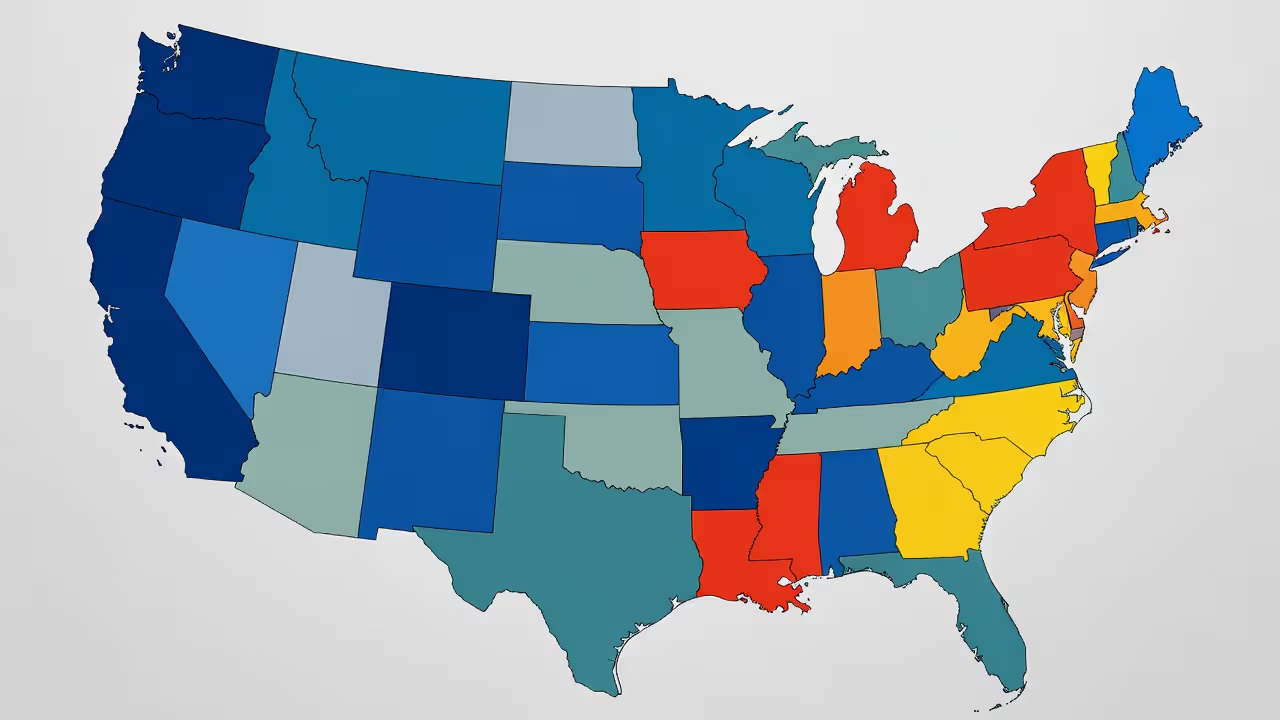
Custody data by parent varies significantly depending on where you live. States like Arizona, Washington, and Minnesota have adopted laws that create a presumption in favor of equal parenting time. In those states, joint physical custody rates are considerably higher than the national average — sometimes exceeding 50 percent of all cases.
By contrast, states without presumptive joint custody statutes tend to show higher rates of sole maternal custody, particularly in cases involving lower-income families where fathers may have less access to legal representation.
Race and income also shape outcomes in ways the headline statistics don't capture. Research published in family law journals consistently shows that Black and Hispanic fathers are more likely to have custody arrangements that are informal or unwritten — meaning they're not captured in court data at all. That makes the official numbers an incomplete picture of how custody actually works across different communities.
Author: Rebecca Thornfield;
Source: colorfulpagescoalition.org
Geography matters in another way too. Rural families often have fewer family court resources, longer case timelines, and less access to mediation services — all of which affect how custody gets decided and documented.
How Parental Custody Trends Have Shifted Over Time
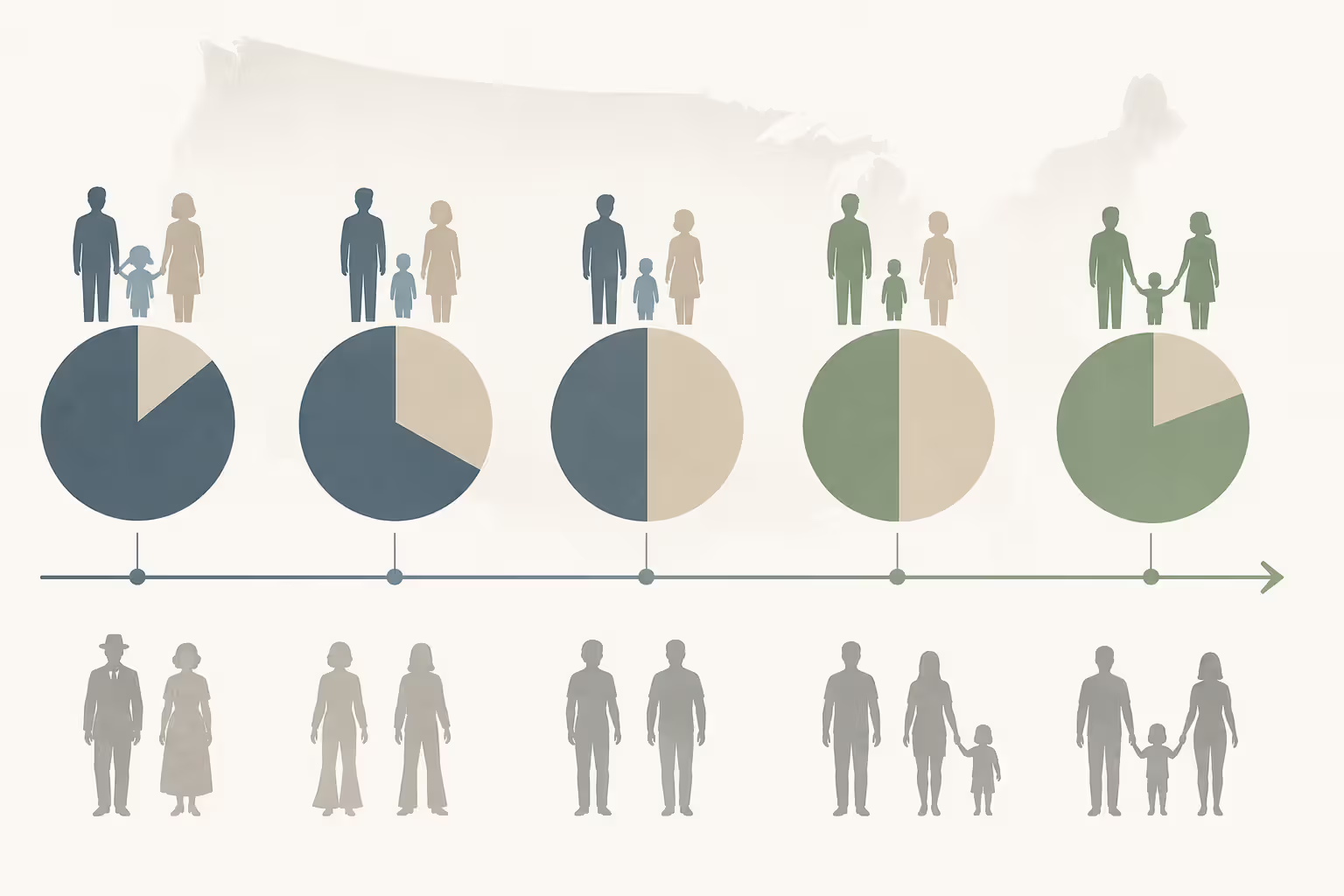
The shift is real and it's been happening for decades. In the 1980s, sole maternal custody was the overwhelming norm — mothers received physical custody in roughly 80 percent of cases. By the early 2000s, that number had dropped to around 65 percent. By the early 2020s, it was closer to 45 to 51 percent, with joint arrangements filling the gap.
Census Bureau data and state court reports both confirm this direction. Parental custody trends have moved steadily toward shared arrangements, driven by changes in family law, advocacy from fathers' rights groups, and a broader cultural shift in how we think about fathers' roles in parenting.
The before/after picture is stark. A father in 1985 seeking joint physical custody was fighting against a strong legal presumption that mothers were the natural primary caregivers. A father in 2026 making the same request in Arizona or Minnesota starts from a position of presumptive equality.
Custody statistics by gender still show a gap — but the trajectory is clear. Joint physical custody has gone from an exception to a standard option in most US family courts.
Author: Rebecca Thornfield;
Source: colorfulpagescoalition.org
Why Custody Statistics Do Not Tell the Full Story
Here's something that often gets lost: the vast majority of custody arrangements are never decided by a judge.
Estimates vary, but most family law researchers put the share of custody cases that go to a contested trial at somewhere between 5 and 10 percent. The rest are resolved through negotiation, mediation, or informal agreement — and those outcomes don't always make it into court data.
That means the statistics you read about custody data by parent are largely drawn from cases that were formally filed and documented. Informal arrangements — particularly common among unmarried parents — are systematically undercounted. A father who has his children every weekend and half the summer may never appear in any custody database.
The research consistently shows that children benefit from meaningful relationships with both parents. Courts that start from a position of presumptive shared parenting are aligning with the evidence, not just the politics.
— Warshak Richard
Parental custody trends in the data also don't capture how arrangements evolve over time. A custody order set when a child is three may look completely different by the time they're ten — parents modify agreements, children express preferences, and life circumstances change. The static snapshot in court records misses all of that.
Child custody outcomes are also shaped by who has better legal representation. Parents with attorneys consistently achieve more favorable arrangements than those who represent themselves — and access to attorneys is unequally distributed by income.
FAQ: Child Custody Statistics and Outcomes Questions Answered
The mother vs father custody statistics picture is more nuanced than most headlines suggest. Mothers still receive sole physical custody more often, but joint arrangements are now the norm in many states, and the gap has been narrowing for decades. If you're navigating a custody situation, the data can set expectations — but your specific circumstances, your state's laws, and what you actually ask for will matter far more than any national average.
Related Stories

Read more

Read more




The content on this website is provided for general informational and educational purposes only. It is intended to explain concepts related to parenting, child development, family caregiving, adoption, fostering, and child safety.
All information on this website, including articles, guides, and examples, is presented for general educational purposes. Outcomes may vary depending on individual family circumstances.
This website does not provide professional medical, psychological, or legal advice, and the information presented should not be used as a substitute for consultation with qualified pediatricians, child psychologists, or family counselors.
The website and its authors are not responsible for any errors or omissions, or for any outcomes resulting from decisions made based on the information provided on this website.