
Grandparents Raising Grandchildren Statistics in the US
Grandparents Raising Grandchildren Statistics in the US

Content
Content
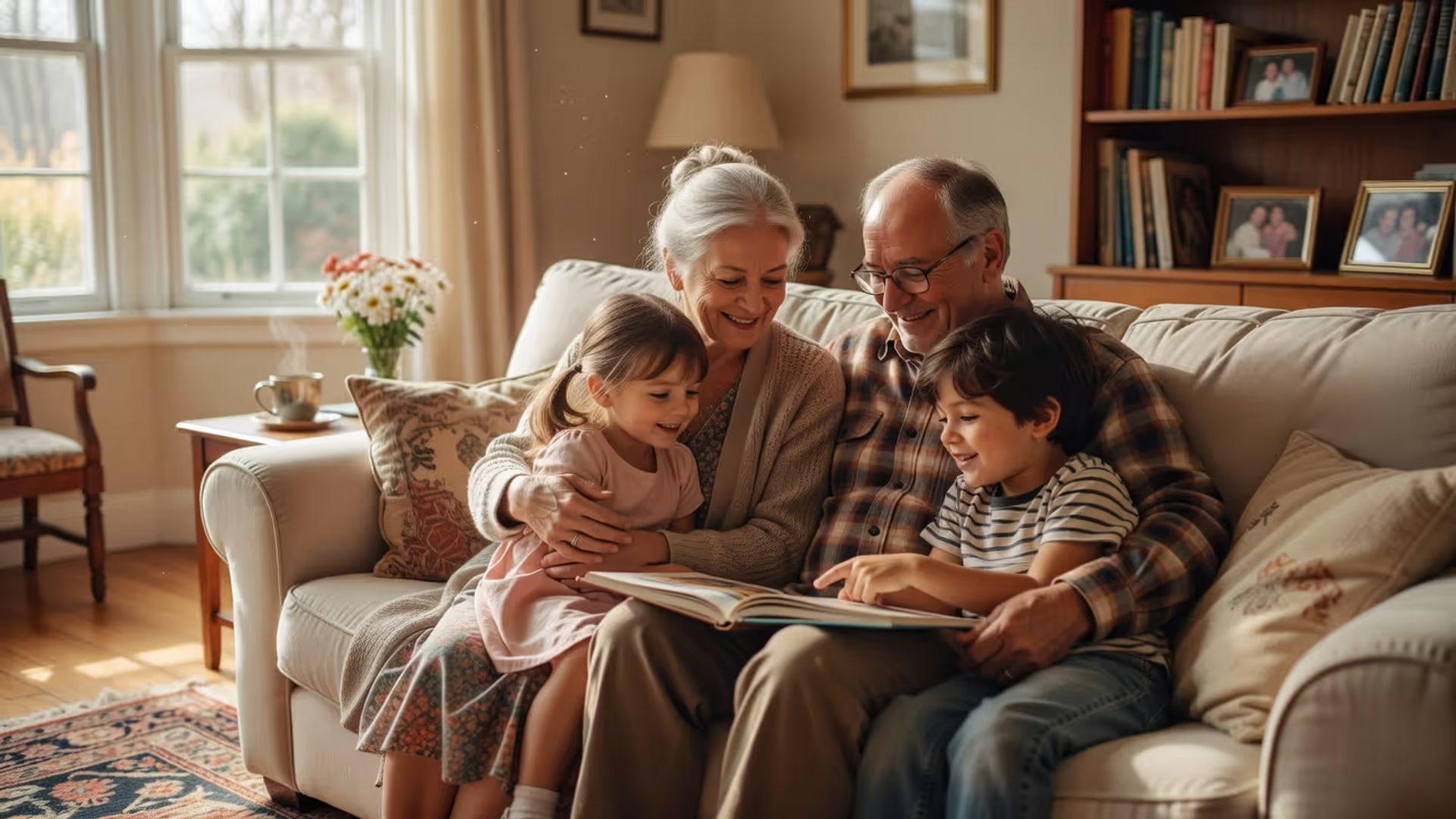
Every year, millions of American children wake up in a home run by a grandparent — not a parent. That's not a small footnote in US family data. It's a defining feature of how many families actually function. The grandparents raising grandchildren statistics paint a picture that's both striking and, for many families, deeply personal. Understanding the scale, the causes, and the support available isn't just useful — it's necessary for anyone living this reality or working alongside families who are.
How Many Grandparents Are Raising Grandchildren Today
The numbers are significant. According to US Census Bureau American Community Survey data, approximately 2.7 million grandparents are currently responsible for their grandchildren's basic needs in the United States. About 1.5 million of those grandparents are raising grandchildren without either parent present in the household.
That's not a niche situation. It's a nationwide pattern.
Author: Olivia Brackenridge;
Source: colorfulpagescoalition.org
Grandparents raising grandkids span every state, every income level, and every racial and ethnic background. But the burden isn't distributed evenly. Southern states and rural communities tend to carry a disproportionate share. States hit hardest by the opioid crisis — West Virginia, Kentucky, Ohio — show some of the highest rates of grandparent-headed households relative to their overall population.
Here's a regional breakdown based on the most recent American Community Survey estimates:
| US Region / State | Est. Grandchildren in Grandparent Care | % of Grandparents Raising Without Parents Present | Median Household Income (Kinship Caregivers) |
| California | ~220,000 | 48% | $52,400 |
| Texas | ~195,000 | 51% | $44,800 |
| Florida | ~160,000 | 53% | $41,200 |
| New York | ~130,000 | 50% | $48,600 |
| Georgia | ~105,000 | 58% | $38,900 |
| Ohio | ~98,000 | 61% | $36,700 |
| West Virginia | ~22,000 | 67% | $29,400 |
| Mississippi | ~38,000 | 65% | $28,800 |
| South (total) | ~810,000 | 59% | $35,600 |
| Midwest (total) | ~490,000 | 55% | $40,200 |
| Northeast (total) | ~370,000 | 50% | $47,100 |
| West (total) | ~510,000 | 49% | $50,300 |
Source: US Census Bureau, American Community Survey (ACS) 5-Year Estimates
One counterintuitive point: many people assume grandparent caregiving is concentrated in low-income communities. Income is a factor, but grandparents across middle-class households step in just as often — they just have fewer formal support structures in place because they don't always qualify for public assistance.
Why Grandparents Become Primary Caregivers
Parental substance abuse is the leading driver. Full stop. Research from the Annie E. Casey Foundation consistently shows that drug and alcohol addiction — particularly opioid dependency — accounts for roughly 30–40% of grandparent kinship placements. In states like West Virginia, that figure climbs even higher.
But substance abuse isn't the only cause. Grandparents as caregivers often step in because of:
- Parental incarceration — The US has the highest incarceration rate in the world, and children of incarcerated parents are among the most vulnerable populations. About 1 in 28 American children has a parent behind bars at some point in their childhood.
- Parental death — Overdose deaths, accidents, and illness all leave children without a primary caregiver. The COVID-19 pandemic alone orphaned or left without a primary caregiver an estimated 140,000+ US children between 2020 and 2022.
- Child abuse or neglect — When child protective services removes a child from a home, grandparents are often the first placement option.
- Mental illness or severe disability — Parents dealing with untreated psychiatric conditions may be unable to provide safe, consistent care.
- Teen parenthood — Younger parents sometimes rely on their own parents to take on primary caregiving roles, sometimes formally, often informally.
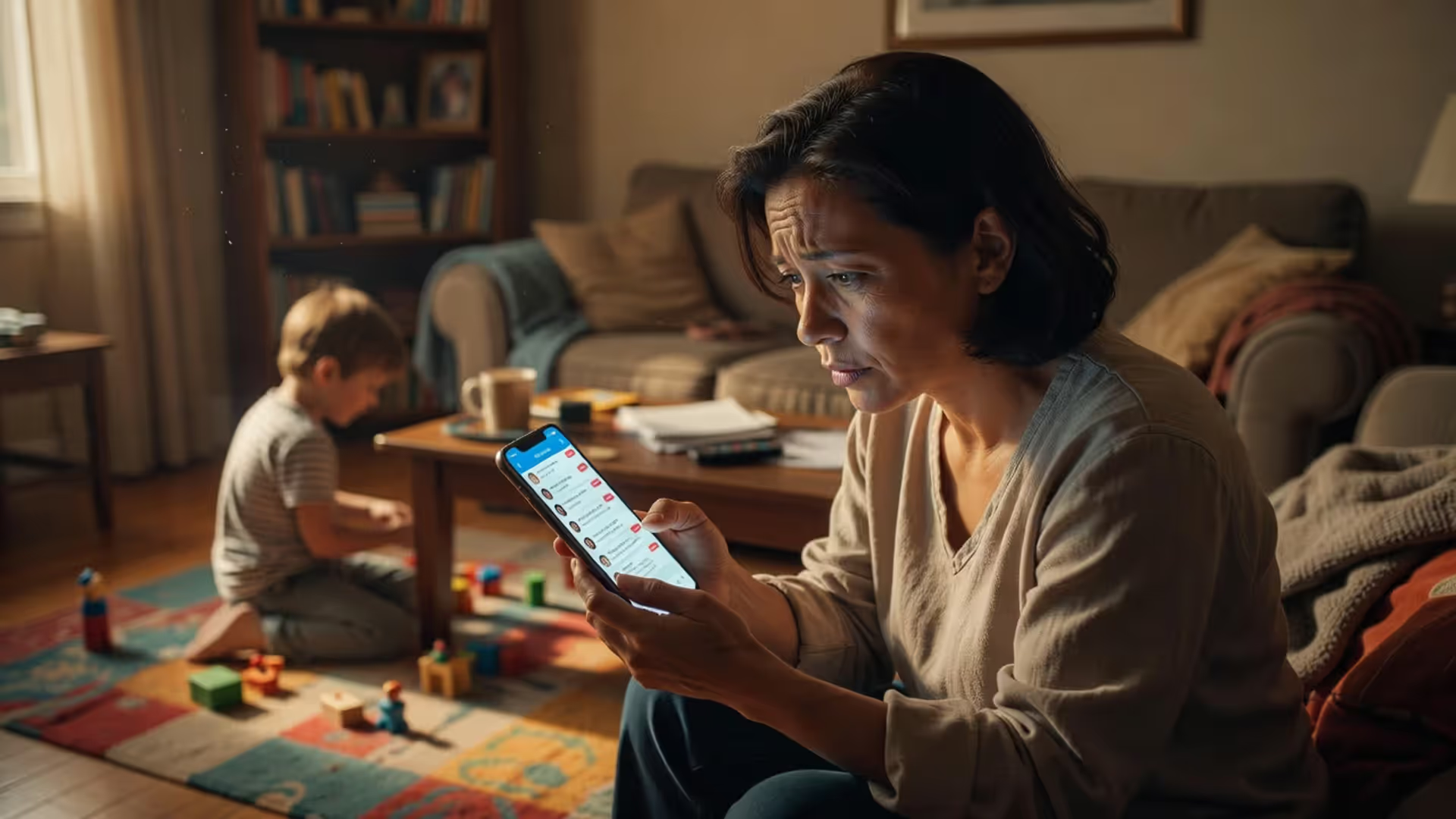
The pattern I see most often in the data is this: it's rarely one single cause. It's usually a combination — a parent struggling with addiction who also has mental health issues, or incarceration that follows years of instability. Grandparents don't get a warning. They just get a phone call.
Author: Olivia Brackenridge;
Source: colorfulpagescoalition.org
What Kinship Care Means for Families
Kinship care refers to the full-time care, nurturing, and protection of children by relatives or close family friends when parents can't do so. It's the formal term for what many families simply call "family stepping up."
Kinship care meaning goes beyond just living arrangements. It's a recognized child welfare placement category — and it includes both formal and informal arrangements.
Formal kinship care happens through the child welfare system. A court or child protective services agency places the child with a relative caregiver. The grandparent may receive foster care payments and is subject to licensing requirements and agency oversight.
Informal kinship care is far more common. A parent voluntarily places a child with grandparents, or grandparents simply take over without any court involvement. No agency oversight. Often no financial support. And — critically — limited legal authority to make decisions for the child.
This distinction matters enormously. An informal caregiver may struggle to enroll a grandchild in school, consent to medical treatment, or access public benefits — all because they lack legal standing. Kinship care explained properly always includes this formal vs. informal gap, because it's where most families run into problems.
Challenges Grandparents Face as Caregivers
Raising grandchildren isn't a retirement plan anyone signs up for. Grandparents as caregivers face a layered set of challenges that most people outside this situation don't fully appreciate.
Financial strain hits first and hardest. Many grandparent caregivers are on fixed incomes — Social Security, pensions, or part-time work. Adding a child (or two, or three) to that budget is a serious shock. The median household income for kinship caregivers nationally sits well below the median for all US households with children.
Health impacts are real and documented. Studies published in journals like The Gerontologist show that grandparent caregivers report higher rates of depression, anxiety, and physical health decline compared to non-caregiving grandparents of similar age. They're often managing their own chronic conditions while keeping up with a child's school schedule, appointments, and emotional needs.
Legal hurdles are a constant frustration. Without formal legal authority — guardianship or custody — grandparents raising grandkids can't always make routine decisions. Signing a permission slip for a school trip shouldn't require a court order. But sometimes it does.

Author: Olivia Brackenridge;
Source: colorfulpagescoalition.org
Emotional toll is the part that's hardest to quantify. Many grandparents grieve the loss of the retirement they expected. They love their grandchildren — deeply — but they also mourn the situation that brought everyone to this point. And they often feel isolated, because their peers aren't dealing with the same pressures.
A common mistake grandparents make early on: assuming the situation is temporary and not seeking legal or financial help right away. Waiting costs time, money, and sometimes custody.
Legal Options and Financial Support Available
The good news: there are real options. The bad news: navigating them takes effort, and the system isn't always easy to access.
Guardianship is the most common legal route. A grandparent petitions the family court to become the child's legal guardian. This grants authority to make medical and educational decisions without terminating parental rights. It's less permanent than adoption and typically easier to obtain.
Adoption permanently transfers parental rights to the grandparent. It's the strongest legal protection — and it ends the child's legal relationship with the birth parent. Some grandparents pursue this when reunification is clearly not going to happen.
Kinship foster care is available when the child has been placed through the child welfare system. Grandparents who become licensed foster parents can receive monthly foster care payments, access Medicaid for the child, and receive case management support.
For families outside the formal system, financial help includes:
- TANF (Temporary Assistance for Needy Families) — Grandparents can apply for child-only TANF grants on behalf of a grandchild, even if the grandparent's own income is too high to qualify for full benefits.
- Social Security — If a grandparent is receiving Social Security retirement or disability benefits, a grandchild they're raising may qualify for dependent benefits under certain conditions.
- State kinship support programs — Many states have their own kinship navigator programs that connect families with local resources, legal aid, and financial assistance. These vary significantly by state.
- Medicaid and CHIP — Most grandchildren in kinship care qualify for Medicaid or the Children's Health Insurance Program regardless of the grandparent's income.
The simpler option for most families is starting with a kinship navigator program — they help you figure out which benefits apply to your specific situation without requiring you to understand the entire system upfront.

Author: Olivia Brackenridge;
Source: colorfulpagescoalition.org
Why Grandparent Caregiving Matters for Children
The importance of grandparents in a child's life is well-documented — but when a grandparent becomes the primary caregiver, that importance becomes foundational.
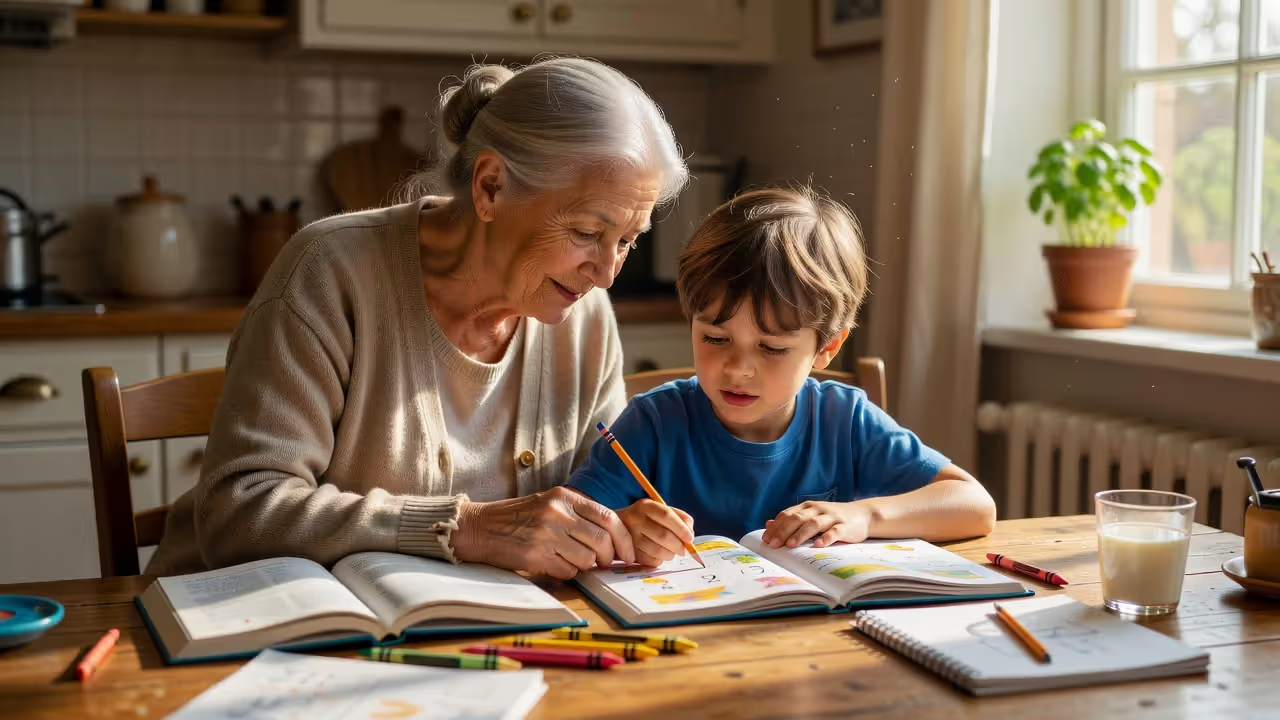
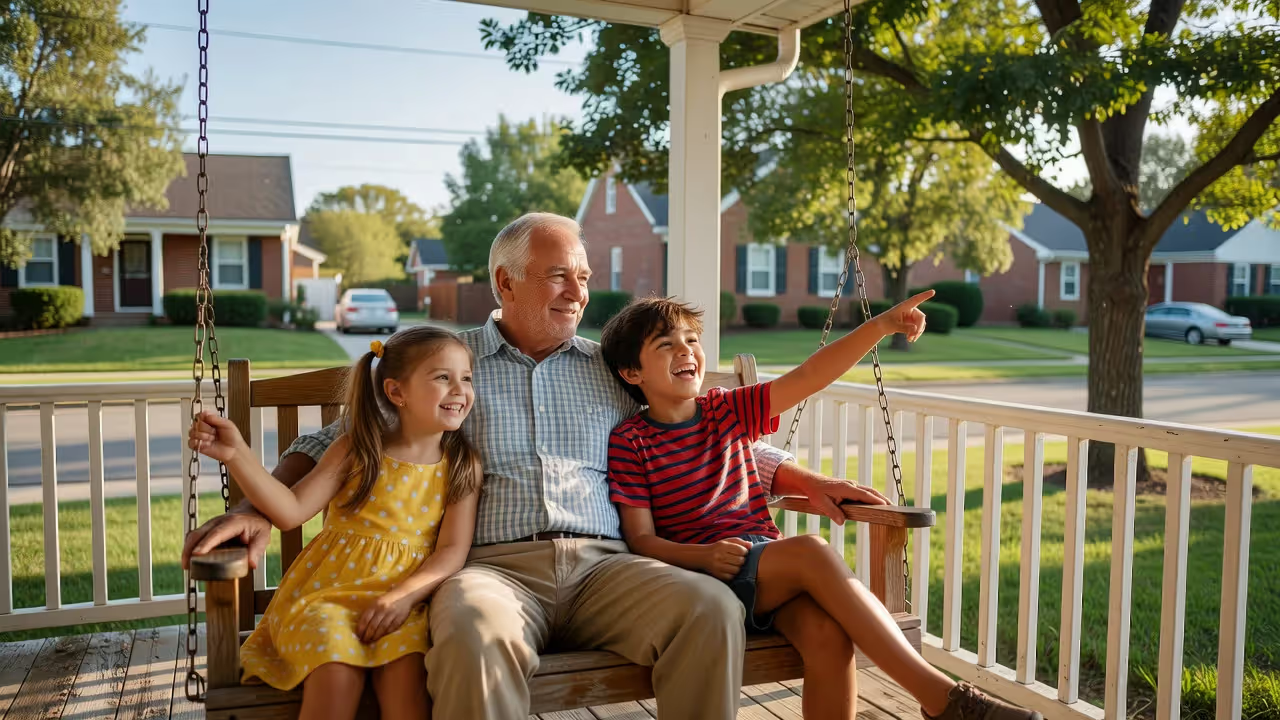
Children raised by grandparents typically show better outcomes than those placed with non-relative foster families. They maintain connections to their cultural identity, their family history, and — when possible — their siblings. That continuity matters enormously for emotional development.
Research from Generations United and child welfare agencies consistently shows that children in grandparent-headed households have lower rates of behavioral problems and higher rates of school stability compared to children in non-relative foster care. They're less likely to experience multiple placement changes, which are themselves a major risk factor for developmental delays and trauma responses.
Grandfamilies are a lifeline for children who would otherwise enter the foster care system. These grandparents step up out of love, often at great personal sacrifice, and they deserve the full support of our communities and our policies.
— Butts Donna
Grandparents raising grandchildren also provide something no stranger can replicate: a pre-existing relationship. The child already knows this person. Already trusts them. That foundation — even in a painful situation — gives children a fighting chance at stability.
FAQ: Grandparents Raising Grandchildren Questions Answered
Grandparent caregiving is one of the most underrecognized forms of family resilience in the United States. These families don't always show up in policy conversations, but they're holding together millions of children's lives — often without formal recognition, adequate financial support, or a clear path through the legal system. If you're in this situation, knowing your options is the first step. And if you work with families, recognizing the weight grandparents carry is the least you can do.
Related Stories
Read more
Read more



The content on this website is provided for general informational and educational purposes only. It is intended to explain concepts related to parenting, child development, family caregiving, adoption, fostering, and child safety.
All information on this website, including articles, guides, and examples, is presented for general educational purposes. Outcomes may vary depending on individual family circumstances.
This website does not provide professional medical, psychological, or legal advice, and the information presented should not be used as a substitute for consultation with qualified pediatricians, child psychologists, or family counselors.
The website and its authors are not responsible for any errors or omissions, or for any outcomes resulting from decisions made based on the information provided on this website.