

Characteristics of Adolescence Explained for Parents and Educators
Characteristics of Adolescence Explained for Parents and Educators

Adolescence doesn't arrive quietly. One day you're parenting a child who still wants bedtime stories, and the next you're navigating slammed doors, shifting moods, and a kid who suddenly has opinions about everything. That shift is real, and it's biological. Understanding the characteristics of adolescence — what drives them, when they appear, and what they mean — makes a genuine difference for parents, teachers, and the young people living through it.
What Is Adolescence
Adolescence is the developmental period between childhood and adulthood. Biologically, it begins with the onset of puberty — typically somewhere between ages 10 and 13 — and ends when the brain and body reach full maturity, usually in the early-to-mid twenties. Socially, the boundaries are less precise. Many cultures mark the end of adolescence with milestones like finishing school, entering the workforce, or legal adulthood at 18.
The World Health Organization defines adolescence as the period from ages 10 to 19. But researchers and clinicians often extend that window to 24, especially given what we now know about adolescent development and how long the prefrontal cortex takes to fully mature.
Don't confuse adolescence with puberty. Puberty is the physical process — hormones, growth spurts, reproductive maturation. Adolescence is the entire developmental phase that contains puberty but also includes cognitive, emotional, and social transformation. Puberty is a chapter. Adolescence is the whole book.
Stages of Adolescence and What Happens in Each
Breaking adolescence into stages helps because the experience of a 12-year-old looks almost nothing like that of a 19-year-old. Developmental psychologists typically divide it into three phases.
Early Adolescence (Ages 10–13)
This is when the physical changes start showing up — and often before the emotional readiness to handle them. Puberty begins for most kids in this window. Girls typically start earlier than boys, with breast development and the beginning of menstruation. Boys begin testicular growth and voice changes, though these often peak slightly later.
Socially, kids this age become intensely focused on peer acceptance. The opinion of a best friend can carry more weight than a parent's. That's not defiance — it's developmentally normal. The brain is literally rewiring to prioritize social belonging.
One common mistake adults make here: treating early adolescent behavior as rebellion when it's actually anxiety. A lot of the moodiness at 11 or 12 comes from confusion, not attitude.

Author: Olivia Brackenridge;
Source: colorfulpagescoalition.org
Middle Adolescence (Ages 14–17)
This stage is the one most people picture when they think of teenagers. Identity exploration is at its peak. Erik Erikson called this the crisis of identity versus role confusion — young people are actively testing who they are through friendships, appearance, beliefs, and sometimes risky behavior.
Physical development continues and usually completes for most girls during this period. Boys catch up and often experience their most rapid growth spurts between 14 and 16. Emotionally, middle adolescence is intense. Mood swings are common. So is heightened self-consciousness — the "imaginary audience" effect, where teens feel constantly watched and judged.
Risk-taking increases here, and that's not purely recklessness. The reward centers of the brain mature faster than the impulse-control systems. So a 16-year-old genuinely experiences more reward from a risky choice than an adult would — the brain is wired that way temporarily.
Late Adolescence (Ages 18–21)
Things tend to stabilize in late adolescence, though "stable" is relative. Identity becomes more settled. Decision-making improves. The gap between emotional reaction and thoughtful response starts to narrow. Most young people in this stage are navigating major transitions — college, work, independent living.
The social world shifts from peer groups to more selective, deeper relationships. Romantic partnerships become more serious. And for the first time, many late adolescents start to see their parents as people rather than just authority figures. That's actually a sign of healthy development.
Brain development is still finishing up, particularly in the prefrontal cortex. That matters for risk assessment, planning, and emotional regulation — which is why 19-year-olds can still make decisions that seem baffling to adults.
Physical Changes in Adolescence
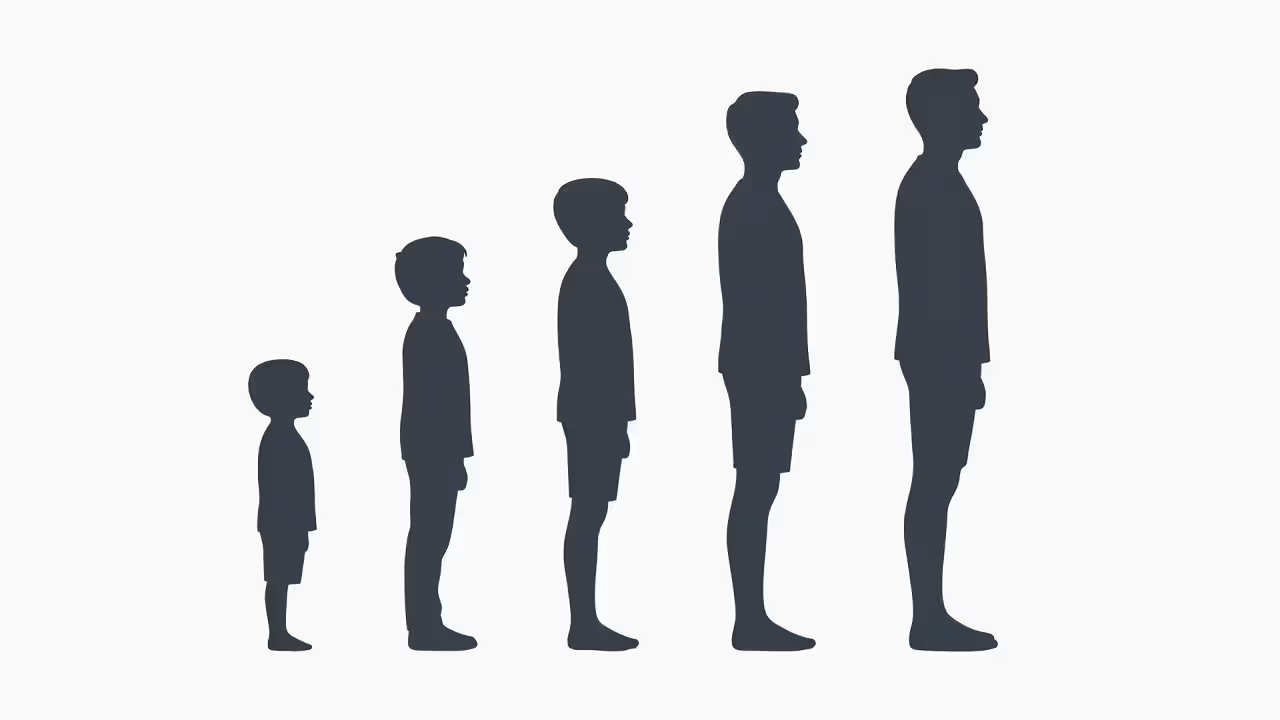
The physical features of adolescence are the most visible markers of the transition. They're also the ones that can cause the most anxiety — for the young person experiencing them and for the adults watching. Understanding what's typical and when it tends to happen reduces a lot of unnecessary worry.
Author: Olivia Brackenridge;
Source: colorfulpagescoalition.org
| Change Category | Males | Females | Typical Age Range |
| Height growth | Rapid growth spurt, up to 4 inches/year at peak | Earlier growth spurt, typically 2–3 inches/year | Males: 12–16; Females: 10–14 |
| Hormonal shifts | Testosterone surge; increased muscle mass | Estrogen and progesterone increase | Both: begins 10–13 |
| Body hair | Pubic, underarm, facial, and body hair develops | Pubic and underarm hair develops | Both: 11–15 |
| Skin changes | Increased oil production; acne common | Acne common; skin may become oilier | Both: 12–17 |
| Reproductive development | Testicular growth, sperm production begins | Breast development, menstruation begins | Males: 11–14; Females: 10–13 |
| Voice changes | Voice deepens significantly | Slight deepening of voice | Males: 13–15; Females: subtle, 11–14 |
| Body composition | Muscle mass increases; broader shoulders | Hips widen; increased body fat percentage | Both: throughout adolescence |
A counterintuitive point worth knowing: the timing of these changes varies enormously and still falls within the normal range. A girl who begins menstruating at 10 and one who starts at 15 can both be perfectly healthy. Comparing timelines between kids is rarely useful and often harmful.
Emotional and Behavioral Signs of Adolescence
The signs of adolescence aren't just physical. The emotional and behavioral shifts are just as significant — and often harder to interpret. What looks like a bad attitude might be identity formation. What looks like withdrawal might be the beginning of healthy independence.
Common emotional characteristics of adolescence include:
- Mood volatility. Emotions can shift quickly and intensely. This is partly hormonal and partly neurological — the emotional processing centers of the brain are highly active while regulatory systems are still developing.
- Identity exploration. Teens try on different versions of themselves. Hairstyles, friend groups, beliefs, and interests may shift frequently. That's the point.
- Heightened sensitivity to rejection. Social pain registers as intensely as physical pain in the adolescent brain. Being left out of a group chat can genuinely hurt in a measurable way.
- Risk-taking and boundary testing. Not all risk-taking is dangerous. Some of it is developmentally appropriate experimentation. The pattern I see most often is that adults conflate all risk-taking with delinquency, when most of it is just curiosity.
- Peer influence. Peer relationships become the primary social reference point during adolescence. This isn't a failure of parenting — it's biology doing its job.

Author: Olivia Brackenridge;
Source: colorfulpagescoalition.org
One thing adults often miss: emotional intensity in adolescence isn't dysfunction. It's development. The goal isn't to eliminate it — it's to help young people build the skills to navigate it.
Cognitive and Social Adolescent Development
The brain changes during adolescence are as dramatic as the physical ones — just less visible. And they explain a lot of behavior that otherwise seems irrational.
Abstract thinking develops significantly during this period. A 10-year-old thinks concretely. A 17-year-old can reason about hypotheticals, consider multiple perspectives, and engage with complex moral questions. That's a massive cognitive leap, and it happens gradually across adolescence.
The prefrontal cortex — responsible for planning, impulse control, and weighing consequences — is the last part of the brain to mature. It's not fully developed until around age 25. This creates a real mismatch: the capacity for complex thought arrives before the full capacity for impulse regulation.
Socially, adolescent development moves from family-centered to peer-centered and eventually toward more autonomous relationships. School performance during this period is closely tied to social belonging. A student who feels excluded or unsafe socially will almost always struggle academically, regardless of ability.

Author: Olivia Brackenridge;
Source: colorfulpagescoalition.org
One important comparison: a 13-year-old and a 20-year-old are both technically adolescents, but their cognitive profiles look dramatically different. Early adolescence is marked by egocentric thinking and concrete reasoning. Late adolescence shows much more nuanced, systems-level thinking. Treating them the same way doesn't work.
How Families and Schools Can Support Adolescent Growth
Supporting adolescent development doesn't mean having all the answers. It mostly means staying present, staying consistent, and not taking the hard parts personally.
For families, a few things make a measurable difference. Maintaining open communication — even when teens seem uninterested — keeps the door open for when they do need to talk. Setting clear, consistent expectations while allowing increasing autonomy mirrors what the developing brain actually needs. And recognizing the signs of adolescence as normal, rather than alarming, reduces conflict significantly.
Schools play a different but equally important role. Adolescents thrive in environments where they feel seen and where failure isn't permanent. Teachers who build genuine relationships with students — not just transactional ones — tend to see better outcomes across the board. Offering structured opportunities for identity exploration (electives, clubs, leadership roles) supports the developmental work teens are already doing internally.
One practical note: punitive-only discipline approaches tend to backfire during adolescence. The adolescent brain responds strongly to social shame, and public correction often increases defiance rather than reducing it. Restorative approaches — focused on understanding and repair — align better with how adolescent development actually works.
Both families and schools should know what the signs of adolescence look like that warrant professional attention: persistent withdrawal, significant changes in sleep or appetite, loss of interest in previously enjoyed activities, or expressions of hopelessness. These aren't typical adolescent moodiness — they're signals worth taking seriously.
The adolescent mind is essentially a mind of the moratorium, a psychosocial stage between childhood and adulthood, and between the morality learned by the child and the ethics to be developed by the adult.
— Erikson Erik
FAQ: Adolescence Questions Answered
Adolescence is one of the most studied and least understood phases of human life — partly because it looks so different from the outside than it feels from the inside. For parents and educators, the most useful thing isn't a perfect script. It's a solid understanding of what's actually happening developmentally, so that normal behavior doesn't get misread as crisis, and real warning signs don't get dismissed as "just a phase." The young people navigating this period need informed, steady adults in their corner. That starts with knowing what you're actually dealing with.
Related Stories

Read more

Read more




The content on this website is provided for general informational and educational purposes only. It is intended to explain concepts related to parenting, child development, family caregiving, adoption, fostering, and child safety.
All information on this website, including articles, guides, and examples, is presented for general educational purposes. Outcomes may vary depending on individual family circumstances.
This website does not provide professional medical, psychological, or legal advice, and the information presented should not be used as a substitute for consultation with qualified pediatricians, child psychologists, or family counselors.
The website and its authors are not responsible for any errors or omissions, or for any outcomes resulting from decisions made based on the information provided on this website.