

Why It Matters That Teens Are Reading Less
Why It Matters That Teens Are Reading Less?

Teen reading is in free fall. Not a slow drift — a measurable, documented collapse that's been building for two decades and accelerating fast. If you're a parent watching your kid scroll through short videos instead of cracking open a book, or a teacher noticing that fewer students finish assigned reading, you're not imagining it. The numbers back you up, and the consequences are bigger than most people realize.
How Much Teen Reading Has Declined in Recent Years
The data is hard to ignore. According to the American Time Use Survey, the share of Americans aged 15–24 who read for pleasure on a given day dropped from around 43% in 2004 to roughly 16% by the early 2020s. That's not a rounding error. That's a collapse.
National Center for Education Statistics data on reading scores tells a similar story. Adolescent literacy scores have stagnated or declined across multiple assessment cycles, with the largest drops concentrated among middle and high school students. The kids who read the least are also the ones falling furthest behind on standardized benchmarks.
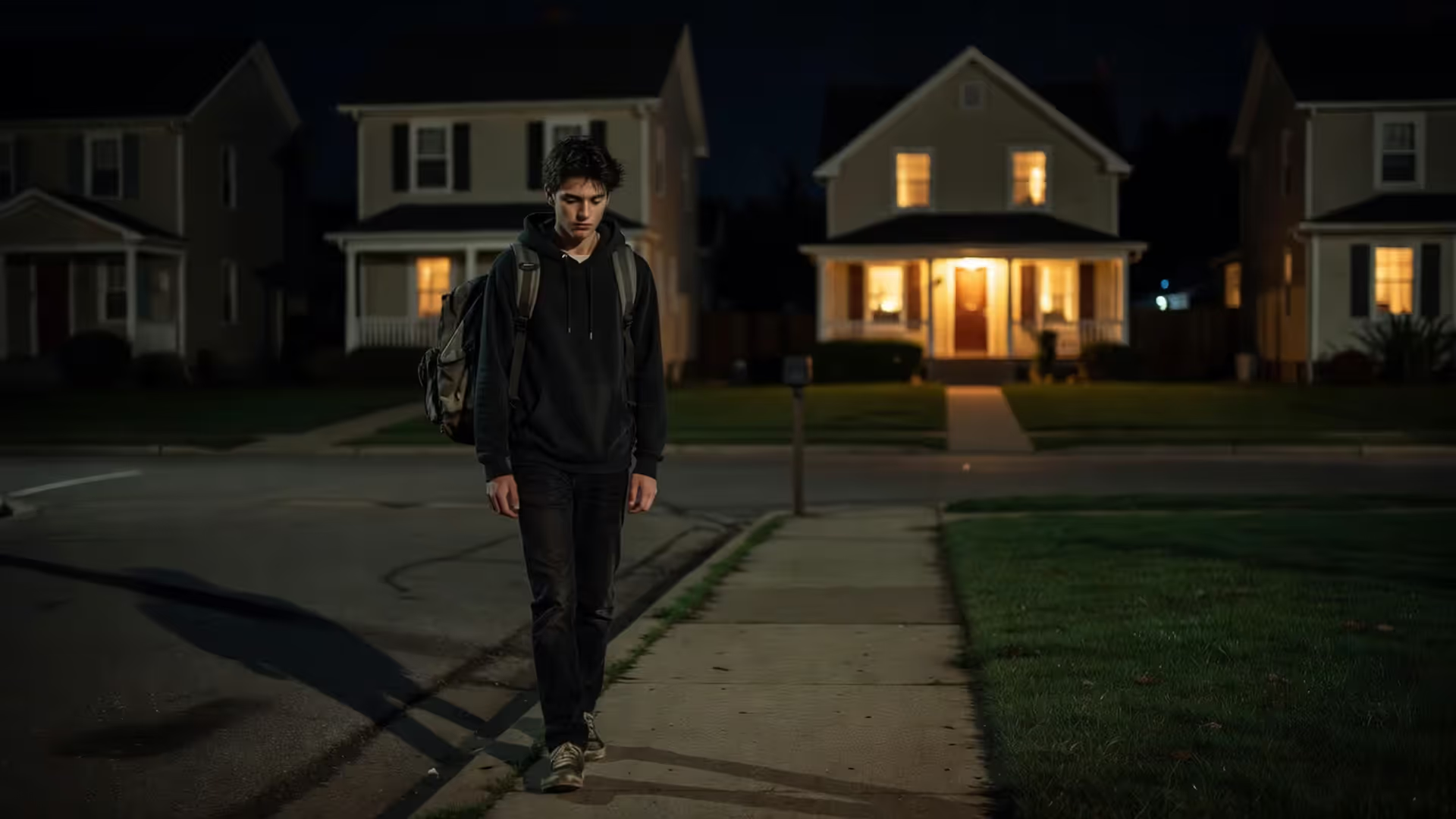
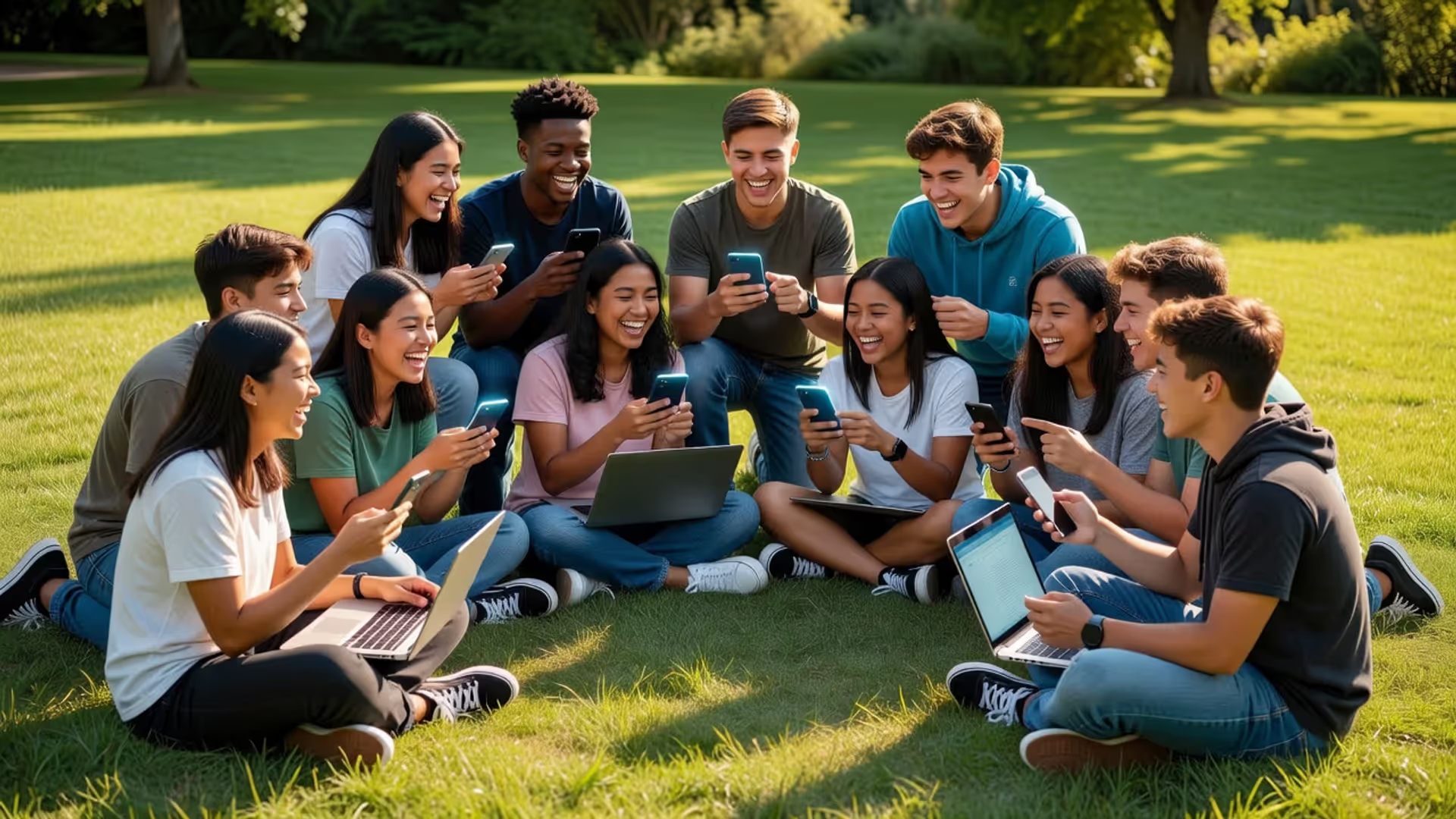
What makes this especially striking is the timeline. Declining teen reading didn't happen overnight. It's been a slow erosion — but the pace has picked up sharply since smartphones became standard gear for teenagers around 2012. By 2025, the average US teen spends over seven hours a day on screens. Books are competing for scraps of attention.
One counterintuitive point worth flagging: teens aren't reading less text overall. They're reading more text than ever — just in fragments. Captions, threads, comment sections, headlines. That kind of reading doesn't build the same cognitive muscles. It's the difference between jogging and walking to the fridge.
What Is Driving the Drop in Teen Reading Habits
Blaming teenagers is the easy move. It's also wrong. Teen reading habits don't change in a vacuum. They shift in response to the environment adults have built around them.
How Screens and Social Media Compete With Books
Social media platforms are engineered to win. They're designed by teams of engineers and behavioral scientists whose entire job is to make the app more compelling than whatever else you might do. A 16-year-old choosing between TikTok and a novel isn't making a fair choice — one side of that equation has a billion-dollar optimization engine behind it.
The dopamine loop is real. Short-form content delivers fast, frequent rewards. Books ask for something different: sustained attention, delayed payoff, and the willingness to sit with discomfort for a while before the story pays out. That's a harder sell when a 15-second video is one thumb-swipe away.

Author: Rebecca Thornfield;
Source: colorfulpagescoalition.org
When School Reading Feels Like a Chore
Here's a pattern I see most often: teens who might actually enjoy reading have been conditioned to associate it with obligation. Required reading lists, reading logs, comprehension quizzes — these tools aren't inherently bad, but they can strip the pleasure out of books entirely. When every chapter comes with a worksheet attached, reading stops feeling like exploration and starts feeling like homework.
And the books on many required lists haven't changed much in 30 years. That's a problem. A 15-year-old who might love a graphic novel, a thriller, or a contemporary YA story about someone who looks like them is instead handed a 19th-century text with no connection to their life. The message, unintentional as it is, becomes: books aren't for you.
What Teens Lose When They Stop Reading Regularly
The stakes here are higher than test scores.
Reading builds a kind of inner life that's hard to develop any other way. It trains the brain to hold complex narratives, track multiple characters, and follow extended arguments. These aren't abstract skills — they're the foundation for critical thinking, empathy, and the ability to navigate a complicated world.
Reading is the sole means by which we slip, involuntarily, often helplessly, into another's skin, another's voice, another's soul.
— Oates Joyce Carol
That capacity to inhabit another perspective is exactly what's at risk. Teens who don't read regularly tend to show lower scores on measures of empathy and social cognition. They're less practiced at imagining experiences outside their own. That matters not just for personal growth, but for how they'll function as citizens, coworkers, and partners.
There are neurological consequences, too. Deep reading — the kind sustained fiction or nonfiction demands — activates parts of the brain associated with language processing, visualization, and emotional regulation. When teens stop doing it regularly, those neural pathways get less exercise. It's not permanent damage, but it's a real loss that compounds over time.

Author: Rebecca Thornfield;
Source: colorfulpagescoalition.org
Benefits of Reading That Teens Miss Out On
Flip the picture around and the losses become gains — for teens who do read consistently.
Vocabulary is the most obvious one. Readers encounter words in context, which is the most effective way to actually learn them. A teen who reads 30 minutes a day is exposed to roughly a million words per year that non-readers simply don't encounter. That gap shows up in writing quality, verbal SAT scores, and the ability to communicate clearly in college and beyond.
Focus is another. Books train sustained attention in a way almost nothing else does. A teen who can sit with a novel for an hour has developed a skill that's becoming genuinely rare — and genuinely valuable.
How Reading Affects Academic Performance
The academic benefits of reading for teens are well-documented and consistent across studies. Regular readers outperform non-readers in reading comprehension, writing ability, and content-area subjects like history and science — because those subjects require the same skills books build: inference, synthesis, and following complex arguments.
The comparison is stark. A student who reads for pleasure 20 minutes a day typically scores in the 90th percentile on reading assessments. A student who reads less than five minutes a day tends to score in the 50th percentile or below. That's not a small difference. It's the gap between struggling and thriving academically.
But here's the counterintuitive part: forcing more assigned reading doesn't automatically close this gap. What predicts academic benefit most strongly is voluntary reading — the kind kids choose for themselves. That's the reading that builds intrinsic motivation and genuine skill.
What Parents and Educators Can Do to Encourage Teen Reading
Getting teens to read isn't about rules. It's about conditions.
Start with choice. Teens are far more likely to finish a book they picked themselves than one assigned to them. Let them choose the genre, the length, the format. A reluctant reader who devours graphic novels is still a reader. Don't gatekeep what counts.
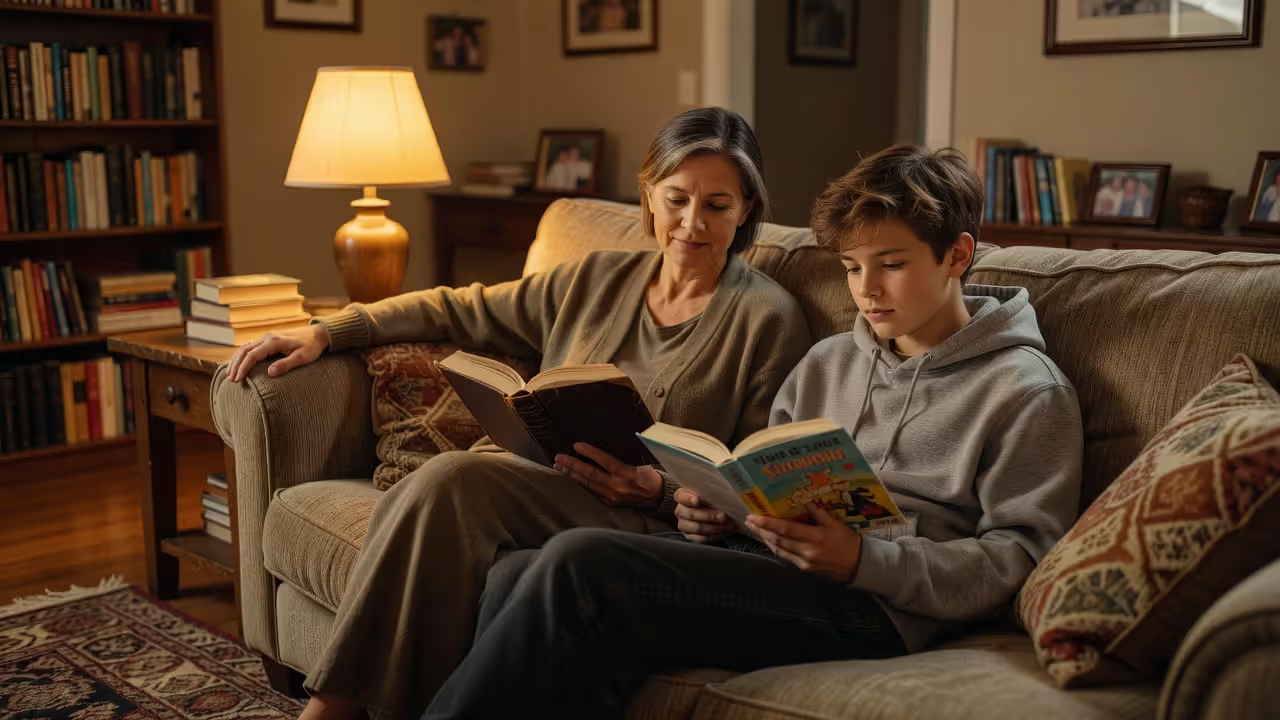
Model the behavior. If your teen never sees an adult in their life reading for pleasure, books become something school does to you, not something people actually do. Even 15 minutes of visible reading in the evening sends a signal.
Author: Rebecca Thornfield;
Source: colorfulpagescoalition.org
Reduce friction. Keep books visible and accessible. A stack on the kitchen table beats a shelf in a back bedroom. Audiobooks in the car count. E-readers with a library app lower the cost barrier to zero. The easier it is to start reading, the more likely it happens.
For educators specifically: independent reading time that's genuinely free — no logs, no quizzes, no accountability forms — has shown real results in studies on encouraging teen reading. It communicates trust and respects autonomy. Both matter enormously to teenagers.
One common mistake: parents who reward reading with screen time. The implicit message is that reading is a chore to be endured, and screens are the real prize. Try pairing reading with something neutral or pleasant instead — a comfortable spot, a snack, no pressure to discuss what they read.
Does the Format Matter — Print vs. Digital vs. Audiobooks
This is a real debate, and the answer is: it depends on the goal.
Print books consistently show the best outcomes for comprehension and retention in research studies. There's something about the physical experience — page position, tactile feedback, no notifications — that supports deeper processing. But print isn't always accessible or appealing, especially for reluctant readers.
E-readers are a solid middle ground. They're convenient, adjustable, and can carry an entire library. Comprehension is slightly lower than print on average, but the gap is small and the accessibility advantage is significant. For teens who travel, have visual processing differences, or just prefer screens, e-readers can be the difference between reading and not reading at all.
Audiobooks are more contested. Some educators argue they don't build the same decoding skills as print. That's fair for younger children still learning to read. For teens, the evidence is more nuanced — audiobooks support vocabulary growth, exposure to narrative structure, and a genuine love of stories. For a teen who "hates reading," an audiobook might be the entry point that changes everything.
| Format | Comprehension Retention | Engagement Level | Accessibility | Cost | Suitability for Reluctant Readers |
| Print Books | High | High (distraction-free) | Moderate (requires physical copy) | Varies ($0 with library) | Moderate |
| E-Readers | Moderate–High | Moderate (some distraction risk) | High (portable, adjustable text) | Low (library apps free) | High |
| Audiobooks | Moderate | High (passive listening possible) | Very High (multitask-friendly) | Low–Free (library apps) | Very High |
The simpler take: any format that gets a teen reading — or listening — is better than none. Don't let format debates become another barrier.
FAQ: Teen Reading Habits and Decline Questions Answered
The pattern is clear, and so is the path forward. Declining teen reading isn't inevitable, and it's not a teenager problem — it's an environment problem. Change the conditions, offer real choices, and most teens will find their way back to books. The stakes are high enough that it's worth the effort.
Related Stories

Read more

Read more


The content on this website is provided for general informational and educational purposes only. It is intended to explain concepts related to parenting, child development, family caregiving, adoption, fostering, and child safety.
All information on this website, including articles, guides, and examples, is presented for general educational purposes. Outcomes may vary depending on individual family circumstances.
This website does not provide professional medical, psychological, or legal advice, and the information presented should not be used as a substitute for consultation with qualified pediatricians, child psychologists, or family counselors.
The website and its authors are not responsible for any errors or omissions, or for any outcomes resulting from decisions made based on the information provided on this website.