
How Many Hours Do Teens Spend on Social Media Each Day
How Many Hours Do Teens Spend on Social Media Each Day?

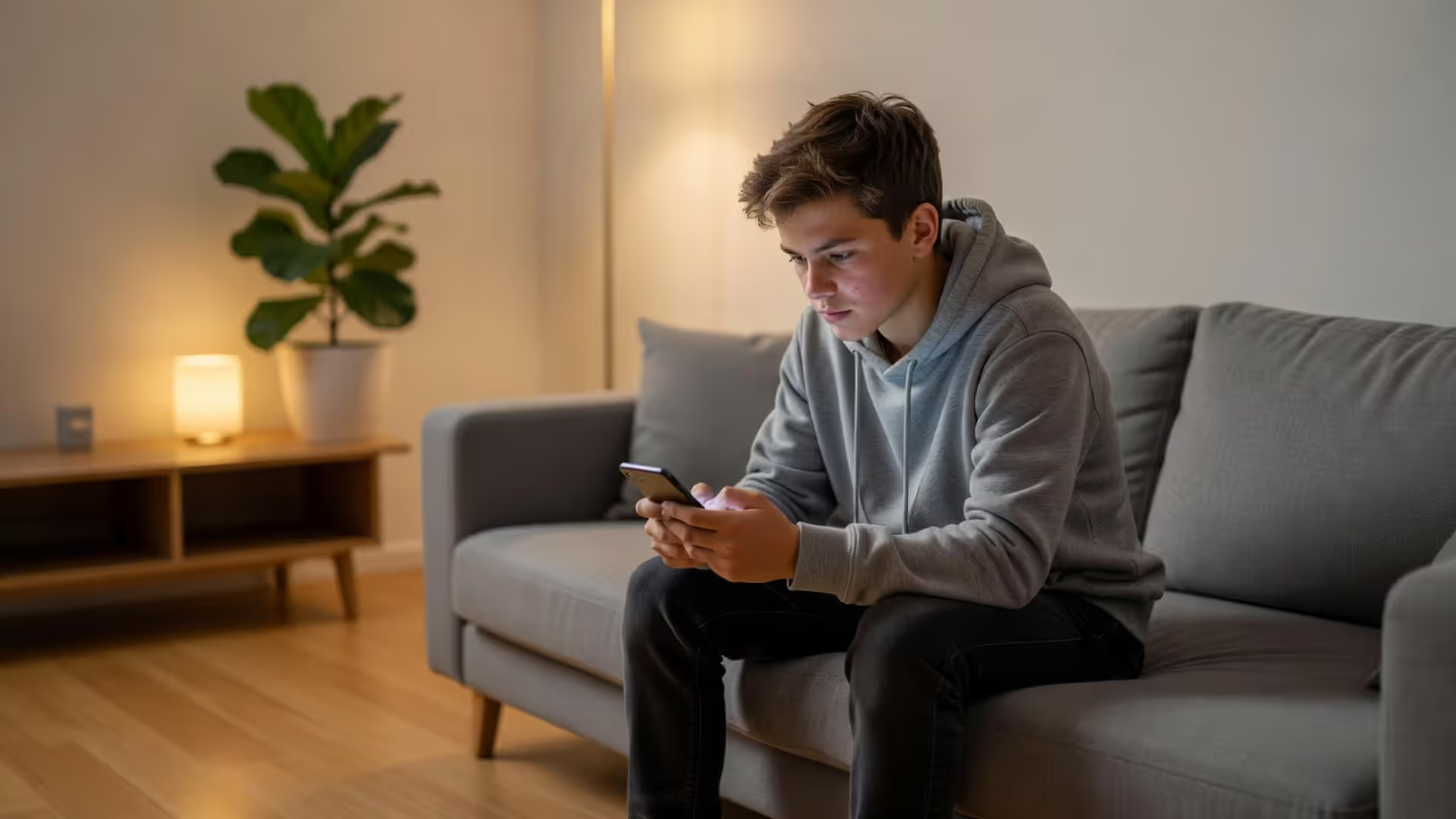
Teenagers are glued to their phones. That's not a hot take — it's a measurable reality backed by years of research. But the actual numbers might surprise you, whether you're a parent trying to set boundaries, a researcher tracking trends, or just someone curious about how many hours do teens spend on social media every single day. The answer isn't simple, and it shifts depending on age, gender, platform, and a handful of behavioral factors that most people overlook.
What the Latest Research Says About Teen Social Media Usage
The data on teen social media usage has grown sharper over the past few years, and the picture it paints is striking. According to Pew Research Center, roughly 46% of US teenagers say they use the internet "almost constantly" — a figure that's climbed significantly from previous years. Common Sense Media's 2023 report found that teens between 13 and 18 spend an average of 4.8 hours per day on social media alone, separate from other screen activities like gaming or streaming.
That's not total screen time. That's just social media.
Teenagers and social media have become nearly inseparable in the American context. The same Common Sense report noted that social media now accounts for the largest single category of teen screen time, overtaking video content consumption for the first time. And the trend line points upward — usage in 2025 was higher than in 2022, with no meaningful plateau in sight.
The rise in screen time among teenagers, particularly on social media platforms, correlates with measurable shifts in mental health indicators. The sheer volume of daily exposure is unlike anything previous generations experienced during adolescence.
— Twenge Jean
One counterintuitive finding: teens themselves often underestimate how much time they spend online. When researchers compare self-reported usage against device-tracked data, the gap can be 30–40%. So when a teenager says "maybe an hour or two," the real number is frequently much higher.
Average Screen Time for Teens Broken Down by Age Group
Not all teenagers are the same, and screen time for teenagers varies considerably across the adolescent years. A 13-year-old's habits look very different from a 17-year-old's — partly because of platform preferences, partly because of social dynamics, and partly because older teens simply have more unsupervised time.
Here's a breakdown of estimated daily social media time by age group, based on data from Common Sense Media (2023) and Pew Research Center (2024):
| Age Group | Est. Daily Social Media Time | Most-Used Platform | Source / Year |
| 13–14 | 3.5 hours | YouTube / TikTok | Common Sense Media, 2023 |
| 15–16 | 4.8 hours | TikTok / Instagram | Pew Research Center, 2024 |
| 17–19 | 5.5 hours | Instagram / Snapchat | Common Sense Media, 2023 |
The average screen time for teens across all age groups sits around 4.8 hours per day on social platforms specifically — but that average masks a wide range. Some teens clock under two hours; others exceed eight.
Author: Madeline Ashcroft;
Source: colorfulpagescoalition.org
How Usage Differs Between Younger and Older Teenagers
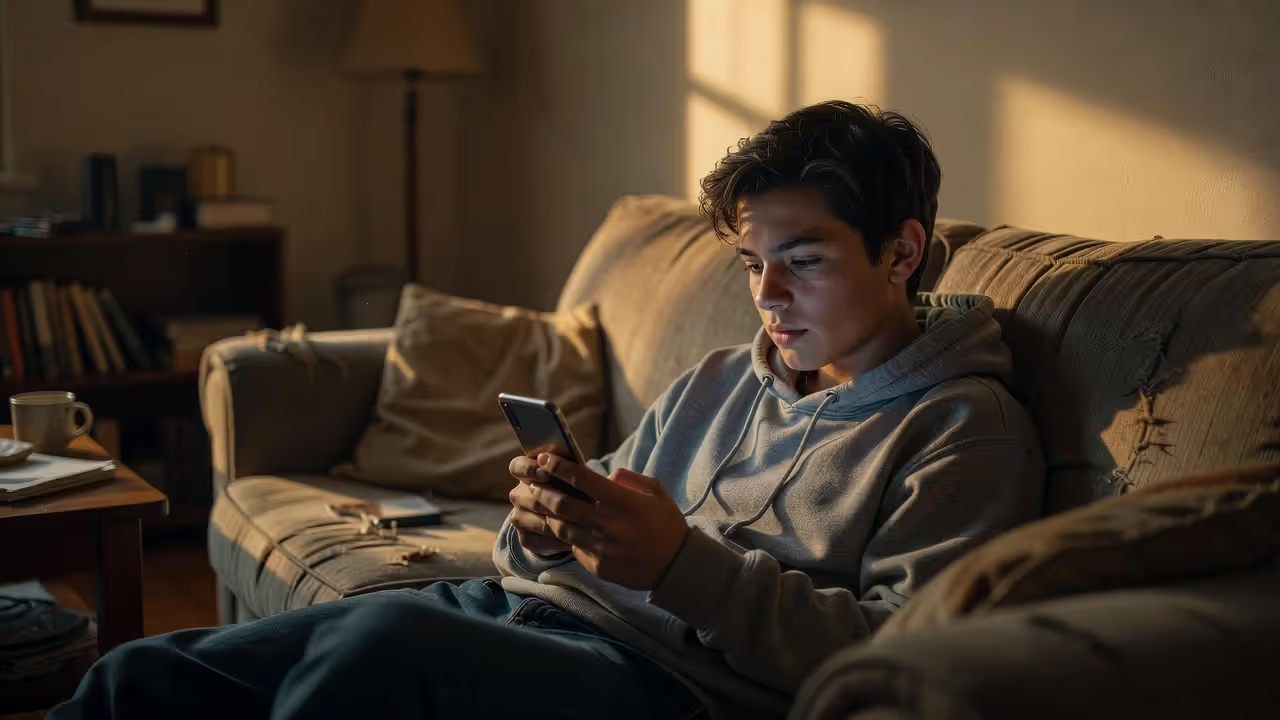
Younger teens (13–14) tend to have more parental oversight, which naturally caps their usage. They're also more likely to be on YouTube — a platform that blends entertainment with educational content and is often more acceptable to parents. But by 15–16, the social comparison engine kicks in hard. Instagram and TikTok dominate, and the average daily time jumps by more than an hour.
By 17–19, teens are approaching adult-level autonomy. Many have their own devices with no content filters, later bedtimes, and a social life that increasingly plays out online. Snapchat becomes a primary communication tool at this stage, not just a content platform. The jump from 13 to 19 in terms of daily usage — roughly two full extra hours — is one of the more consistent findings across research sources.
Which Platforms Take Up the Most Time
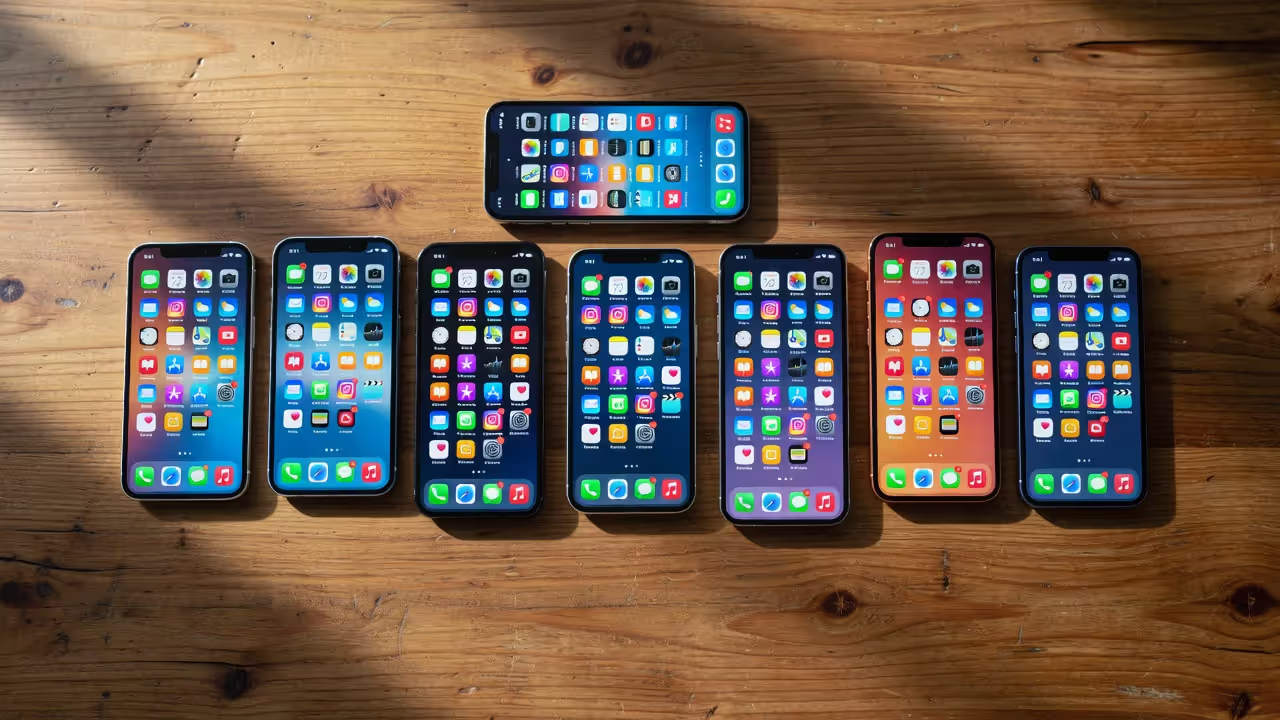
If you want to understand the social media habits of teens, you have to look at where the time actually goes. Platform by platform.
TikTok leads in raw time consumption. Its algorithm is exceptionally good at keeping users engaged — the average TikTok session for a teen runs longer than any other platform, with some estimates putting daily TikTok use at 90+ minutes among heavy users. The short-video format creates a loop that's genuinely hard to break. You finish one video and the next one is already playing.
YouTube comes in close behind, though it occupies a slightly different role. Teens use YouTube for longer-form content — tutorials, gaming commentary, music — which means individual sessions are longer but less frequent throughout the day.
Instagram ranks third in time spent on social media by teens, but it's the platform where social pressure is most concentrated. The combination of Stories, Reels, and direct messaging keeps users cycling back repeatedly. A teen might open Instagram a dozen times a day for short bursts rather than one long session.
Snapchat functions more like a messaging app with social features, and its usage is often tied to maintaining streaks — a behavioral mechanic specifically designed to drive daily return visits. And X (formerly Twitter) sees lower teen engagement overall, though it spikes among older teens interested in news, sports, or cultural commentary.
Author: Madeline Ashcroft;
Source: colorfulpagescoalition.org
How Teen Social Media Habits Vary by Gender
The gender split in teen social media usage is one of the most consistent findings across research. And it's not subtle.
Teen girls spend more time on social media than teen boys — on average, about 30–60 minutes more per day depending on the study. More telling is where they spend that time. Girls skew heavily toward Instagram and TikTok, platforms built around visual content, social comparison, and peer validation. Boys lean toward YouTube and gaming-adjacent platforms like Discord and Twitch.
Pew Research data shows that 69% of teen girls say they use TikTok, compared to 56% of teen boys. On Instagram, the gap is similar. These aren't small differences — they reflect meaningfully different online experiences.
The pattern I see most often in research is that girls' usage is more socially motivated (staying connected, monitoring peer activity, seeking validation), while boys' usage tends to be more entertainment-driven. That distinction matters because socially motivated usage is more likely to trigger anxiety and comparison effects.
It's also worth noting that teen girls are more likely to report feeling "addicted" to social media — not because they have less self-control, but because the platforms they use are specifically optimized for the kind of engagement those platforms generate.
How Teen Screen Time Compares to Recommended Limits
Here's where the numbers get uncomfortable.
The American Academy of Pediatrics has published screen time guidelines that recommend consistent limits on media use for children and adolescents, with an emphasis on quality over quantity and the importance of maintaining sleep, physical activity, and face-to-face interaction. For teens, the AAP doesn't set a hard daily hour cap the way it does for younger children, but it emphasizes that media use shouldn't displace sleep or other health-promoting behaviors.
Sleep alone tells the story. The AAP recommends 8–10 hours of sleep for teens. Research consistently shows that teens who spend 5+ hours on social media daily average significantly less sleep than those who spend under 2 hours. The displacement effect is real and measurable.
By any reasonable reading of those guidelines, most US teens are using social media well beyond what supports healthy development. An average of 4.8 hours per day of social media — on top of school, homework, and other screen time — doesn't leave much room for the offline activities that the AAP and other health bodies consistently recommend.

Author: Madeline Ashcroft;
Source: colorfulpagescoalition.org
Factors That Drive Higher Time Spent on Social Media by Teens
Time spent on social media by teens doesn't just happen. It's engineered.
Platform design is the biggest driver. Infinite scroll, autoplay video, notification systems, and streak mechanics are all built to maximize session length and return frequency. These aren't neutral features — they're behavioral tools developed by teams of engineers and psychologists. Teenagers and social media interact within a system deliberately designed to win against willpower.
After-school hours are peak usage time. Research shows the biggest spike in teen social media activity happens between 3 PM and 9 PM, when school structure disappears and boredom or downtime kicks in. That six-hour window is when most of the daily average accumulates.
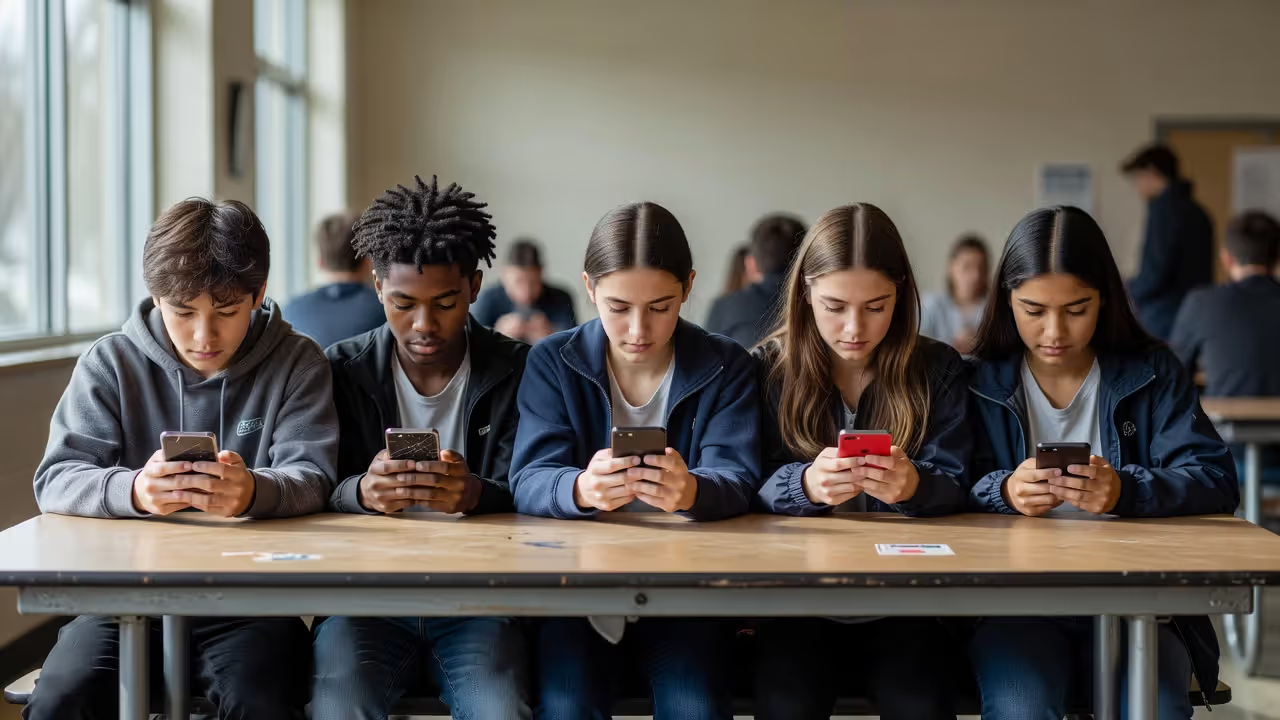
Peer pressure plays a role that often gets underestimated. If your friend group communicates primarily through Snapchat streaks or Instagram DMs, opting out isn't really an option — it means social isolation. That's a powerful driver for teenagers, whose social belonging needs are at their developmental peak.
Notifications are a constant pull. The average teen receives dozens of social media notifications per day. Each one is a designed interruption, and each interruption tends to lead to a session rather than a quick glance. Turning off notifications is one of the most effective interventions, but few teens do it voluntarily.
Boredom is underrated as a driver. Teens reach for their phones not always because they want to be on social media, but because it's the default response to any unstructured moment. That automaticity is part of what makes usage so hard to track and regulate.
Author: Madeline Ashcroft;
Source: colorfulpagescoalition.org
FAQ: Teen Social Media Screen Time Questions Answered
The numbers here are hard to ignore. Most US teens are spending the equivalent of a part-time job's worth of hours on social media every week — and that time is being shaped by platform mechanics, peer dynamics, and developmental psychology all working in the same direction. Understanding the patterns is the first step, whether you're a parent, a researcher, or a teenager trying to make sense of your own habits. The data doesn't tell you what to do with it. But it does make the scale of the thing impossible to miss.
Related Stories

Read more

Read more



The content on this website is provided for general informational and educational purposes only. It is intended to explain concepts related to parenting, child development, family caregiving, adoption, fostering, and child safety.
All information on this website, including articles, guides, and examples, is presented for general educational purposes. Outcomes may vary depending on individual family circumstances.
This website does not provide professional medical, psychological, or legal advice, and the information presented should not be used as a substitute for consultation with qualified pediatricians, child psychologists, or family counselors.
The website and its authors are not responsible for any errors or omissions, or for any outcomes resulting from decisions made based on the information provided on this website.