
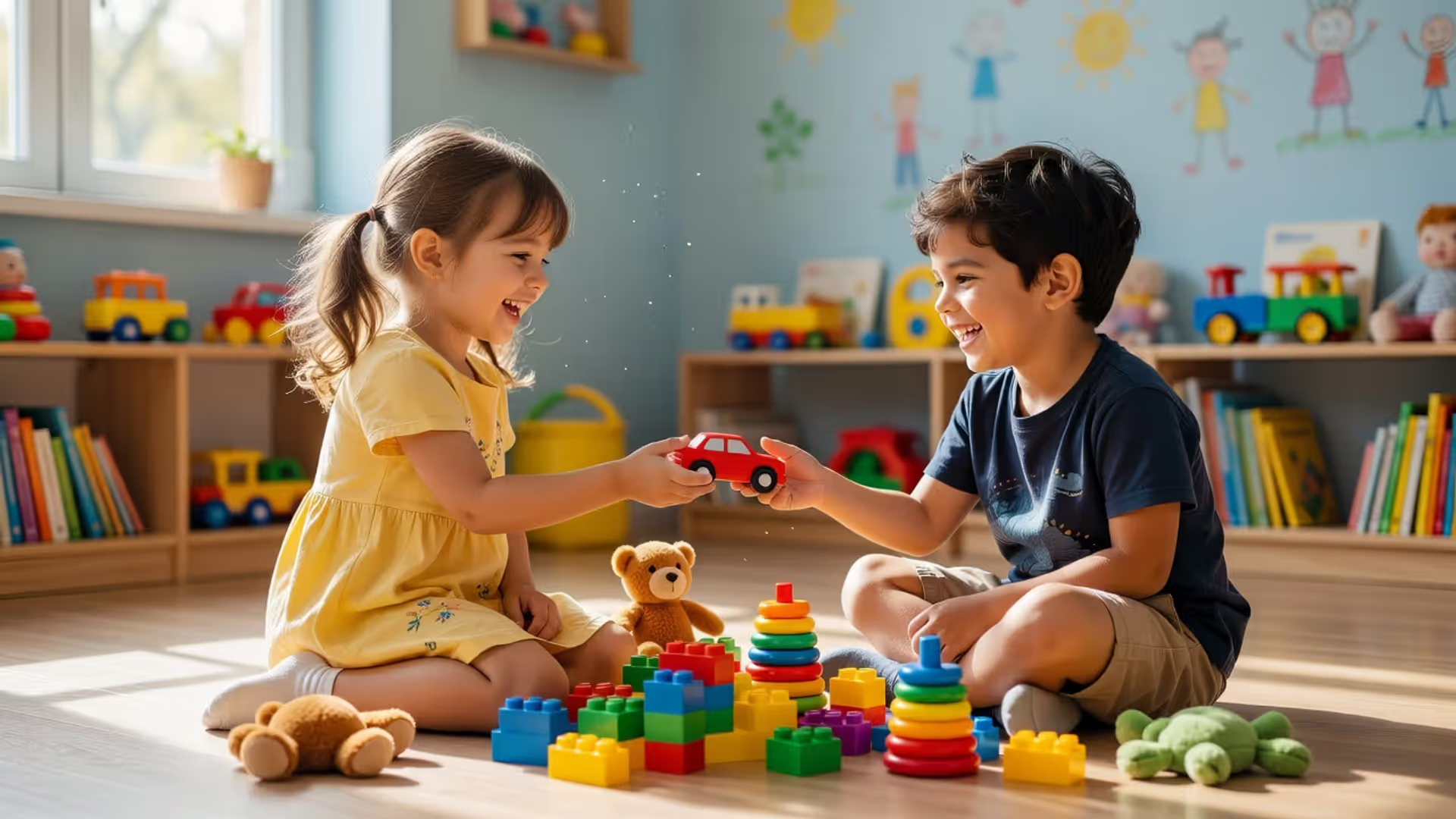
How to Build Sharing Skills in Young Children
How to Build Sharing Skills in Young Children?

Children don't come wired to share. That's not a parenting failure — it's just biology and brain development doing their thing. Most parents hit the same wall: a toddler clutches a toy like it's life-or-death, a playdate turns tense, and suddenly you're wondering if you're raising a tiny tyrant. You're not. Building sharing skills takes time, the right approach, and a realistic understanding of what kids are actually capable of at different ages.
Why Sharing Is Hard for Toddlers and Young Kids
Before you can teach something, it helps to understand why it's difficult. Sharing isn't instinctive. For young children, it runs completely against the grain of how their brains work at this stage.
That shift — from "I want" to "you want too" — doesn't happen overnight. It's a slow developmental process, and pushing it too hard, too fast, tends to backfire.
The Role of Ownership and Egocentric Thinking
Around ages 2–4, children are deeply egocentric. Not selfish in a moral sense — just neurologically wired to see the world from their own perspective. They haven't yet developed the cognitive flexibility to fully grasp that another child feels the same way about a toy that they do.
There's also an ownership piece. When a toddler says "mine," they mean it in a very literal, almost physical sense. Research in developmental psychology shows that children as young as 2 can form strong object attachments and recognize ownership boundaries. Taking a toy away — even briefly — can feel like a genuine loss to them.
Egocentric thinking in early childhood is a well-documented phase, not a character flaw. Understanding this reframes the whole challenge. You're not fighting bad behavior. You're working with a brain that's still building the circuitry for empathy and perspective-taking.
The roots of sharing are not in selflessness but in the gradual understanding that others have needs too.
— Cohen Lawrence J.
At What Age Do Children Naturally Start to Share
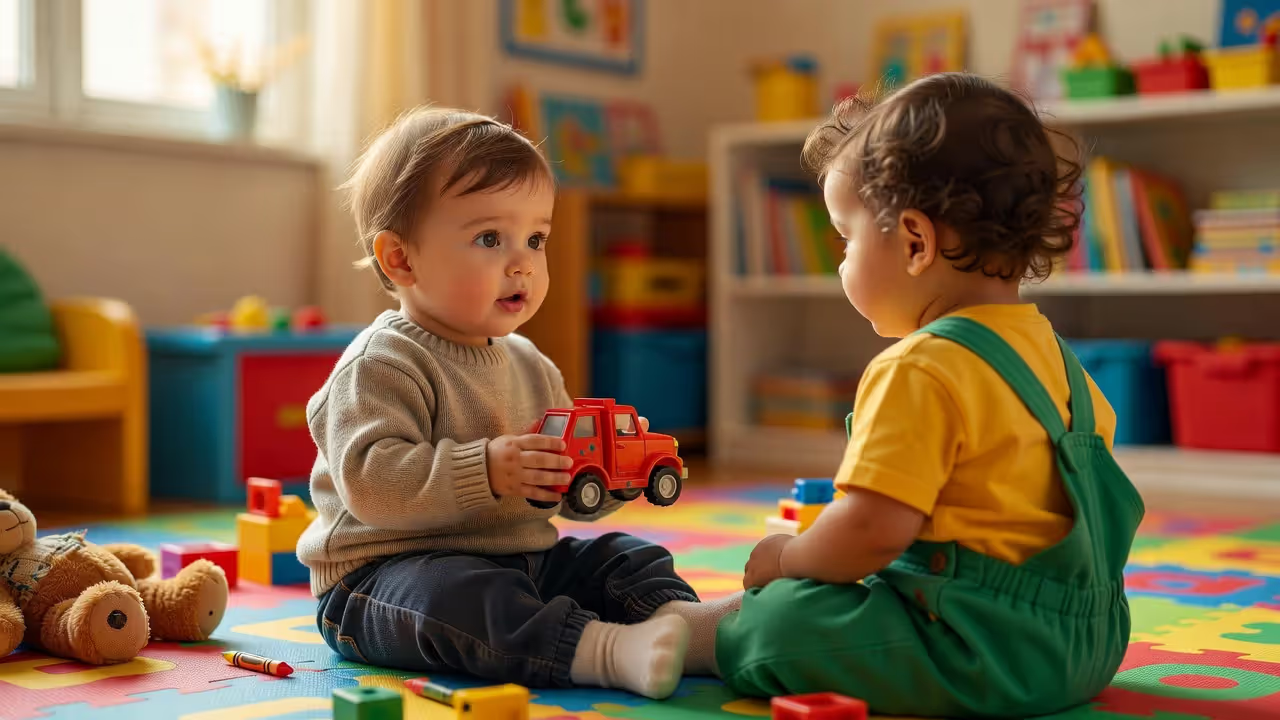
Most children begin showing genuine, spontaneous sharing behavior somewhere between ages 3 and 4. Before that, what looks like sharing is usually compliance — they hand something over because an adult told them to, not because they wanted to.
By age 4–5, kids start to share more naturally with familiar peers, especially when they feel secure and the relationship feels reciprocal. True cooperative sharing — where a child voluntarily offers something without prompting — typically becomes consistent around age 6 or 7.
That timeline varies. Kids with siblings often get more practice earlier. Children in group daycare settings may develop turn-taking habits sooner. But the underlying cognitive readiness doesn't dramatically accelerate just because of environment.
Author: Rebecca Thornfield;
Source: colorfulpagescoalition.org
How to Teach Sharing Without Forcing It
Forced sharing is one of the most common mistakes — and it's also one of the least effective strategies. Grabbing a toy from one child and handing it to another doesn't teach sharing. It teaches that bigger people take things.
So what actually works?
Start with turn-taking, not sharing. Telling a 3-year-old to "share" is vague. Saying "you get it for 3 minutes, then Mia gets a turn" is concrete. Kids respond to timers. A simple kitchen timer or a visual sand timer makes the concept real and removes the adult from the referee role.
Name the feeling, then redirect. "You really love that truck. It's hard to let go of it." Validating first doesn't mean giving in — it means the child feels heard before you ask them to do something hard. That small shift makes them more cooperative, not less.
Model sharing yourself. This sounds obvious, but most parents underestimate how much kids watch. Share your food. Offer something to another adult in front of your child. Talk out loud about it: "I'm going to give Dad some of my popcorn because I want him to enjoy it too."
Don't force it in the moment of high emotion. If a child is already mid-meltdown over a toy, that's not the teachable moment. Come back to it later, calmly. The pattern I see most often is parents trying to teach the lesson exactly when the child is least able to absorb it.
Use "special toys" as an out. Before a playdate, let your child pick one or two toys that are off-limits — things they don't have to share. Everything else is fair game. This gives them control, which reduces anxiety, and often makes them more willing to share the rest.
Sharing Activities for Children That Actually Work
Structured activities build sharing habits in a low-pressure context. They make the skill feel like a game, not a lesson.
| Age Range | Developmental Stage | Recommended Strategy | What to Avoid |
| 2–3 years | Egocentric, parallel play | Turn-taking with timers, side-by-side play | Forced sharing, taking toys away |
| 3–4 years | Beginning cooperative play | Role-play, simple group games | Over-explaining, long wait times |
| 4–6 years | Cooperative, rule-based play | Group projects, sharing games with rules | Shaming, comparing to other kids |
| 6–8 years | Peer relationships forming | Team activities, classroom jobs, buddy systems | Rewarding only the outcome, not effort |
Activities for Toddlers Ages 2–3
At this age, the goal isn't real sharing — it's turn-taking practice. Keep it short and playful.
The Passing Game. Sit in a small circle (even just two kids and an adult) and pass a soft ball or stuffed animal around. Say "your turn" each time. Simple, repetitive, and it builds the muscle memory of giving something up and getting it back.
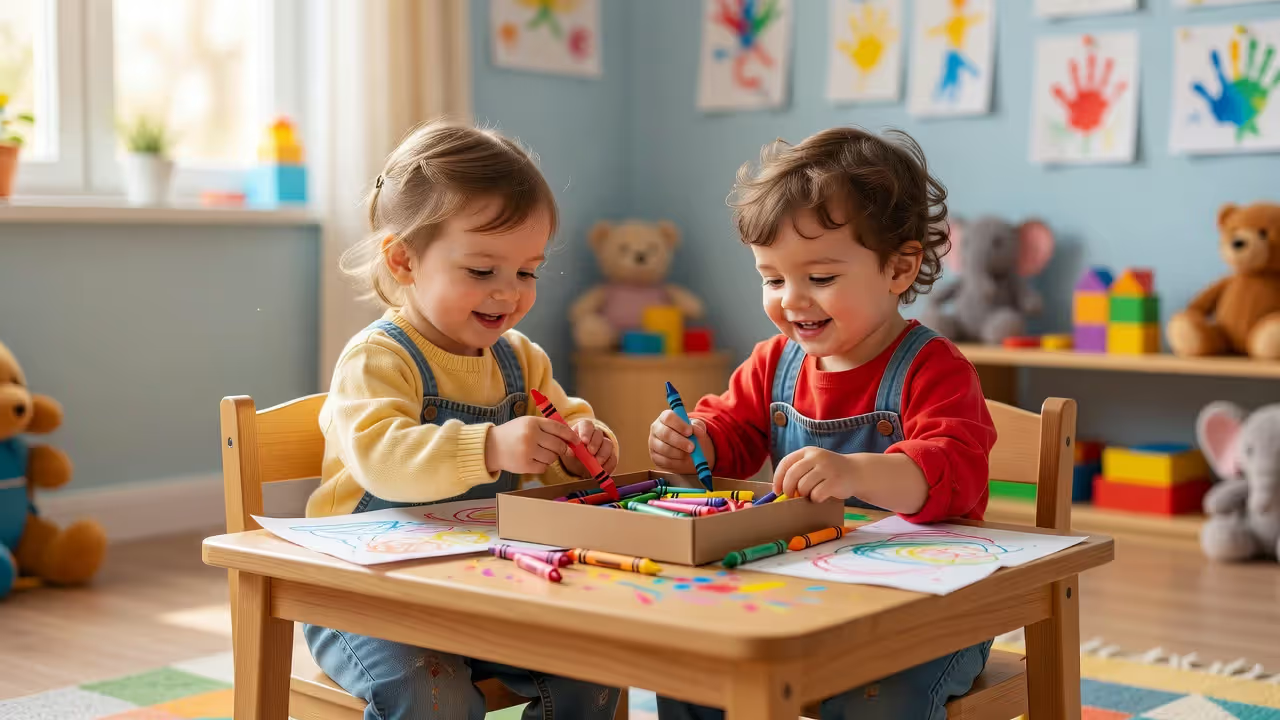
Parallel art. Set up two kids side by side with shared supplies — one box of crayons between them. Don't force them to share the crayons. Just let them negotiate naturally. Stay close to coach if needed, but let it play out. The friction is part of the learning.
Sand timer trades. Use a 2-minute sand timer. One child holds a toy while the sand runs. When it flips, the other child gets it. Kids this age are surprisingly accepting of the timer's "authority" — it's not mom saying give it up, it's the timer.
Author: Rebecca Thornfield;
Source: colorfulpagescoalition.org
Activities for Preschool and Early Elementary Ages
By ages 4–7, children can handle more structured cooperative activities.
Puzzle partnerships. Give two kids one puzzle to complete together. Neither can finish it alone. This makes cooperation feel necessary, not forced.
Snack sharing rituals. Let a child be the "snack helper" who distributes food to everyone at the table. Giving them the role of distributor — rather than just being told to share — builds agency and pride.
Story role-play. Use picture books about sharing (there are dozens of good ones) and then act out the scenarios. Kids process concepts better through play than through lectures. A 5-minute role-play after reading a book can land harder than a 10-minute talk.
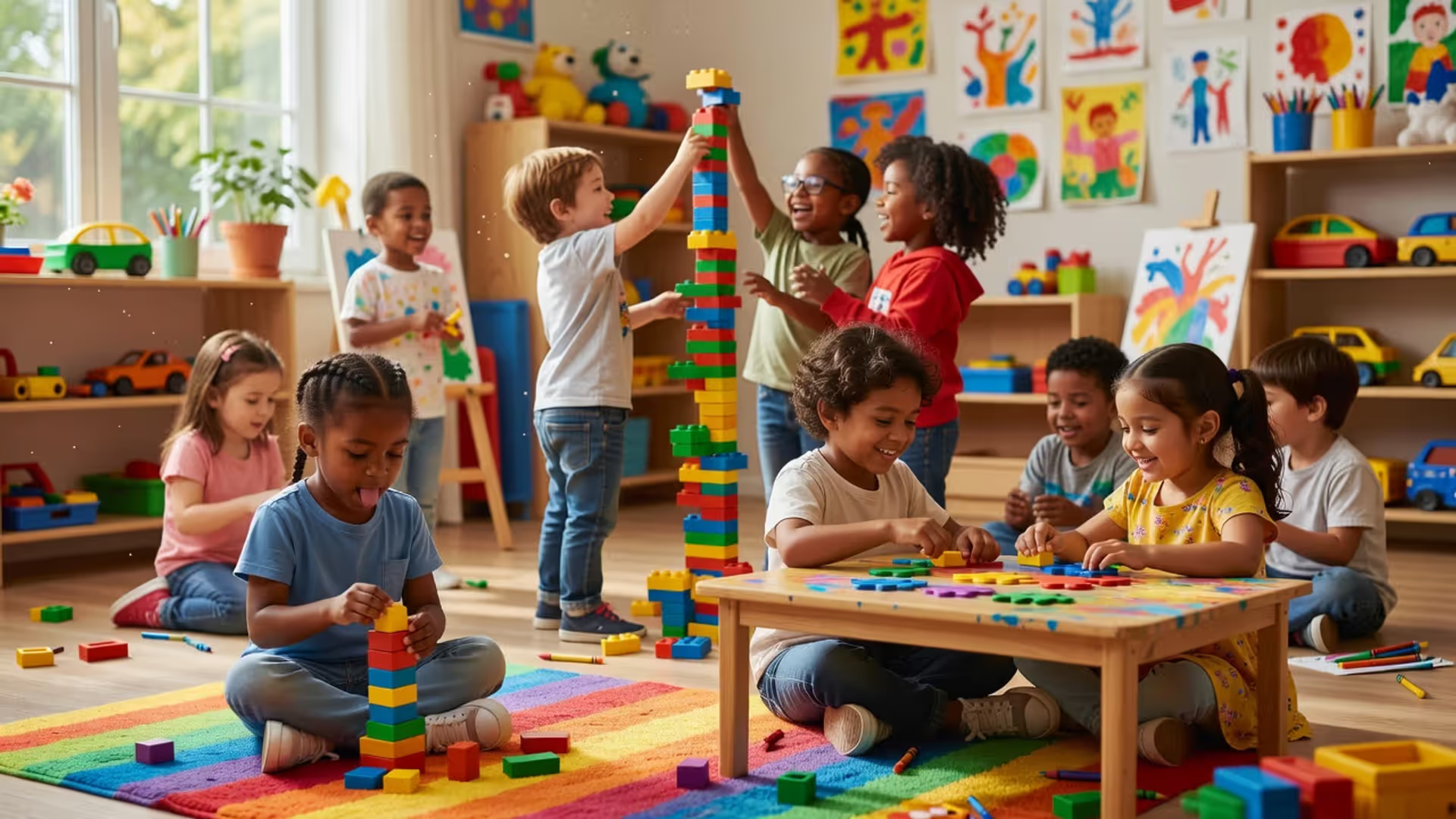
Group building projects. Blocks, LEGOs, or craft supplies for a shared project. One set of materials, one goal. Disagreements will happen — that's fine. The adult's job is to coach, not solve.
Common Mistakes Parents Make When Encouraging Sharing
The biggest one is already covered: forced sharing. But there are others worth naming.
Over-praising every instance. "Oh my goodness, you shared! That's AMAZING!" sounds supportive, but it can actually make sharing feel like a big deal — something exceptional rather than normal. Calm acknowledgment works better: "You gave Maya a turn. That was kind."
Inconsistent rules. If sharing is required at the playground but not at home, or required with cousins but not with siblings, kids get confused. Consistency matters more than perfection.
Comparing to other kids. "Look how nicely Jake shares" is almost never motivating. It's usually shaming. Kids don't respond well to social comparison at this age — it tends to breed resentment, not inspiration.
Expecting too much too soon. A 2-year-old who refuses to hand over a toy isn't misbehaving. They're being 2. Calibrating expectations to developmental reality reduces a lot of unnecessary conflict.

Author: Rebecca Thornfield;
Source: colorfulpagescoalition.org
How Schools and Caregivers Can Reinforce Sharing Skills
Teachers and daycare providers have a real advantage: they see kids in group settings every day. That repetition is powerful for developing sharing skills.
Classroom routines that build sharing naturally include: shared supply stations (one bin of markers for a table of four), group projects with assigned roles, and structured free play with adult coaching nearby.
The key is coaching, not controlling. When a dispute over a toy happens, the instinct is to step in fast and resolve it. But a brief pause — letting kids try to work it out for 30–60 seconds before intervening — builds problem-solving capacity. Step in if it escalates. Otherwise, let the friction do some teaching.
Caregivers can also use "social narration": describing what they see out loud. "I notice you're both reaching for the same book. What could you do?" This prompts thinking without providing the answer.
Consistency between home and school helps too. When parents and teachers use similar language — "take turns," "your turn next," "how do you think she feels?" — the concepts reinforce each other instead of competing.
Signs That a Child Is Developing Sharing Skills on Track
Parents sometimes worry when their 3-year-old still won't share without a battle. In most cases, that's completely normal.
Here's what on-track development typically looks like:
- Ages 2–3: Takes turns with adult prompting; may protest but complies. Parallel play is dominant.
- Ages 3–4: Starts to share spontaneously with familiar kids; still struggles with strangers or high-value items.
- Ages 4–5: Shows genuine concern when a peer is upset; begins offering items without being asked.
- Ages 5–7: Shares consistently in structured settings; negotiates and problem-solves around sharing independently.
If a child at age 6 or 7 still consistently refuses to share and shows no empathy toward peers, that's worth discussing with a pediatrician or child psychologist. But for most kids, the timeline above covers normal variation.

Author: Rebecca Thornfield;
Source: colorfulpagescoalition.org
Frequently Asked Questions About Teaching Kids to Share
FAQ: Teaching Kids to Share Questions Answered
Sharing is one of those skills that develops on its own timeline — and that timeline is longer than most parents expect. The goal isn't to produce a perfectly generous 3-year-old. It's to build habits, language, and emotional tools that make sharing feel natural by early elementary school. Stay consistent, model what you want to see, and trust the process. It works.
Related Stories
Read more
Read more




The content on this website is provided for general informational and educational purposes only. It is intended to explain concepts related to parenting, child development, family caregiving, adoption, fostering, and child safety.
All information on this website, including articles, guides, and examples, is presented for general educational purposes. Outcomes may vary depending on individual family circumstances.
This website does not provide professional medical, psychological, or legal advice, and the information presented should not be used as a substitute for consultation with qualified pediatricians, child psychologists, or family counselors.
The website and its authors are not responsible for any errors or omissions, or for any outcomes resulting from decisions made based on the information provided on this website.