
Understanding the Levels of Play in Child Development
Understanding the Levels of Play in Child Development

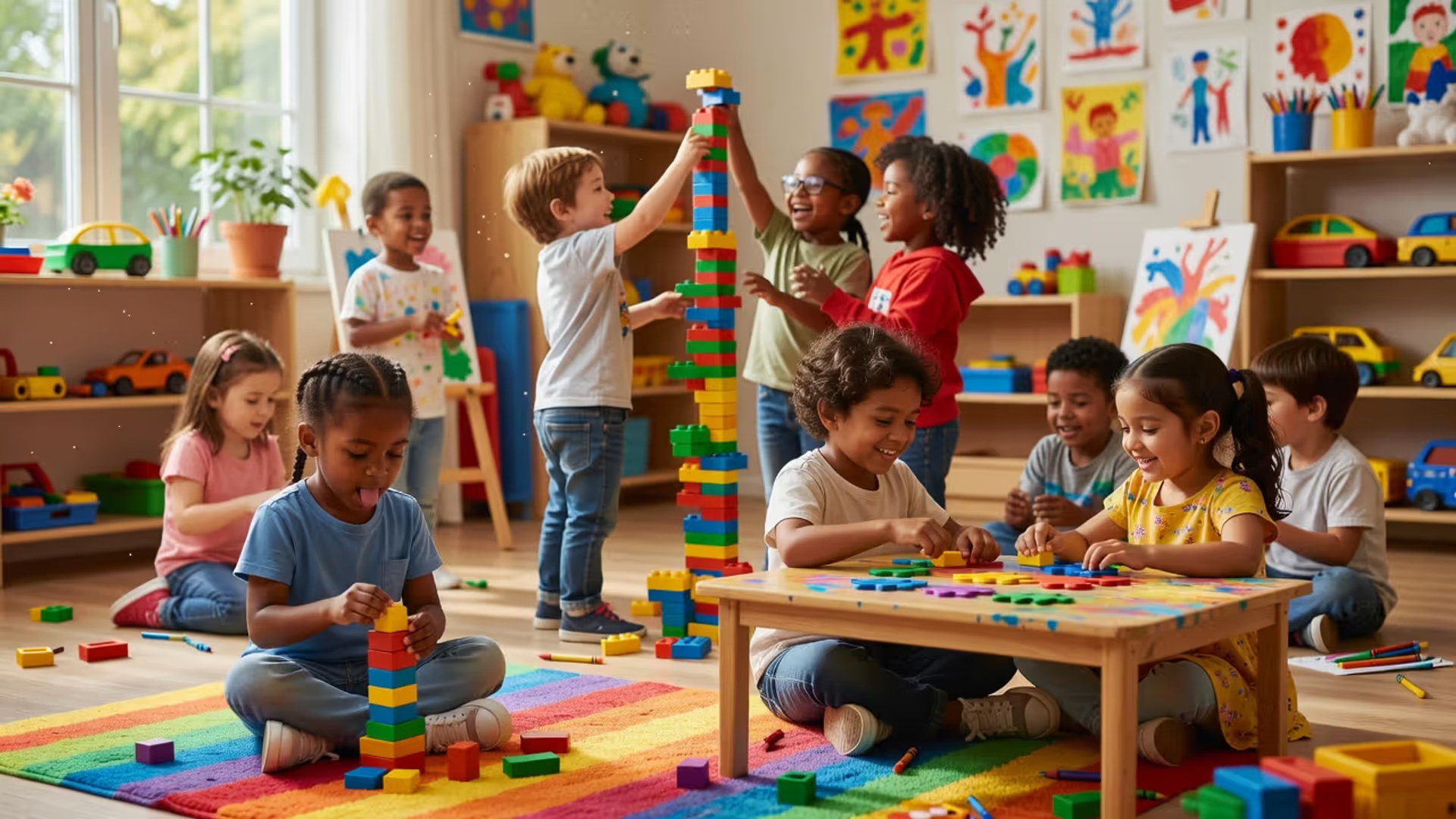
Every child plays. But not every child plays the same way — and that's completely normal. Play isn't random; it follows a recognizable pattern of development that researchers have studied for nearly a century. Understanding the levels of play helps parents, teachers, and caregivers see where a child is developmentally and what kinds of experiences they need next. Whether you're watching a baby stare at their own hands or a group of kindergartners negotiating the rules of a made-up game, you're witnessing a stage of play in action.
What Are the Levels of Play
Play development isn't just a loose idea — it's a framework backed by decades of observational research. Researchers categorize play into stages because children's social and cognitive abilities change dramatically in the first six years of life, and those changes show up directly in how they play.
The most widely used framework comes from sociologist Mildred Parten, who published her observations in 1932 after watching children at the University of Minnesota's Institute of Child Development. Her work identified six distinct social play categories that still form the foundation of how we understand play development stages today.
What makes Parten's model so durable is its simplicity. She wasn't measuring IQ or motor skills. She was watching how children related to each other — or didn't. That social lens is what gives the framework its staying power.
Play is the work of the child.— Montessori Maria
Each stage reflects a child's growing capacity for social interaction, language, and self-regulation. The six stages of play move from completely independent, self-focused behavior all the way to organized group activity with shared rules and goals. Knowing where a child falls on that spectrum tells you a lot about what they're ready for — and what might come next.
Unoccupied Play and Solitary Play
These are the earliest stages of play, and both are deeply independent. Neither involves other children in any meaningful way. That might sound like a limitation, but it's actually developmentally right on target.
What Unoccupied Play Looks Like in Infants
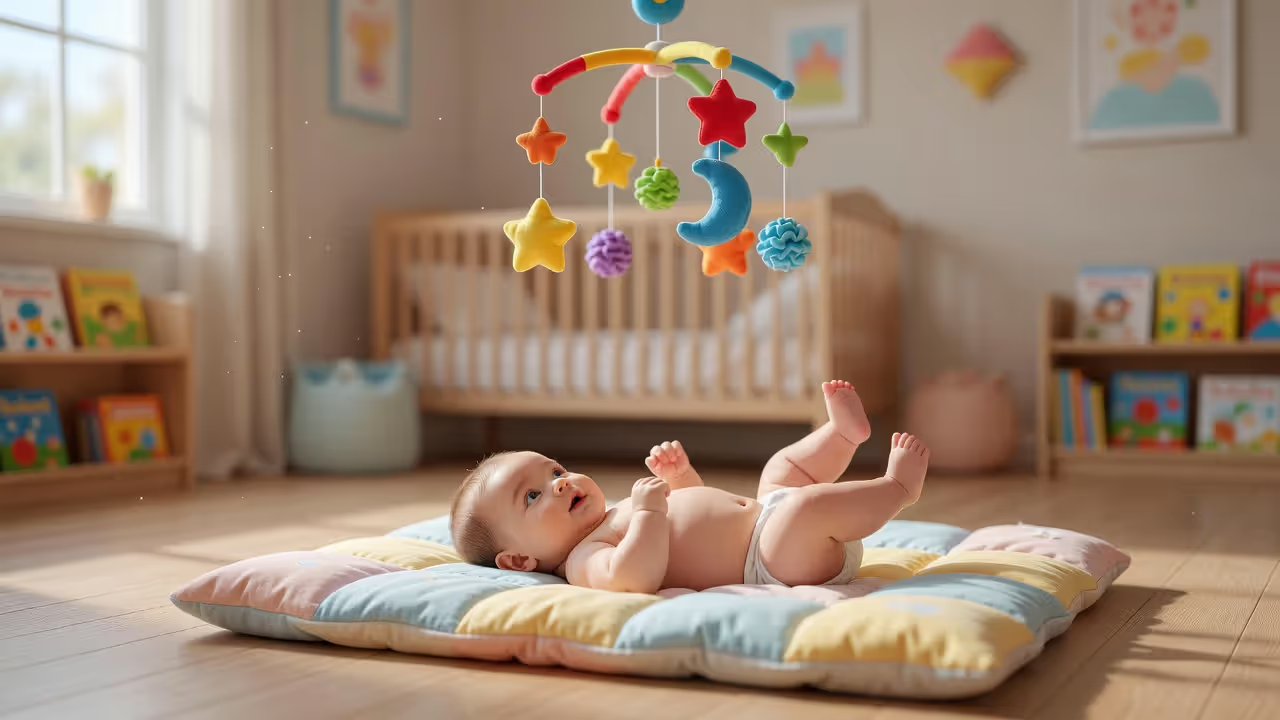
Unoccupied play is the starting point — and it barely looks like play at all. An infant lying on a blanket, randomly moving their arms and legs, staring at a ceiling fan, or mouthing a toy is engaging in unoccupied play. There's no goal, no social partner, no narrative. It's pure sensory exploration.
This stage typically appears from birth through around 3 months. The child isn't bored. They're gathering information about their body and their environment in the only way they currently can. Every random kick, every unfocused gaze is building neural connections.
A common mistake here is assuming that unoccupied play means a child needs stimulation. Sometimes a baby just needs to exist in a space without being entertained.
Author: Garrett Willowmere;
Source: colorfulpagescoalition.org
How Solitary Play Supports Early Independence
Solitary play comes next, typically emerging between 2 and 3 years old, though infants engage in versions of it too. The child plays alone, with their own toys, without interest in what other children nearby are doing. They're absorbed in their own world.
Think of a 2-year-old building a block tower in the corner of a room full of other kids. They're not ignoring the others out of shyness — they're simply not developmentally ready to coordinate play with peers yet. Solitary play builds focus, imagination, and self-direction. These aren't small things. They're the foundation for everything that comes later.
Onlooker Play and Parallel Play
These two stages are where social awareness starts to flicker on. The child isn't playing with others yet, but they're definitely paying attention to them.
The Role of Observation in Onlooker Play
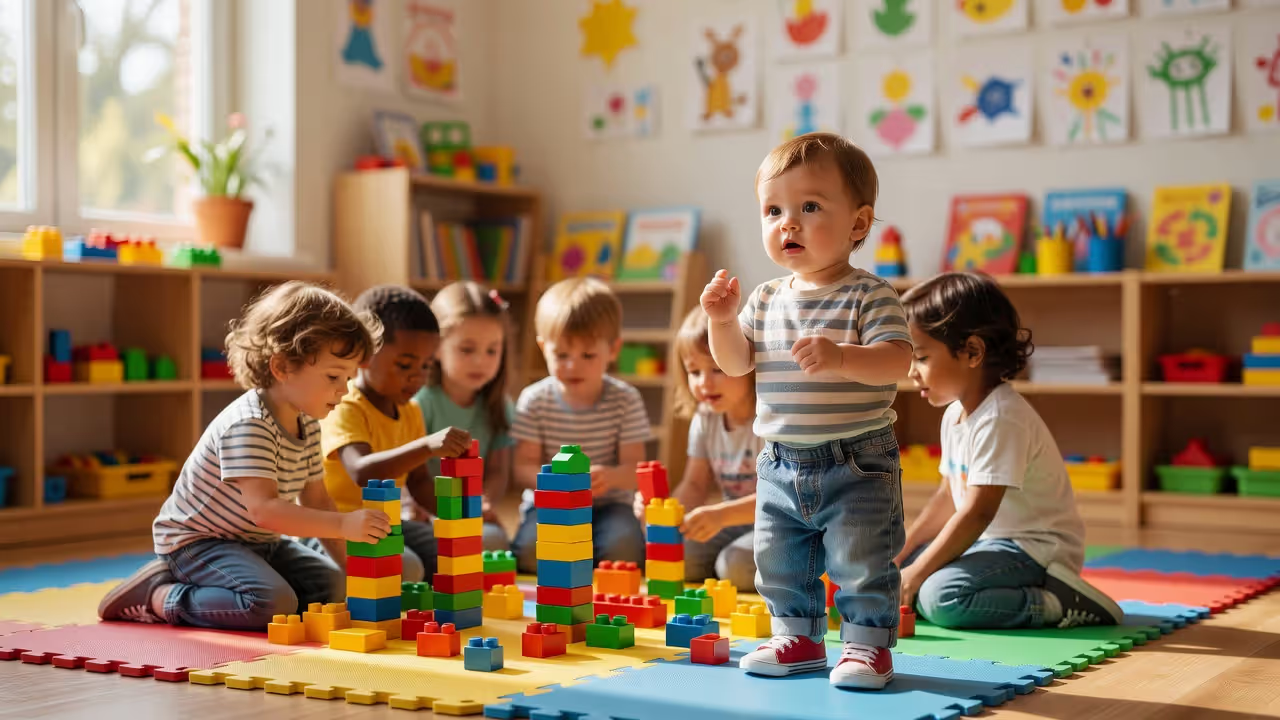
Onlooker play typically appears around age 2 to 3. The child watches other children play but doesn't join in. They might stand nearby, ask questions, or make comments — but they stay on the outside. They're studying the action.
Don't underestimate this stage. Observation is a learning strategy. A child watching two older kids build a ramp for toy cars is absorbing information about physics, social negotiation, and problem-solving. They're preparing to participate. The pattern I see most often is that children who spend time as onlookers tend to join in more confidently when they're ready — because they've already rehearsed it mentally.
Author: Garrett Willowmere;
Source: colorfulpagescoalition.org
Why Parallel Play Matters for Social Readiness
Parallel play is one of the most recognizable stages of play for parents. Two children sit next to each other, each playing with similar toys, but not really playing together. They're aware of each other. They might glance over, mimic what the other does, or even copy a behavior — but there's no shared goal or communication.
This stage typically peaks around ages 2.5 to 3.5. It's not a failed attempt at cooperative play. It's a bridge. Children in parallel play are learning to tolerate proximity, observe social cues, and regulate their behavior around peers — all without the pressure of direct interaction. That's actually a lot of work happening under the surface.
Associative Play and Cooperative Play
Here's where things get genuinely social. These two stages mark a real shift — from playing near others to playing with them.
How Associative Play Builds Communication Skills
Associative play typically emerges around ages 3 to 4. Children interact, share materials, and talk to each other, but there's no organized structure. Everyone's doing their own thing, loosely connected.
Picture a group of 3-year-olds in a sandbox. One is making a road, another is filling a bucket, a third is pouring water. They're talking, handing each other tools, commenting on what the others are doing — but there's no shared plan. That looseness is the point. Associative play is where children practice the back-and-forth of conversation, the negotiation of shared space, and the basics of social reciprocity without needing to fully coordinate.
It's messy. It's imperfect. And it's exactly what it should be at this age.
What Cooperative Play Looks Like in Preschool Settings
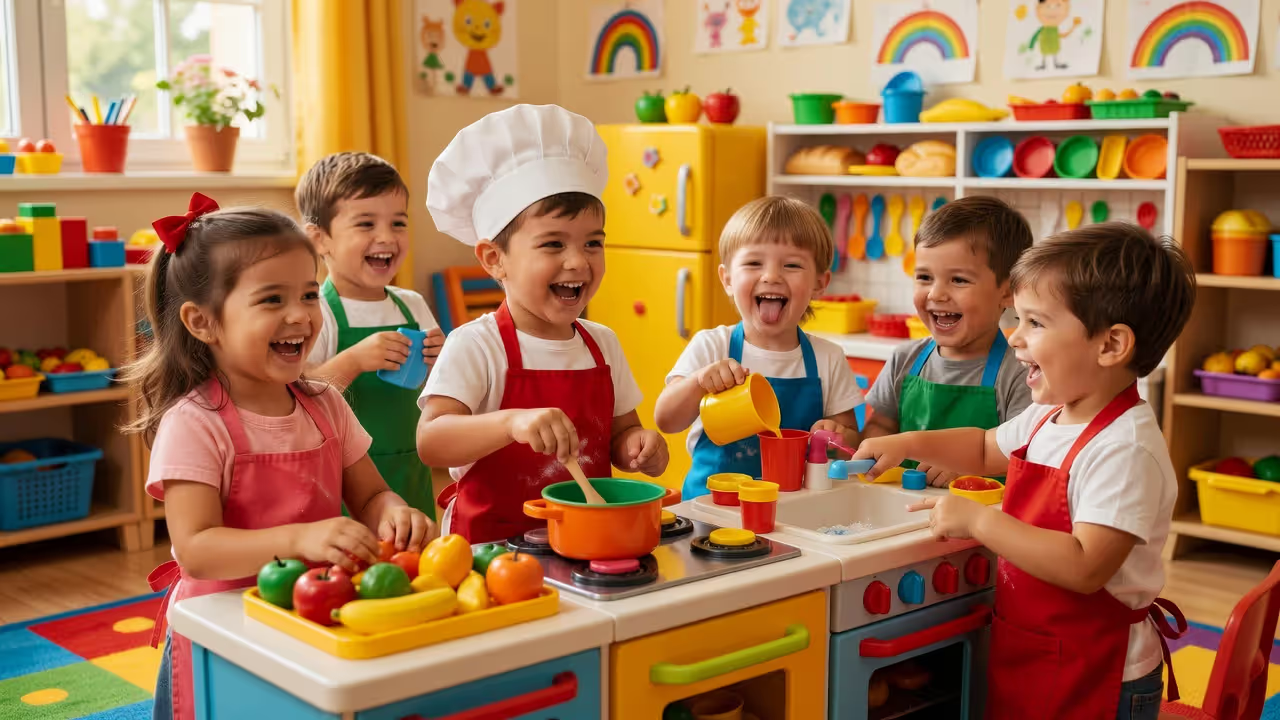
Cooperative play is the most socially sophisticated stage. It typically appears around ages 4 to 6, though many children don't fully engage in it until kindergarten. Now there's a shared goal, defined roles, and often explicit rules. Children organize themselves, assign jobs, and work toward something together.
A group of 5-year-olds playing "restaurant" — one takes orders, one "cooks," one cleans up — that's cooperative play. So is a team building a block city with agreed-upon zones. The difference from associative play is structure. In cooperative play, the group has a plan, and individual children subordinate their impulses to serve that plan.
Author: Garrett Willowmere;
Source: colorfulpagescoalition.org
How Children Progress Through the Six Stages of Play
Here's the thing most people get wrong: these stages aren't a strict ladder. Children don't graduate from one and never return. A 5-year-old who's fully capable of cooperative play will still spend time in solitary play — and that's healthy. The stages overlap, coexist, and cycle depending on the child's mood, environment, and the activity at hand.
Individual variation is real. Some children move through the early stages quickly; others spend more time in parallel play before feeling ready for group interaction. Temperament plays a role. So does the home environment, the number of siblings, and how much peer interaction a child has had.
Environmental factors matter too. A child who's been in daycare since infancy may reach associative play earlier than a child who's spent most of their time at home with one caregiver. Neither trajectory is better — they're just different.
Six Stages of Play at a Glance
| Stage Name | Typical Age Range | Key Behavior | Social Involvement Level |
|---|---|---|---|
| Unoccupied Play | Birth – 3 months | Random movement, sensory exploration | None |
| Solitary Play | 2 – 3 years | Plays alone, no interest in peers | None |
| Onlooker Play | 2 – 3 years | Watches others play, doesn't join | Passive observation |
| Parallel Play | 2.5 – 3.5 years | Plays alongside peers, not with them | Minimal, side-by-side |
| Associative Play | 3 – 4 years | Interacts and shares, no shared goal | Moderate, loosely connected |
| Cooperative Play | 4 – 6 years | Organized group play with rules and roles | High, fully interactive |
How Parents and Educators Can Support Each Stage
Supporting play development isn't about pushing children to the next stage. It's about meeting them where they are and creating conditions for natural progression.
For unoccupied and solitary play, the best thing you can do is get out of the way. Offer open-ended materials — blocks, fabric scraps, simple containers — and let the child explore without directing them. Resist the urge to narrate or instruct. This is their time to be autonomous.
During onlooker play, position a child near (but not inside) a peer group. Don't force entry. Let them watch. If they ask questions about what other kids are doing, answer briefly and let the curiosity build naturally. Forced inclusion at this stage often backfires.
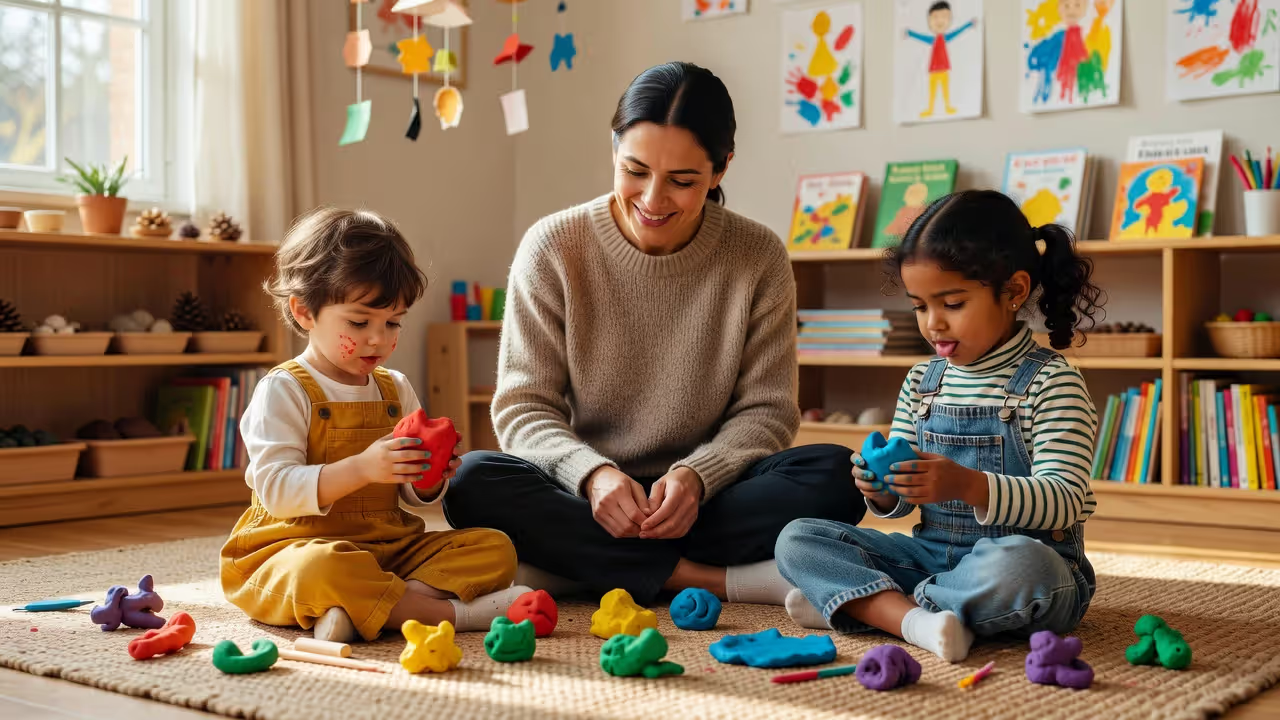
For parallel play, set up environments where two children can do similar activities side by side — playdough at the same table, painting on adjacent easels. Don't prompt them to share or interact. Just let the proximity do its work.
Associative play thrives with open-ended group materials: a shared bin of toy animals, a communal art project, a water table. These naturally invite interaction without requiring coordination. Let conversations and conflicts emerge — both are learning opportunities.
Cooperative play needs structure and support. Introduce simple games with rules. Encourage dramatic play with defined roles. When conflicts arise over rules or fairness, coach rather than solve. Ask: "What do you think you could do?" That's where the real development happens.
Author: Garrett Willowmere;
Source: colorfulpagescoalition.org
Common Misconceptions About Play Development Stages
A few myths about play development stages come up constantly — and they cause unnecessary worry.
Myth: Children must follow the stages in exact order. They don't. A 4-year-old can move between solitary play and cooperative play in the same afternoon. The stages describe tendencies, not a fixed sequence every child must march through.
Myth: Solitary play means a child is antisocial or delayed. This one causes a lot of parental anxiety. Solitary play is healthy and necessary at every age. Even adults need time to play alone — to think, create, and recharge. A child who chooses solitary play isn't rejecting others. They're exercising independence.
Myth: Reaching cooperative play early means a child is advanced. Social development is one dimension of a child's growth. A child who's highly cooperative at age 3 might still struggle with emotional regulation or fine motor skills. Play stages don't predict overall development.
Myth: If a child doesn't engage in onlooker play, they'll skip straight to parallel play. The stages aren't gates you pass through once. A child might show onlooker behavior at age 4 when entering a new social environment, even if they've been doing cooperative play at home for a year. New situations often trigger earlier-stage behavior. That's adaptive, not regressive.
FAQ: Levels of Play Questions Answered
Play doesn't stop being important once a child starts school. The skills built across these stages — independence, observation, communication, cooperation — carry forward into every relationship and learning environment a child will ever encounter. Knowing the levels of play doesn't give you a checklist to rush through; it gives you a map for understanding what you're already seeing every day.
Related Stories
Read more
Read more


The content on this website is provided for general informational and educational purposes only. It is intended to explain concepts related to parenting, child development, family caregiving, adoption, fostering, and child safety.
All information on this website, including articles, guides, and examples, is presented for general educational purposes. Outcomes may vary depending on individual family circumstances.
This website does not provide professional medical, psychological, or legal advice, and the information presented should not be used as a substitute for consultation with qualified pediatricians, child psychologists, or family counselors.
The website and its authors are not responsible for any errors or omissions, or for any outcomes resulting from decisions made based on the information provided on this website.