
Stranger Awareness in Babies and Toddlers Explained
Stranger Awareness in Babies and Toddlers Explained

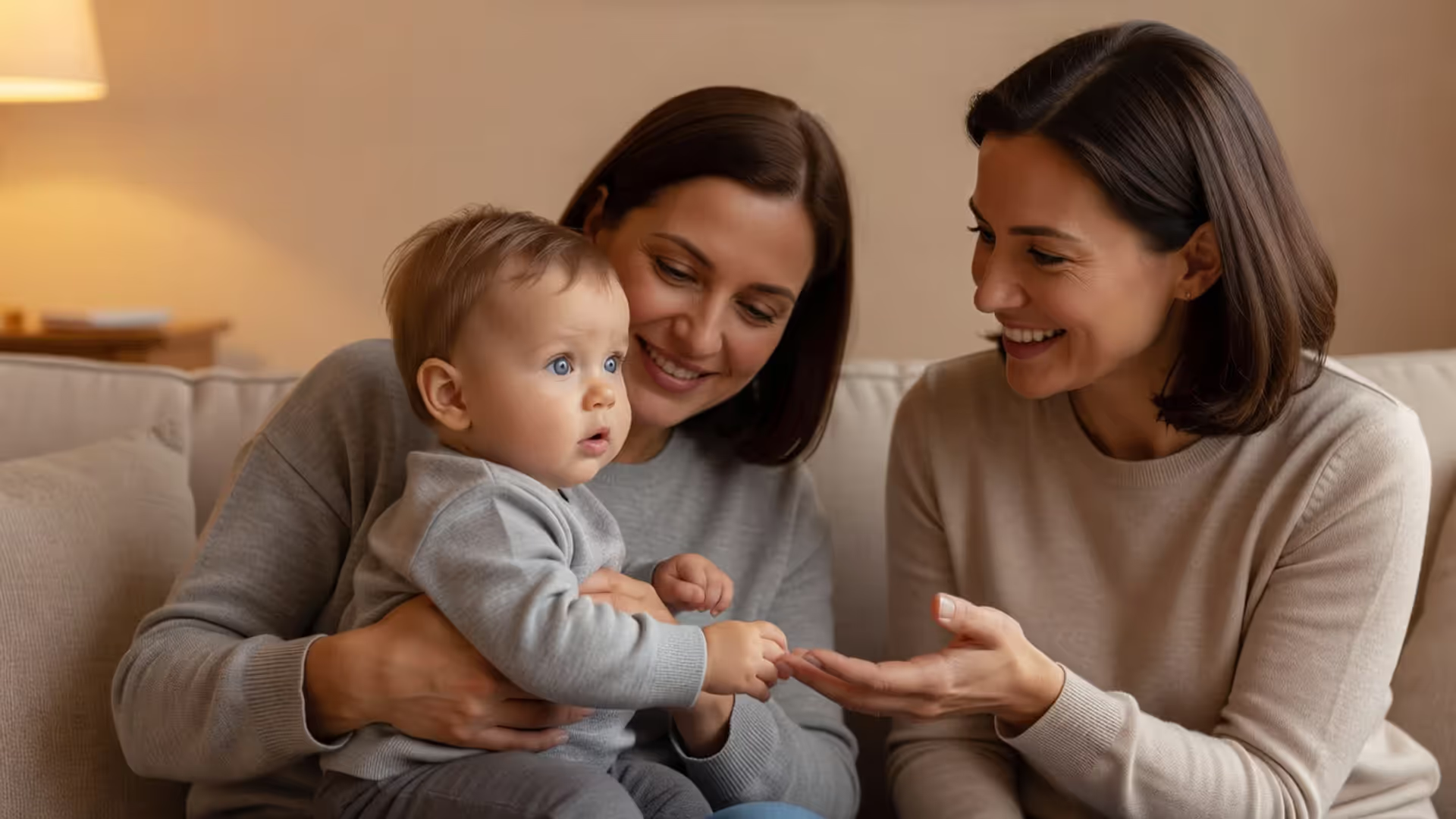
Every parent has been there. Your baby was perfectly happy being passed around at a family gathering — and then, almost overnight, they burst into tears the moment a relative reached out to hold them. Nothing changed. No one was unkind. But your child suddenly wanted nothing to do with unfamiliar faces. That's stranger awareness at work, and it's one of the most misunderstood moments in early childhood development.
What Stranger Awareness Actually Means in Child Development
Stranger awareness is a child's developing ability to distinguish familiar people from unfamiliar ones. It's a cognitive shift, not a behavioral problem. Before this awareness kicks in, babies treat most faces with equal curiosity. After it develops, they start sorting the world into "safe" and "unknown" — and that sorting matters.
A common mistake parents make is assuming stranger awareness is the same as shyness or fear. It isn't. Awareness is the recognition. Anxiety is the emotional response that sometimes follows. A toddler who stares cautiously at a new neighbor but stays calm is showing awareness. A baby who cries and clings when a stranger approaches is showing anxiety. Both are normal, but they're not the same thing.
This distinction matters because it shapes how you respond. Awareness doesn't need to be fixed. Anxiety doesn't either — but it does need to be handled with patience.
The cognitive foundation here is object permanence — a baby's growing understanding that people and objects exist even when they're out of sight. Once a child grasps that mom and dad are specific, permanent people, they start noticing when someone else shows up instead.
When Does Stranger Anxiety Start and How Long Does It Last
Stranger anxiety doesn't arrive on a fixed schedule, but there are reliable windows. Most children show the first signs somewhere between 6 and 8 months. It tends to intensify around 12 to 15 months, then gradually ease through the toddler years. Some kids cycle through it again around age 2 during a second developmental leap.
The duration varies. For most children, the sharpest phase lasts a few months. For others, a milder version lingers well into the preschool years. That's still within the normal range — it just means the child is processing social information more cautiously.
Stranger Anxiety Stage by Age Range
The table below gives a practical breakdown of what to expect at each stage.
| Age Range | Expected Behavior | Stranger Awareness Level | Stranger Anxiety Likelihood |
| 0–5 months | Social smiling, minimal differentiation between faces | Low to none | Very low |
| 6–9 months | Preference for caregivers, wariness of new faces | Emerging | Moderate — onset common here |
| 10–15 months | Strong attachment to primary caregivers, protest at separation | High | High — peak anxiety period |
| 16–24 months | Warming up to strangers slowly, clinging in new environments | Moderate | Moderate, depends on temperament |
| 2–3 years | More language to express feelings, still cautious with new people | Moderate to high | Lower, but still present in some kids |
| 3–5 years | Greater independence, social curiosity increasing | High (contextual) | Low for most, situational for some |
Signs That the Phase Is Passing
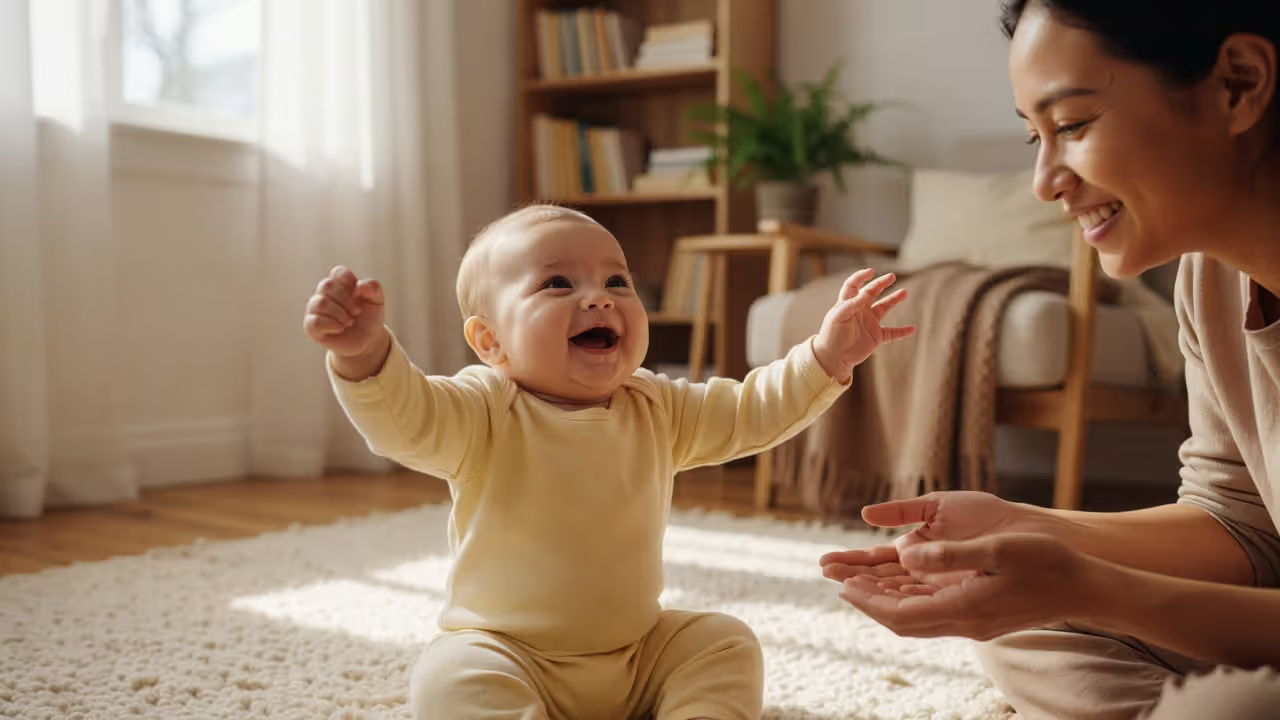
You'll notice the shift before your child can tell you about it. They start making eye contact with unfamiliar people instead of burying their face. They might wave or offer a toy to a new person after a few minutes of observation. The crying at drop-offs gets shorter. Recovery time after a startle improves.
The pattern I see most often is a gradual loosening — not a clean break. One week they're fine at daycare drop-off, the next they cry again. That back-and-forth is normal. It doesn't mean the phase is restarting from scratch.
Author: Madeline Ashcroft;
Source: colorfulpagescoalition.org
Why Stranger Anxiety in Babies Is a Healthy Milestone
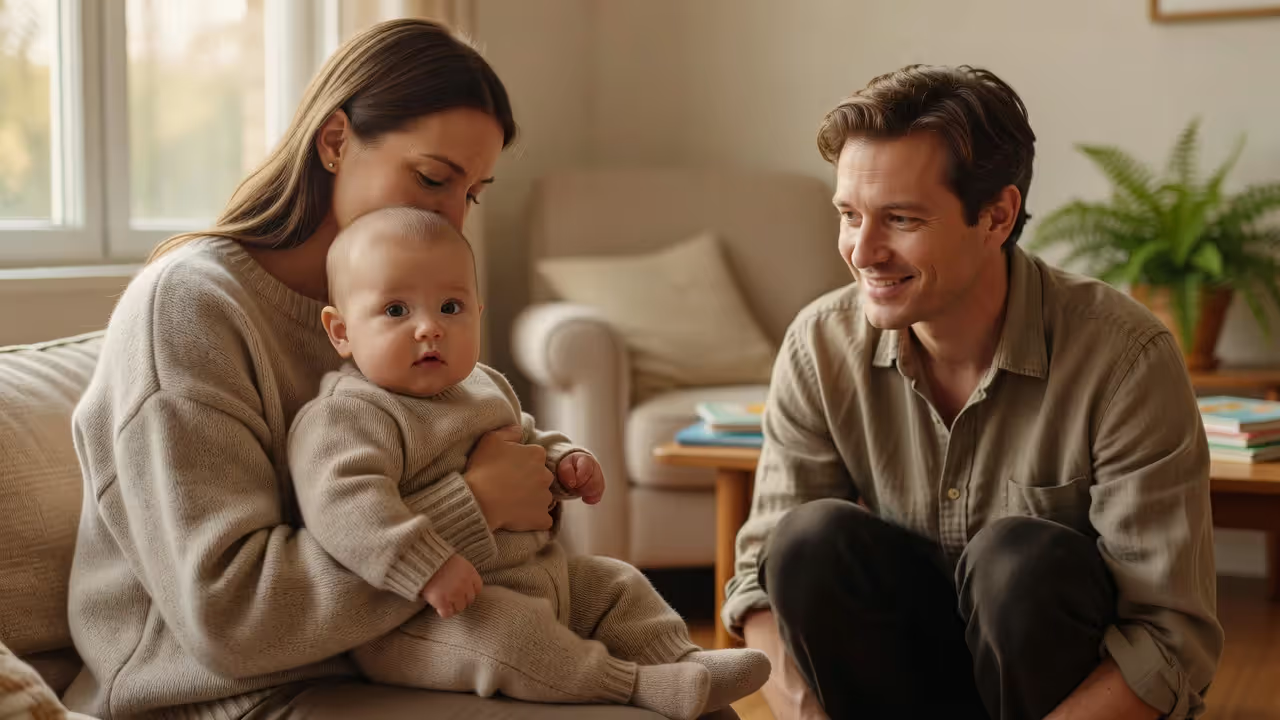
Here's the counterintuitive part: stranger anxiety in babies is actually a sign that development is going well. It means the child has formed a secure enough attachment to their primary caregivers that they can tell the difference between those people and everyone else. That's a cognitive and emotional achievement.
Pediatric researchers have long recognized this phase as a marker of healthy brain development. The ability to differentiate familiar from unfamiliar faces requires memory, pattern recognition, and emotional processing — none of which are trivial at 8 months old.
Stranger anxiety is not a problem to be solved. It is a sign that a child has learned to love — and that's the most important thing a baby can do in the first year of life.
— Brazelton T. Berry
Babies who never show any stranger anxiety — who seem completely indifferent to who holds them — can sometimes be a concern worth monitoring. Indiscriminate attachment (being equally comfortable with anyone) may warrant a conversation with a pediatrician, especially if paired with other developmental flags.
So if your 9-month-old is screaming when grandma reaches out, take a breath. That's not a social failure. That's your baby's brain doing exactly what it's supposed to do.
Author: Madeline Ashcroft;
Source: colorfulpagescoalition.org
How Stranger Awareness Shows Up Differently in Toddlers
Stranger awareness in toddlers looks different than it does in infants — mostly because toddlers have more tools. They can talk (at least a little), they can move away from someone they don't like, and they have stronger opinions about everything.
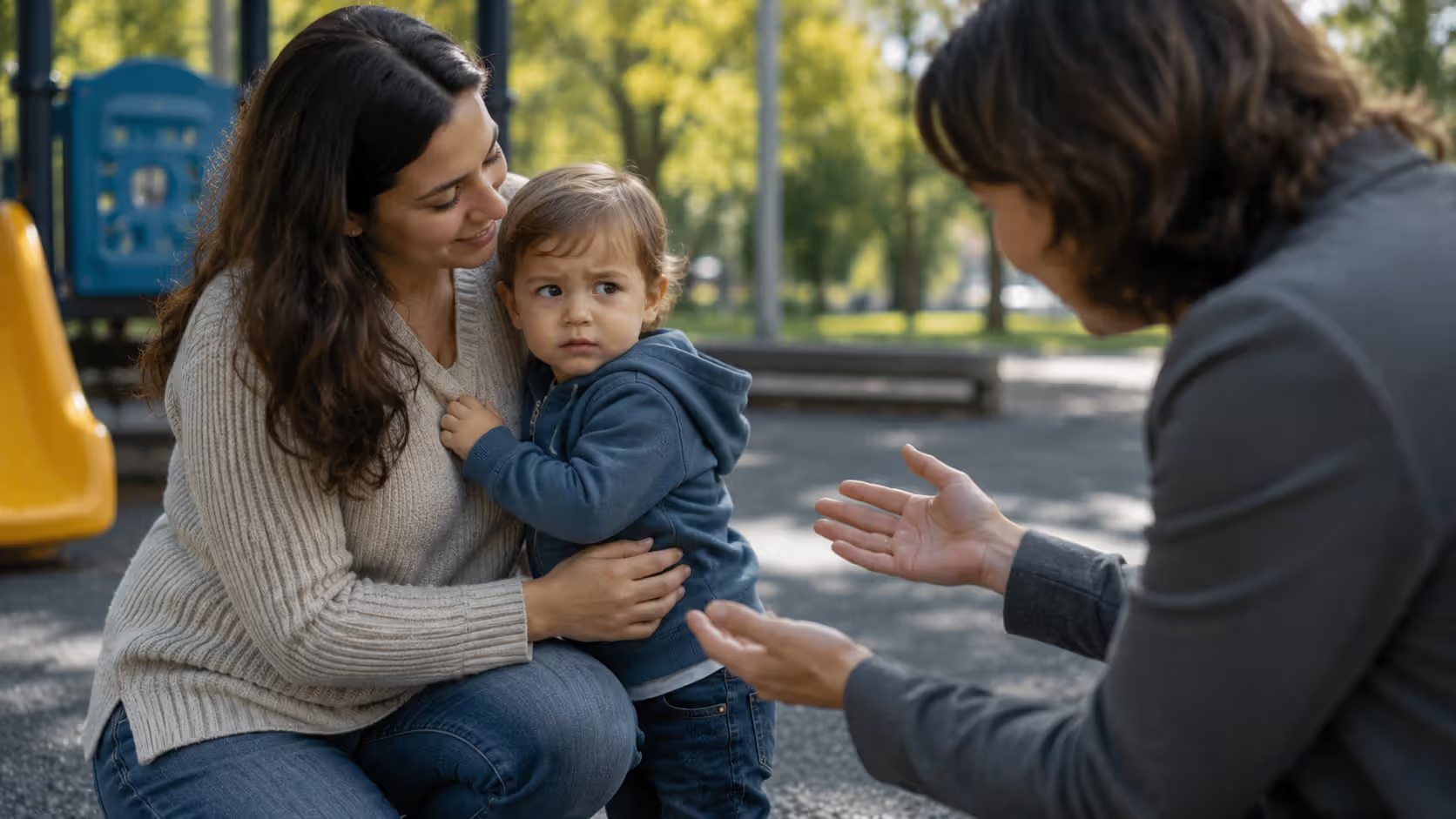
Where a 9-month-old might just cry, a 2-year-old might say "no" loudly, hide behind your legs, or flat-out refuse to say hello. Some toddlers stare intensely at strangers without responding. Others warm up quickly once they've had a few minutes to observe from a safe distance.
Language development plays a big role here. Once children can name their feelings — even roughly — they handle unfamiliar situations better. A toddler who can say "I'm scared" or "I don't like him" is processing the experience differently than one who can only cry. Helping them build that vocabulary is one of the most practical things you can do.
Before language kicks in fully, a toddler's stranger awareness often looks like behavioral caution: hanging back, watching before engaging, or refusing to participate in group activities with unfamiliar adults. After language develops more, they may ask questions about new people ("Who is that? Will they leave?") or negotiate ("Can you hold me?").
That shift from pure reaction to verbal processing is a meaningful developmental step. It usually starts around 18 to 24 months and builds steadily through age 3.
Author: Madeline Ashcroft;
Source: colorfulpagescoalition.org
Helping a Child With Stranger Anxiety Without Forcing It
The single worst thing you can do is force it. Pushing a child to hug, kiss, or sit with someone they're wary of doesn't build confidence — it teaches them that their instincts don't matter. That's a lesson you don't want to give.
Helping a child with stranger anxiety is mostly about creating low-pressure exposure. Here's what actually works:
Let them observe first. Before expecting any interaction, give your child time to watch a new person from a safe distance. Don't rush the introduction. A few minutes of passive observation can make all the difference.
Stay calm yourself. Children read your body language constantly. If you tense up when they start crying, they register that as confirmation that something is wrong. Staying relaxed — even when they're upset — sends a different message.
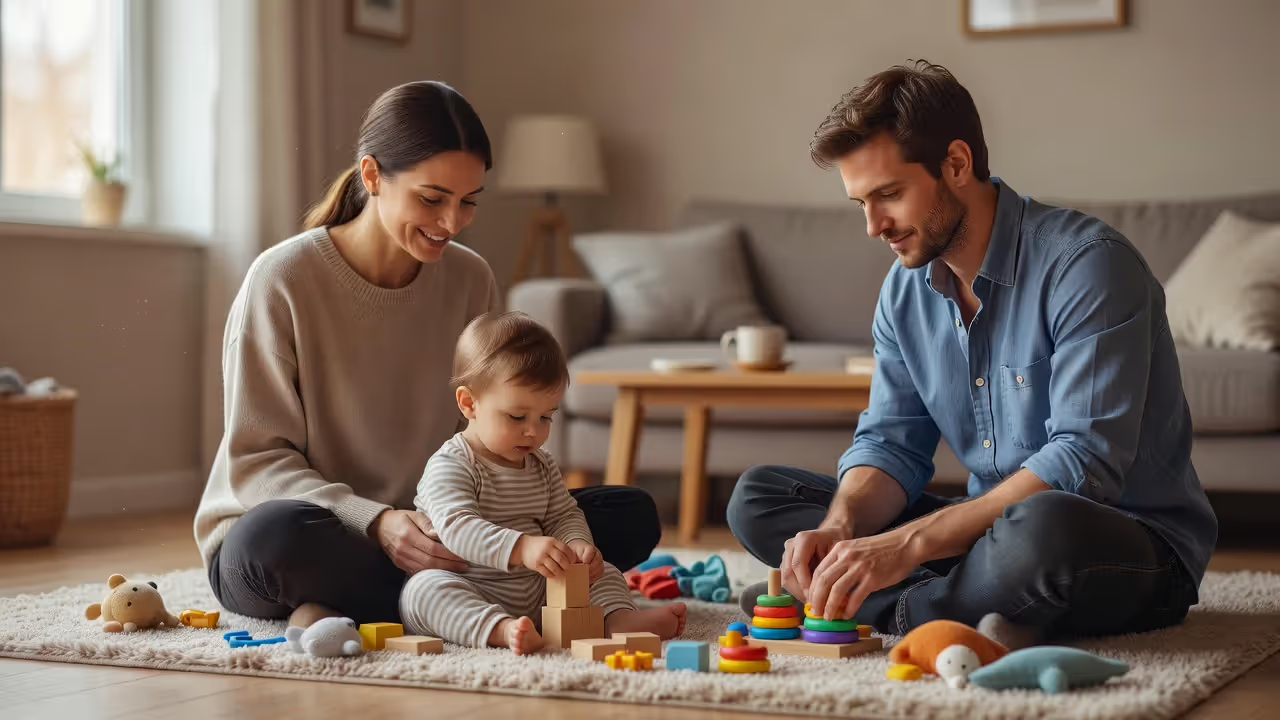
Use parallel play as a bridge. For toddlers especially, having a stranger sit nearby and play independently (not directing attention at the child) often works better than face-to-face interaction. Let the child come to them.
Avoid over-apologizing to the stranger. Saying "I'm so sorry, she's just really shy" in front of your child labels them and doesn't help. A simple "She needs a few minutes" is enough.
Don't sneak away. If you need to leave a child with someone new, say goodbye clearly. Sneaking out feels like a betrayal when they notice, and it makes future separations worse.
Gradual exposure works. Repeated, low-stakes encounters with the same person — a neighbor, a regular babysitter, a family friend — usually result in faster warming than one-time introductions to many different people.
Author: Madeline Ashcroft;
Source: colorfulpagescoalition.org
When to Talk to a Pediatrician About Stranger Anxiety
Most stranger anxiety resolves on its own. But there are situations where it's worth getting a professional opinion.
Recognizing stranger anxiety that's crossed into something more persistent takes some honest observation. If a child is still showing intense, disruptive anxiety around unfamiliar people well past age 4 — especially if it's affecting daily activities like preschool, playdates, or family outings — that's worth discussing with a pediatrician.
Other flags to watch for:
- Anxiety that seems to be getting worse over time rather than gradually easing
- Physical symptoms like stomachaches or sleep disruption tied to social situations
- Complete refusal to engage with any unfamiliar person, even after extended exposure
- Anxiety that extends beyond strangers to any change in routine or environment
Stranger anxiety in babies and toddlers is normal. Anxiety that significantly limits a child's life and doesn't respond to typical supportive parenting strategies is different. A pediatrician can help distinguish between a developmental phase and something that might benefit from early intervention — like referral to a child psychologist or occupational therapist.
Don't wait and hope it passes if your gut is telling you something's off. Early support is always easier than late support.
FAQ: Stranger Anxiety and Stranger Awareness Questions Answered
Stranger awareness is one of those developmental milestones that catches parents off guard because it looks like a problem when it's actually progress. Your child isn't becoming antisocial — they're learning that relationships have meaning, that some people are safe and known, and that it's okay to be cautious with the rest. Supporting them through it means staying patient, skipping the pressure, and trusting that most kids find their footing on their own timeline.
Related Stories
Read more
Read more

The content on this website is provided for general informational and educational purposes only. It is intended to explain concepts related to parenting, child development, family caregiving, adoption, fostering, and child safety.
All information on this website, including articles, guides, and examples, is presented for general educational purposes. Outcomes may vary depending on individual family circumstances.
This website does not provide professional medical, psychological, or legal advice, and the information presented should not be used as a substitute for consultation with qualified pediatricians, child psychologists, or family counselors.
The website and its authors are not responsible for any errors or omissions, or for any outcomes resulting from decisions made based on the information provided on this website.