What Is Preschooler Age and When Does It Start
What Is Preschooler Age and When Does It Start?
Every parent hits that moment — your child turns 3 and suddenly someone asks, "So, are they in preschool yet?" And you realize you're not totally sure what that even means. What exactly is preschooler age? Does it start at 3? At 2 and a half? And when does it end?
These aren't silly questions. The preschool stage is a distinct period in early childhood, and understanding it helps you make better decisions about your child's education, development, and readiness for kindergarten. Here's what you actually need to know.
The Standard Preschooler Age Range in the US
In the US, a preschooler is generally a child between the ages of 3 and 5. That's the widely accepted preschooler age range used by pediatricians, early childhood educators, and federal programs alike.
The CDC's developmental milestones resource tracks children's growth in two-year bands, with the 3- and 5-year marks serving as key checkpoints for the preschool period. The American Academy of Pediatrics also uses ages 3–5 when discussing preschool-age development, and Head Start — the federally funded early learning program — primarily serves children from age 3 up to kindergarten entry.
So if your child is 3, 4, or about to turn 5, they're squarely in the preschooler age range.
One thing that trips people up: some sources include 2-year-olds in "preschool" discussions. That's usually a program label, not a developmental classification. A 2-year-old is developmentally a toddler. The preschool stage explained correctly starts at 3, when children typically begin showing the social and cognitive readiness that preschool programs are designed to build on.
What age is a preschooler, then? Three to five. Simple answer, but the details matter — and they're coming up.
How the Preschool Stage Differs from Toddler and Kindergarten Years
Understanding the preschooler stage means knowing what comes before and after it. The preschool years don't exist in isolation — they sit between toddlerhood and formal schooling, and the differences between these stages are real and meaningful.
Toddlers (roughly ages 1–3) are in a phase of rapid physical development and early language acquisition. They're learning to walk steadily, string words together, and assert independence — often loudly. Their play is largely parallel: they play near other kids, not really with them.
Preschoolers are different. By 3, most children can engage in cooperative play, follow multi-step instructions, and hold a conversation. They're not just reacting to the world anymore — they're starting to reason about it.
Kindergarteners (typically 5–6) are expected to handle structured learning, sit for longer periods, and begin formal reading and math instruction. They've moved past the exploratory, play-based learning that defines the preschool years.
Here's a side-by-side look at how these stages compare:
| Stage Name | Typical Age Range | Key Developmental Focus | Common Program Type |
| Infant/Toddler | Birth – 3 years | Motor skills, early language, attachment | Daycare, infant care centers |
| Preschooler | 3 – 5 years | Social skills, language, imaginative play | Preschool, pre-K, Head Start |
| Kindergarten-Ready | 5 – 6 years | Structured learning, literacy, numeracy | Public kindergarten, transitional K |
The pattern I see most often is parents confusing "preschool program" with "preschooler age." A child can attend a program called "preschool" at age 2, but that doesn't make them developmentally a preschooler. Defining the preschool years accurately requires looking at development, not just program names.
Author: Olivia Brackenridge;
Source: colorfulpagescoalition.org
What Developmental Milestones Define the Preschool Years
The preschool stage isn't just an age bracket — it's a period packed with rapid, observable growth. Children between 3 and 5 change dramatically, and tracking those changes helps parents and caregivers know what's typical and what might warrant a closer look.
By age 3, most children can speak in sentences of 3–4 words, recognize familiar people, and engage in pretend play. By 5, they're typically counting to 10 or higher, drawing recognizable figures, and telling stories with a beginning, middle, and end.
But development isn't a checklist. Kids move at their own pace, and there's a real range of what's considered typical within the preschooler age span.
Social and Emotional Growth During This Stage
This is where some of the biggest changes happen — and where preschool programs earn their value.
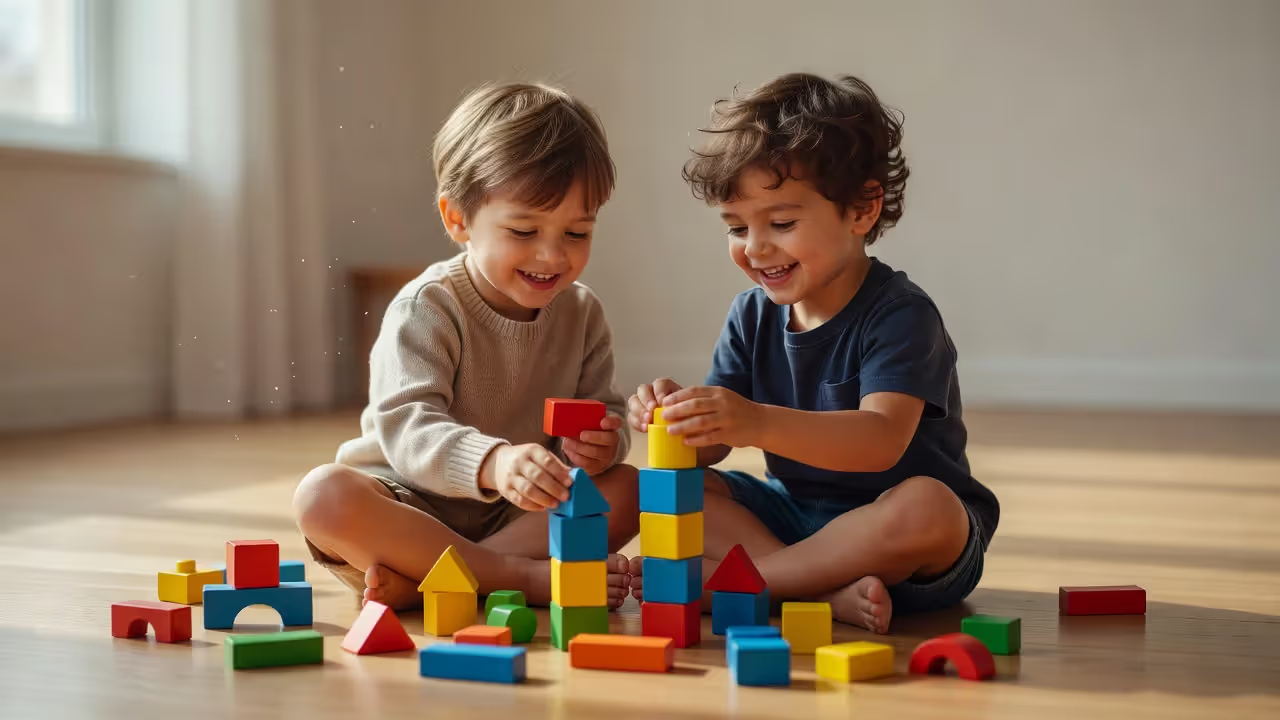
At 3, children are still largely egocentric. They struggle to see things from another person's perspective, which is completely normal. By 4 and 5, most kids begin to show genuine empathy, take turns more consistently, and form real friendships — not just proximity-based play.
Common milestones in this area include:
- Expressing emotions with words rather than just behavior
- Showing interest in pleasing friends and caregivers
- Understanding basic rules and wanting to follow them
- Negotiating during play ("You be the doctor, I'll be the patient")
A common mistake parents make here is expecting 3-year-olds to share willingly and consistently. That's a 4–5 year skill for most kids. Pushing too hard on sharing before a child is ready can actually backfire.
Author: Olivia Brackenridge;
Source: colorfulpagescoalition.org
Language and Cognitive Development at Preschooler Age
Language explodes during the preschool years. A 3-year-old might have a vocabulary of around 1,000 words. By 5, that number can reach 2,000 or more. And it's not just words — it's the ability to use language to reason, question, and imagine.
Cognitive milestones typical of this stage include:
- Sorting objects by shape, color, or size
- Understanding concepts like "more," "less," "same," and "different"
- Engaging in fantasy play with complex narratives
- Beginning to understand cause and effect ("If I drop this, it falls")
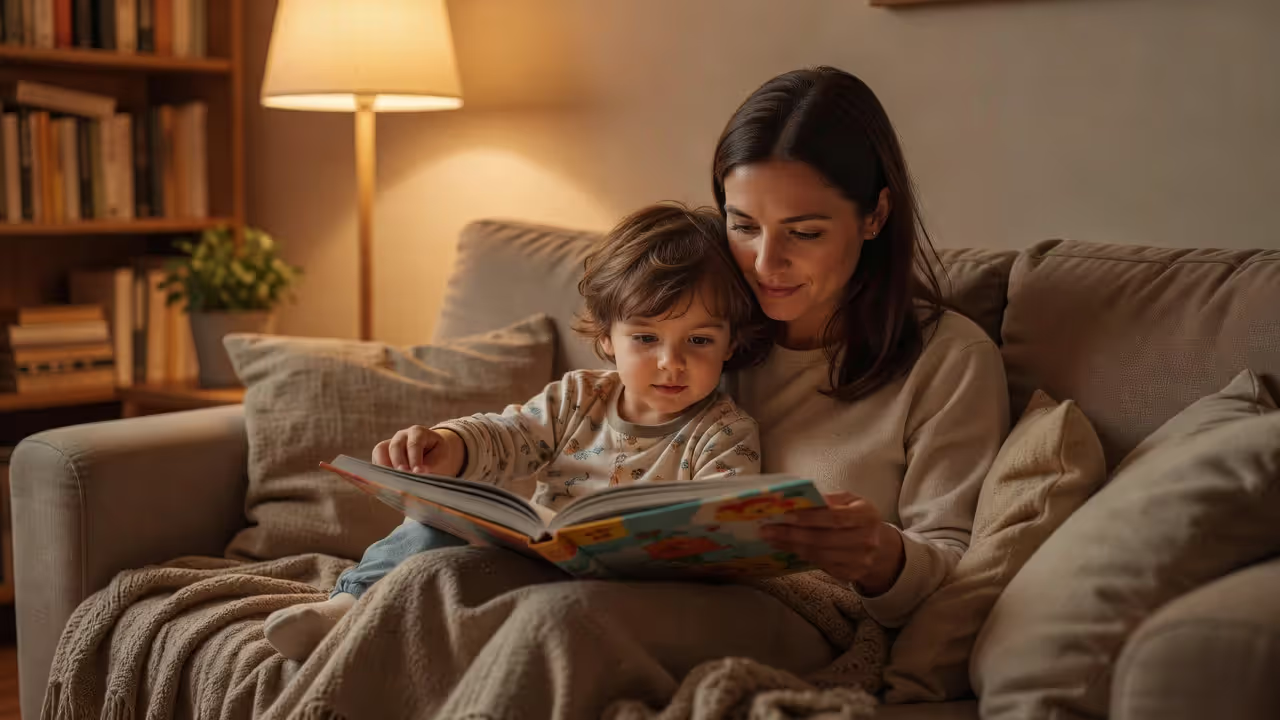
Reading readiness also begins here. Most children don't read independently until kindergarten or first grade, but the preschool years are when phonemic awareness — the ability to hear and play with sounds in words — starts to develop. Rhyming games and read-alouds aren't just fun. They're building the foundation for literacy.
Author: Olivia Brackenridge;
Source: colorfulpagescoalition.org
When a Child May Start or Leave the Preschool Stage Early
Not every child enters or exits the preschooler stage on the standard timeline. And that's okay — development doesn't follow a strict calendar.
Some children show kindergarten readiness before their 5th birthday. In many states, children can enter kindergarten if they turn 5 by a specific cutoff date (often September 1 or December 1, depending on the state). A child who turns 5 in August might start kindergarten at 4 years and 11 months, technically still in the preschooler age range.
On the other end, some children benefit from an extra year in preschool. This is sometimes called "redshirting" — intentionally delaying kindergarten entry to allow more time for social or academic readiness. Research on the long-term benefits of redshirting is mixed, but it's a real option many families consider.
Developmental delays can also affect when a child is considered ready to move on. Children with speech delays, sensory processing differences, or developmental disabilities may remain in preschool-level programs beyond age 5, or may receive specialized early intervention services starting before age 3 through programs like IDEA (Individuals with Disabilities Education Act) Part C and Part B.
The short version: when is a child a preschooler? Typically between 3 and 5 — but individual readiness matters more than the number on the birthday cake.
How Preschooler Age Is Defined by Schools and Programs
Ask three different preschool programs what age they accept, and you might get three different answers. That's because there's no single federal mandate that sets a universal preschool age cutoff. Programs set their own rules within state guidelines.
Author: Olivia Brackenridge;
Source: colorfulpagescoalition.org
Here's how the main types of programs typically handle it:
Public Pre-K programs are run by state education agencies and often target children who are 4 years old by a specific enrollment date. Some states, like Georgia and Oklahoma, offer universal pre-K for all 4-year-olds. Others limit enrollment to children from low-income families or those with identified developmental needs.
Head Start serves children ages 3–5, with Early Head Start extending services to infants and toddlers from birth to age 3. Eligibility is income-based, though some programs reserve slots for children with disabilities regardless of income.
Private preschools have the most flexibility. Many accept children starting at age 2 (often called "twos programs"), while others start at 3. Some private programs run through age 5 or even 6, depending on their curriculum model.
So what age is a preschooler from a school's perspective? It depends on the program. But developmentally and in most official frameworks, preschool age explained simply means 3 to 5. That's the range most educators, pediatricians, and policymakers work from.
The experiences children have during the first five years of life shape the architecture of the developing brain. Early relationships and environments set the foundation for all future learning, behavior, and health.
— Shonkoff Jack
FAQ: Preschooler Age Questions Answered
The preschooler age range of 3 to 5 isn't arbitrary. It reflects a genuine window of development — one where children are ready to engage socially, build language skills, and begin structured learning in a way that younger toddlers simply aren't. Whether your child is heading into a public pre-K program, a private preschool, or you're wondering if they're ready for kindergarten, knowing what this stage actually means gives you a much clearer picture of where your child is and what they need next.
Related Stories
Read more
Read more

The content on this website is provided for general informational and educational purposes only. It is intended to explain concepts related to parenting, child development, family caregiving, adoption, fostering, and child safety.
All information on this website, including articles, guides, and examples, is presented for general educational purposes. Outcomes may vary depending on individual family circumstances.
This website does not provide professional medical, psychological, or legal advice, and the information presented should not be used as a substitute for consultation with qualified pediatricians, child psychologists, or family counselors.
The website and its authors are not responsible for any errors or omissions, or for any outcomes resulting from decisions made based on the information provided on this website.