
Levels of Play in Child Development Explained
Levels of Play in Child Development Explained

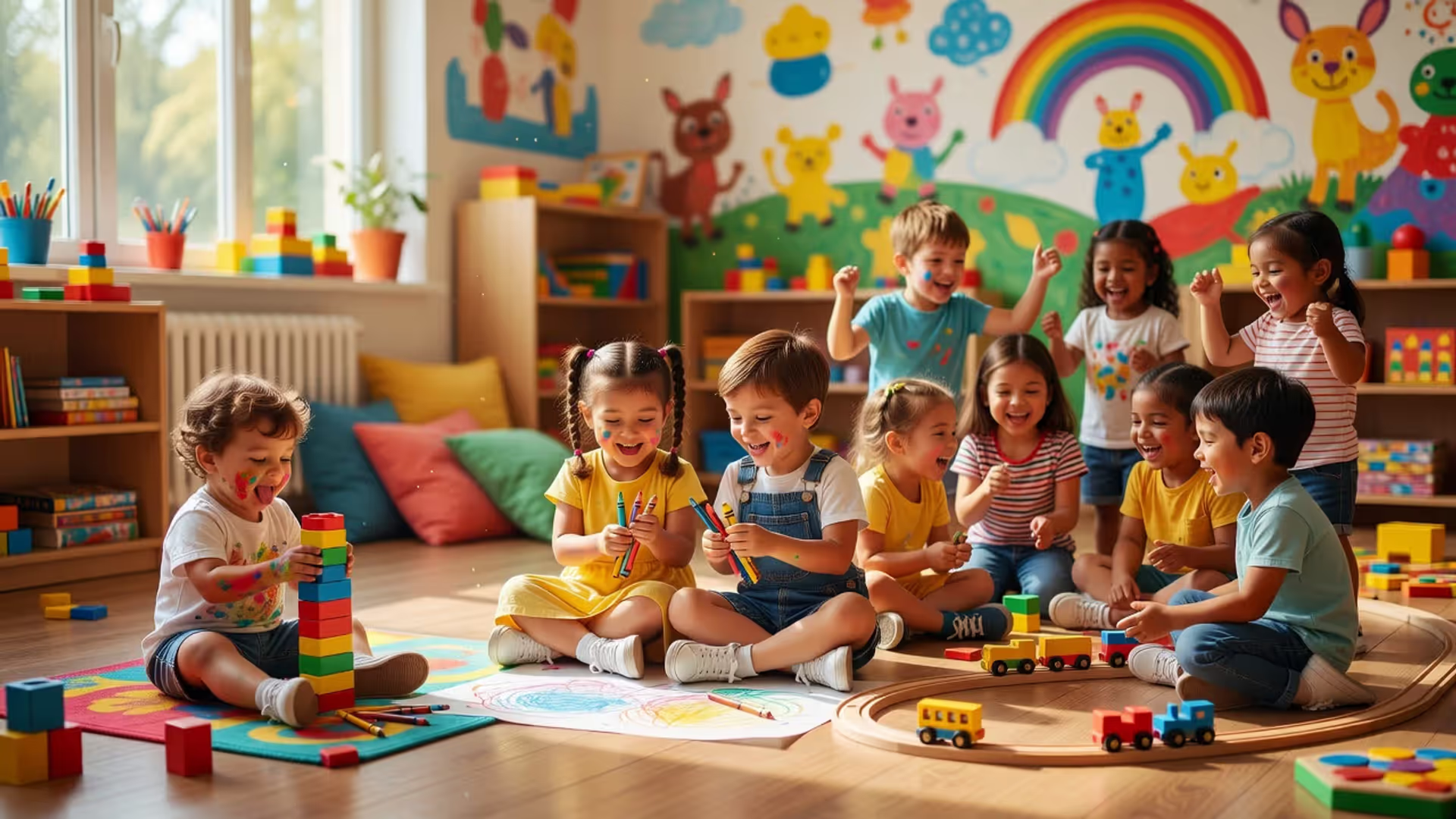
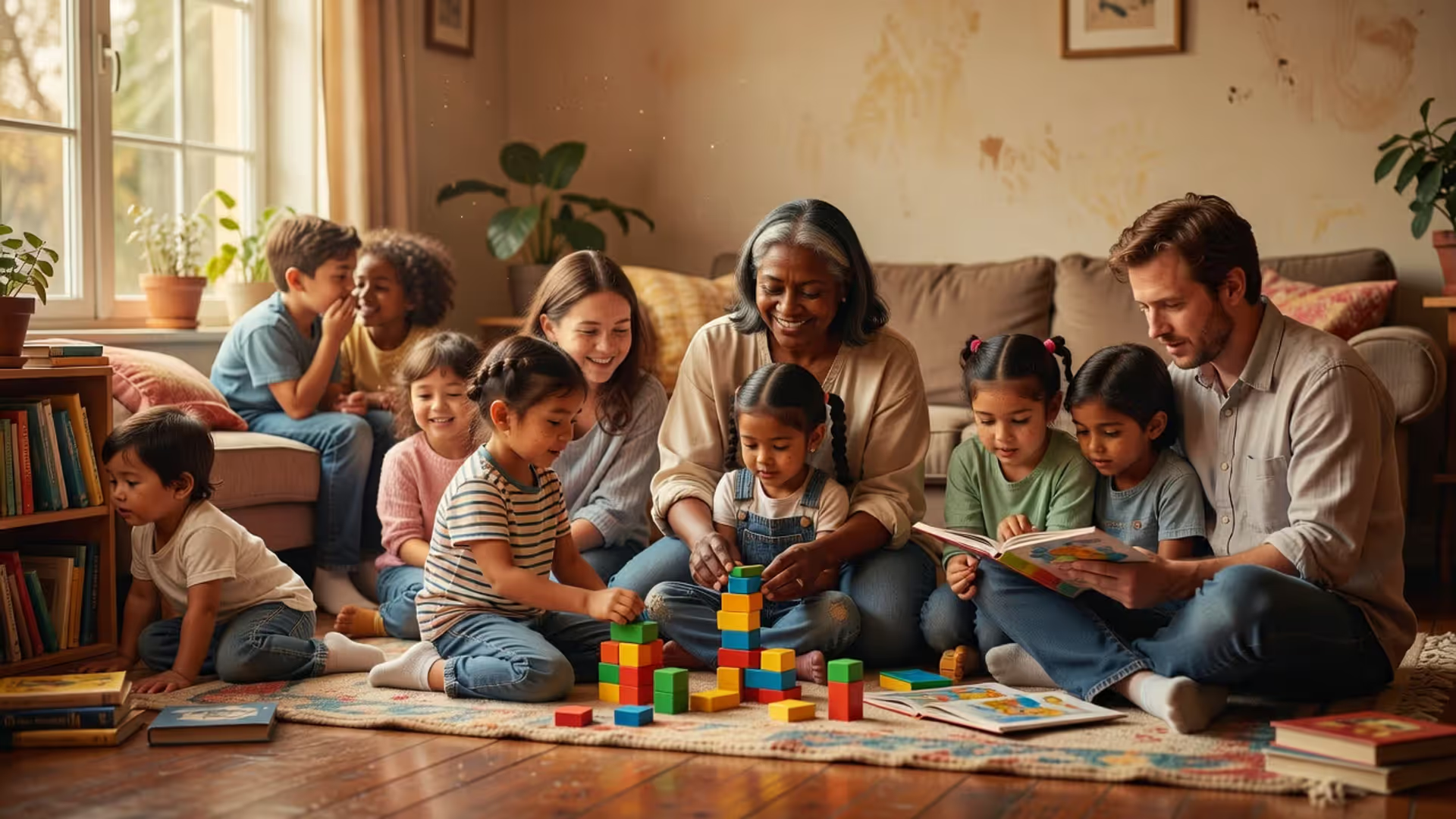
Play isn't just something kids do to pass the time. It's how they learn to exist alongside other people — how they figure out sharing, negotiation, imagination, and trust. And it doesn't happen all at once. Children move through recognizable levels of play as they grow, each one building on the last. Understanding those levels helps you see what's actually going on when a toddler ignores a classmate or when a group of six-year-olds finally starts playing together with real rules.
Where the Stages of Play Framework Comes From
The foundational work here belongs to Mildred Parten, a sociologist who published her observations in 1932 after studying preschool-aged children at the University of Minnesota. She watched kids at play — systematically, repeatedly — and noticed that social participation followed a predictable pattern. Children didn't just randomly engage or disengage. They moved through stages.
Her research identified six distinct categories of play behavior, ranging from no social engagement at all to fully collaborative group activity. That framework, published over 90 years ago, still shapes how early childhood professionals think about play development stages today. It's been updated, debated, and refined — but the core structure holds.
One thing Parten made clear from the start: these stages aren't a strict ladder where you climb up and never look back. Children revisit earlier stages throughout childhood, and even adults do versions of them. The framework describes a developmental sequence, not a rigid progression.
The Six Stages of Play in Order
Author: Rebecca Thornfield;
Source: colorfulpagescoalition.org
Unoccupied Play
This is the starting point. In unoccupied play, a child isn't really playing with anything in particular. They might be watching something that briefly catches their attention, moving their body randomly, or just standing and observing the room. It looks like nothing — but it's not.
Unoccupied play is most common in infants and very young toddlers. The child is orienting to the world. They're building sensory awareness and basic motor control. A baby kicking their legs in a crib? That's unoccupied play. It's the foundation everything else rests on.
Solitary Play
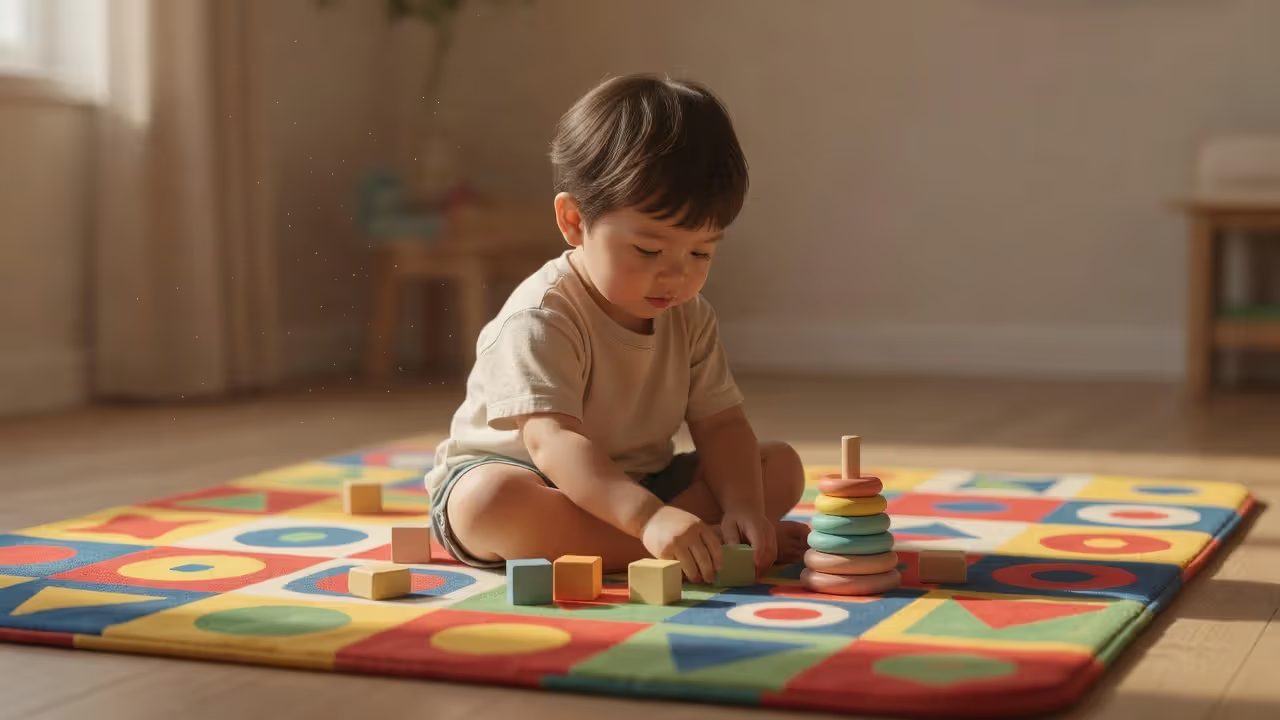
Here, the child plays alone and stays focused on their own activity. They don't try to involve other children nearby, and they're not particularly interested in what others are doing. This is normal and healthy — especially in children under three.
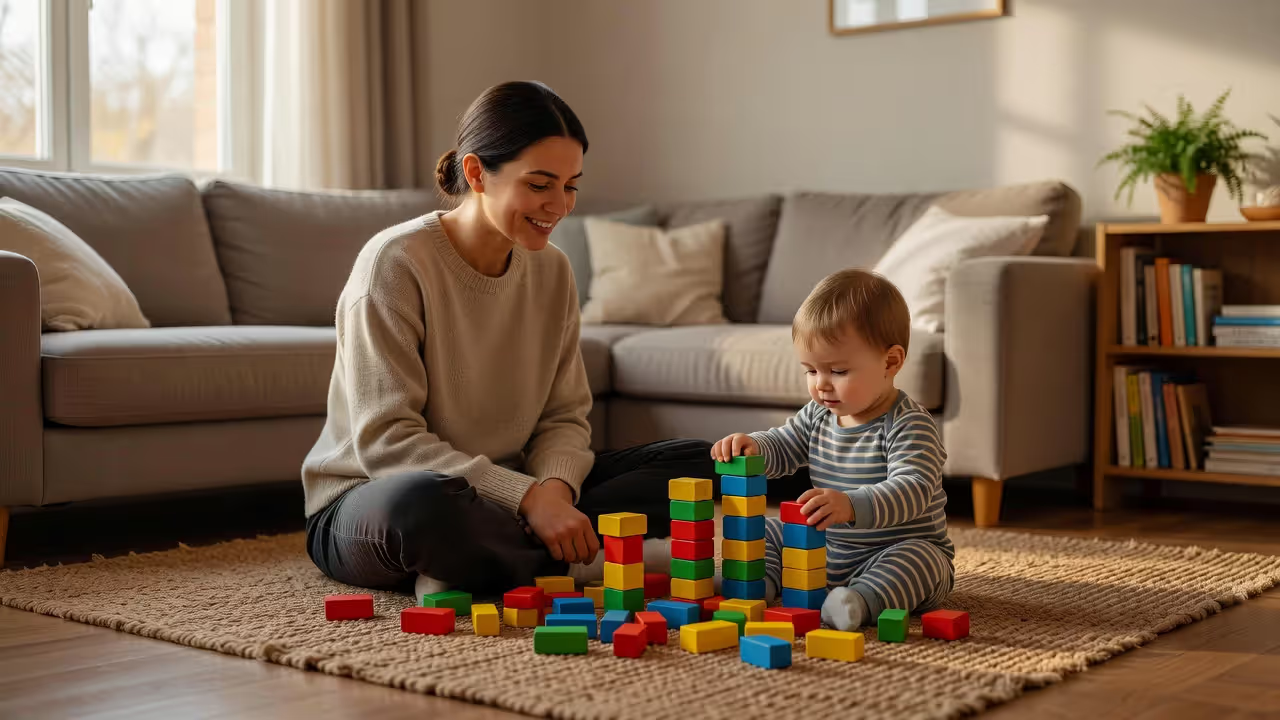
Solitary play isn't antisocial. It's where kids develop concentration, creativity, and the ability to direct their own attention. A two-year-old stacking blocks by themselves while other kids play nearby is doing exactly what they should be doing.
Onlooker Play
The child watches others play but doesn't join in. They might stand close, ask questions, or comment on what's happening — but they stay on the outside. This is more socially engaged than solitary play, even if it doesn't look that way.
Onlooker play typically shows up around ages two to three. It's a bridge. The child is gathering information, figuring out the social dynamics, and deciding whether and how to enter. Don't rush them past this stage. Watching is a form of learning.
Parallel Play
Two children play side by side, doing similar things, but not really with each other. They might both be drawing at the same table, or both pushing toy cars on the floor — independently, in parallel. There's awareness of the other child, but no real interaction.
This is one of the most commonly misunderstood stages. Parents sometimes worry that children playing next to each other without talking aren't connecting. But parallel play is genuinely social. The children are aware of each other, often mimicking each other, and building comfort with proximity. It's a critical step toward more active interaction.
Associative Play
Now children start interacting. They talk, share materials, and show interest in what the other is doing. But there's no shared goal. Two kids might both be painting, commenting on each other's work, handing each other brushes — without any plan to make something together.
Associative play typically emerges around ages three to four. It's messy and loosely organized, and that's fine. Children are practicing the social skills they'll need for true collaboration: turn-taking, communication, awareness of others' intentions.
Cooperative Play
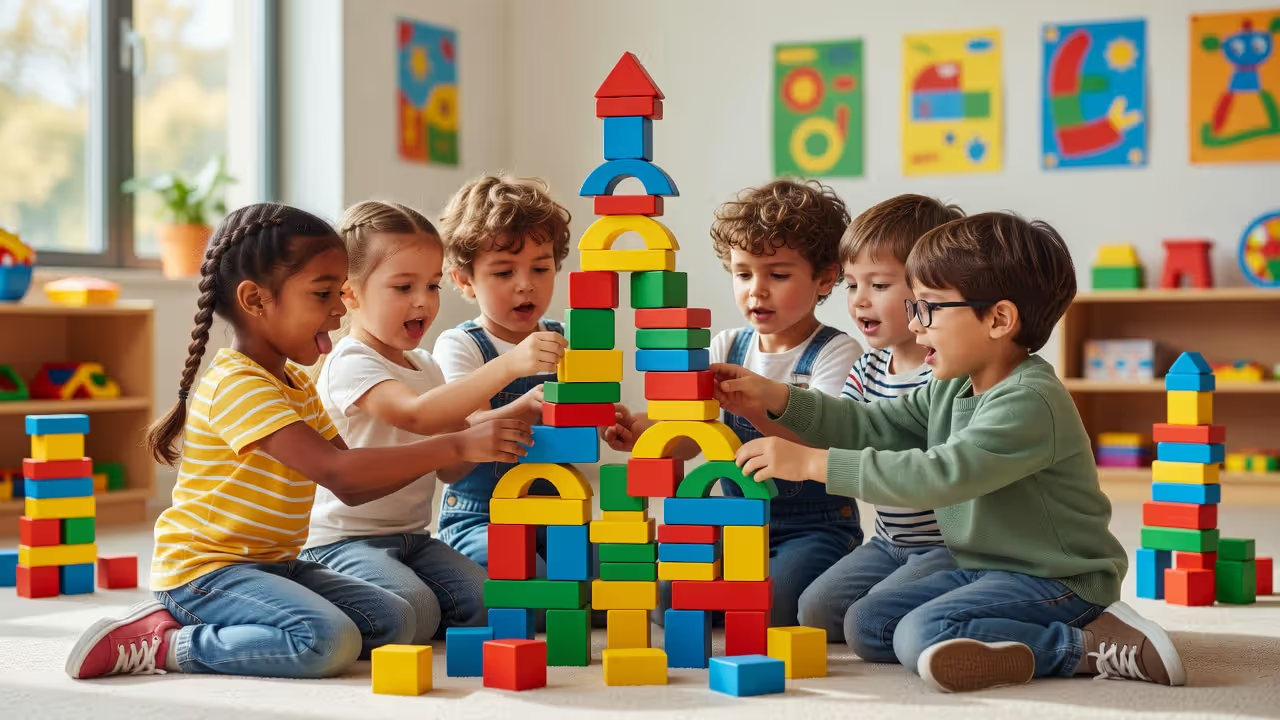
This is the most socially complex stage. Children play together toward a shared goal, with assigned roles, agreed-upon rules, and a sense of group identity. Think: building a fort together, playing house with clear roles, or organizing a game with rules everyone follows.
Cooperative play usually appears around age four or five and becomes more sophisticated through middle childhood. It requires theory of mind — the ability to understand that other people have different thoughts and intentions than your own. That's a significant cognitive achievement.
Author: Rebecca Thornfield;
Source: colorfulpagescoalition.org
How to Recognize Each Stage in Real Life
Theory is useful. But what does this actually look like when you're watching a group of kids at a playground or in a classroom?
Unoccupied play looks like wandering or staring. The child isn't focused on anything specific. Solitary play looks like deep independent focus — a child absorbed in their own world, not tracking what others are doing.
Onlooker play is the child standing at the edge of a group, watching intently. They might respond if spoken to, but they won't initiate. Parallel play is two or more kids doing the same type of activity near each other, maybe glancing over occasionally, but not coordinating.
Associative play gets louder and more social. Kids are talking, reacting to each other, borrowing each other's ideas — but there's no clear shared project. Cooperative play has a different energy: you'll see negotiation, role assignment, and sometimes conflict about the rules.
The pattern I see most often in classrooms is associative play being mistaken for cooperative play. Adults assume the kids are "playing together" because they're talking. But if there's no shared goal, it's still associative. That's not a problem — it's just worth knowing the difference.
What the Research Says About Play Development Stages
Parten's original framework has been tested and refined for decades. A few things the research consistently shows:
The stages overlap significantly. A five-year-old will still engage in solitary play, and that's not regression — it's flexibility. Children choose the type of play that fits the situation, their mood, and their relationship with the people around them.
Age ranges are guides, not rules. Some children enter cooperative play earlier than typical; others take longer. Temperament, cultural context, and prior experience all play a role. Research published in developmental psychology journals has repeatedly shown that the sequence is more reliable than the timing.
One common misconception: that solitary play in older children is always a red flag. It isn't. Studies have distinguished between active solitary play (a child building something complex alone) and passive solitary behavior (a child sitting without engaging). The former is associated with creativity and independence. The latter may warrant closer attention, but only in context.
Author: Rebecca Thornfield;
Source: colorfulpagescoalition.org
How Parents and Educators Can Support Each Stage
You don't need to push children through these stages. But you can create conditions that make each stage easier and more enriching.
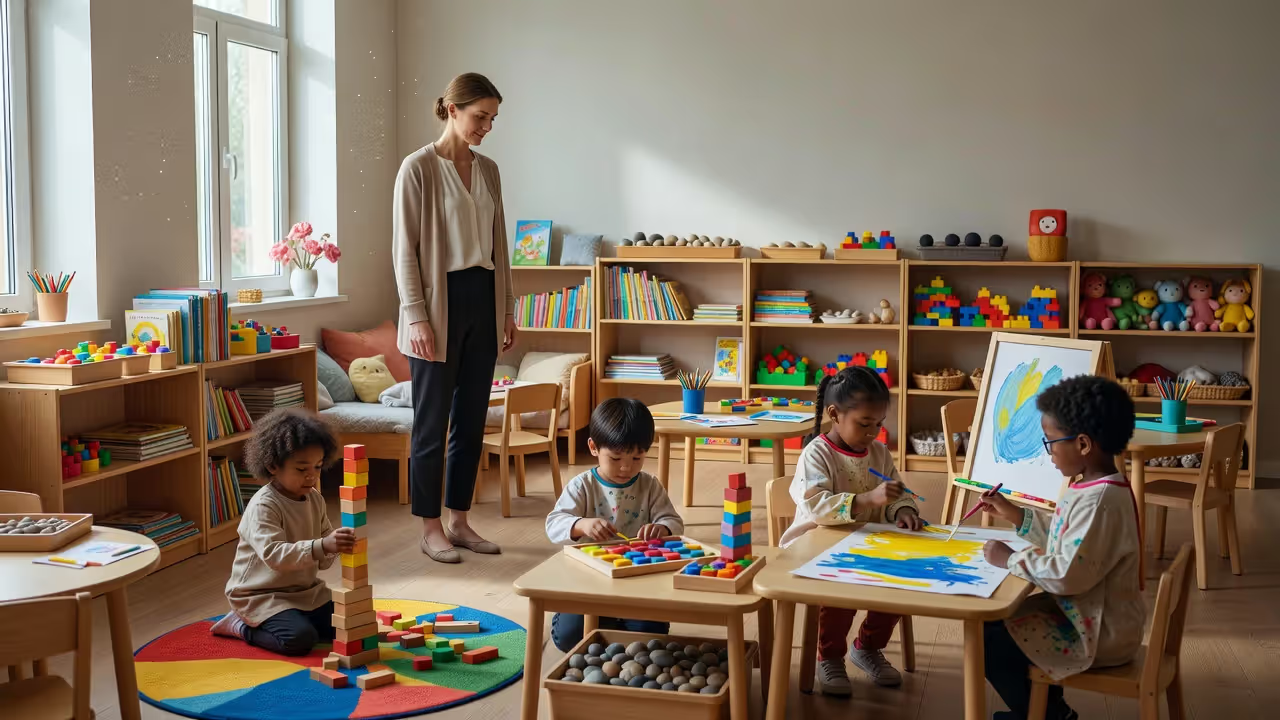
For unoccupied and solitary play, give children unstructured time. Resist the urge to fill every moment with directed activity. Open-ended toys — blocks, clay, simple art supplies — support independent exploration without requiring a goal.
For onlooker play, don't force participation. If a child is watching, let them watch. You can narrate what's happening in the group ("They're building a train track together") to help them process what they're seeing. Pressure to join often backfires.
For parallel play, set up environments where children naturally work near each other — a shared table with individual projects, a sandbox with multiple shovels. Proximity without obligation is the key. Let the awareness build on its own.
For associative play, introduce materials that invite conversation: art projects, dramatic play props, building sets with enough pieces for two. Don't over-structure it. The loose, unplanned quality of associative play is part of what makes it developmentally useful.
For cooperative play, small groups work better than large ones. Three or four children can negotiate roles and rules; eight can't. Games with simple shared goals — building something together, acting out a story — give children a structure to practice within.
Author: Rebecca Thornfield;
Source: colorfulpagescoalition.org
When Play Development May Signal a Concern
Most variation in play development is completely normal. But there are some patterns worth paying attention to.
If a child past age four consistently avoids all social interaction during play — not just preferring solitary play sometimes, but showing no interest in other children whatsoever — that's worth discussing with a pediatrician. The same applies if a child seems distressed by other children's presence, or if onlooker behavior is paired with significant anxiety.
Persistent, exclusive solitary play in school-age children (five and older), especially when the child seems to want connection but can't manage it, may indicate social skills delays or anxiety that could benefit from support. It's not about labeling — it's about getting the child what they need earlier rather than later.
Signs that typically prompt a referral to a developmental specialist include: no pretend play by age three, no interest in peers by age four, or consistent inability to follow simple shared rules in group play by age five or six. These aren't guarantees of a problem, but they're signals worth taking seriously.
The reassuring reality: most children who seem "behind" in play development catch up with time, supportive environments, and sometimes a little targeted coaching. Early observation matters, but early panic doesn't help anyone.
| Stage Name | Typical Age Range | Key Behavior | Social Involvement Level |
| Unoccupied Play | Birth–3 months | Random movement, brief attention | None |
| Solitary Play | 0–2 years | Plays alone, ignores nearby children | None |
| Onlooker Play | 2–3 years | Watches others without joining | Passive/observational |
| Parallel Play | 2–4 years | Plays near others, not with them | Low/indirect |
| Associative Play | 3–4 years | Interacts, shares, no shared goal | Moderate |
| Cooperative Play | 4–6+ years | Shared goals, roles, and rules | High |
Play is essential to development because it contributes to the cognitive, physical, social, and emotional well-being of children and youth.
— Ginsburg Kenneth
Frequently Asked Questions About Levels of Play
Understanding how children move through these levels of play gives you a useful lens — whether you're a parent watching your toddler at the park, a teacher setting up a classroom, or someone who just wants to make sense of what's happening when kids get together. The stages aren't a checklist to rush through. They're a map of how social development actually unfolds, one interaction at a time.
Related Stories
Read more
Read more


The content on this website is provided for general informational and educational purposes only. It is intended to explain concepts related to parenting, child development, family caregiving, adoption, fostering, and child safety.
All information on this website, including articles, guides, and examples, is presented for general educational purposes. Outcomes may vary depending on individual family circumstances.
This website does not provide professional medical, psychological, or legal advice, and the information presented should not be used as a substitute for consultation with qualified pediatricians, child psychologists, or family counselors.
The website and its authors are not responsible for any errors or omissions, or for any outcomes resulting from decisions made based on the information provided on this website.