
Pretend Play Development in Children Explained
Pretend Play Development in Children Explained

Children learn more through play than most adults realize. A toddler feeding a stuffed bear or a five-year-old running a pretend bakery isn't just having fun — they're building the mental architecture that supports language, empathy, and problem-solving for years to come. Pretend play development is one of the most studied areas in early childhood research, and the findings are hard to ignore. This guide breaks down what it looks like, when it happens, and why it matters so much.
What Pretend Play Actually Means
Pretend play is when a child treats one thing as if it were something else, or acts out a role that isn't their own. Simple definition, but the implications run deep.
It's different from general play. A baby shaking a rattle is playing — but that's sensory and motor exploration. Pretend play requires a mental leap: the ability to hold a symbol in mind. A banana becomes a phone. A cardboard box becomes a spaceship. That shift is called symbolic play in children, and it marks a turning point in cognitive development.
Symbolic play means the child understands that one object or action can represent another. That's not a small thing. It's the same mental skill that underpins reading (letters represent sounds), math (numbers represent quantities), and language itself. So when your two-year-old pretends to pour tea from an empty pot, they're not just being cute. They're demonstrating a foundational cognitive ability.
Pretend play development unfolds gradually. It doesn't switch on overnight. And it looks very different at 14 months versus 5 years.
How Pretend Play Develops by Age
The progression follows a fairly predictable path, though every child has their own pace. Here's what research and clinical observation tell us about the stages.
Ages 12–18 Months: First Signs of Symbolic Play
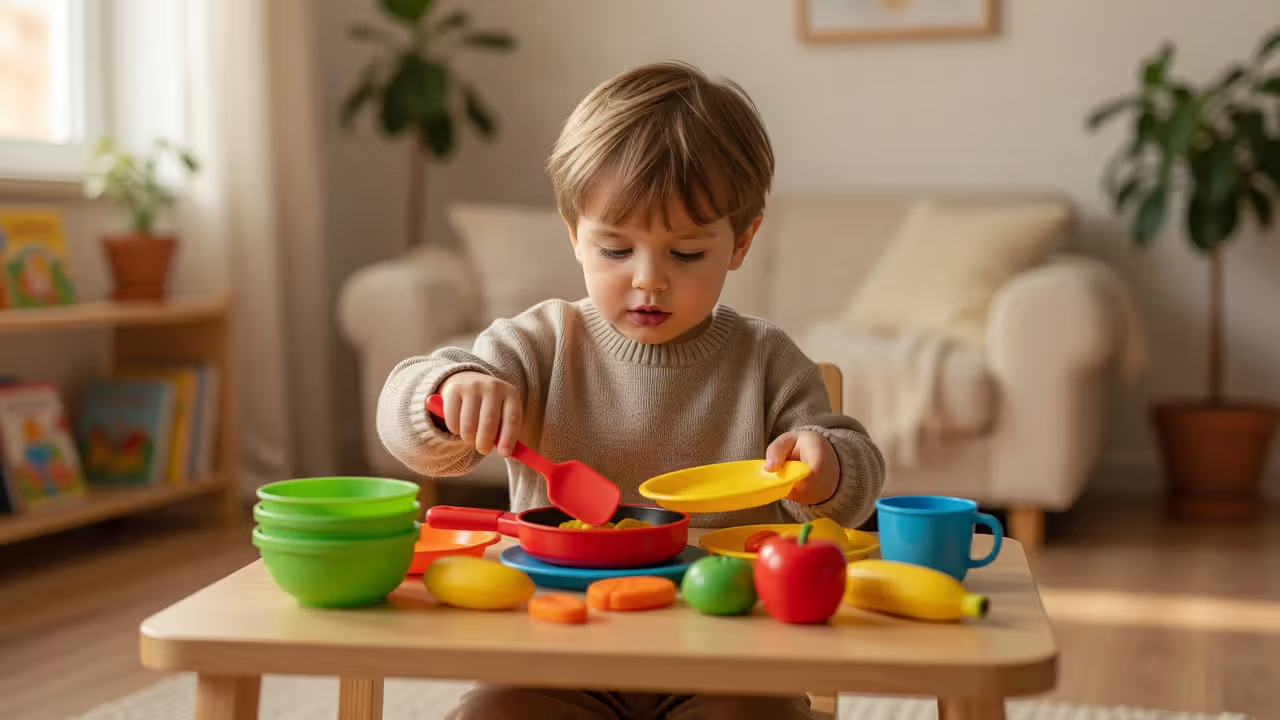
This is where it begins. Around 12 months, most children start showing the earliest pretend behaviors — usually self-directed. A child might pretend to drink from an empty cup or pretend to sleep by lying down and smiling.
By 15–18 months, they extend this to others. They'll hold the cup to a parent's mouth or feed a doll. That shift — from self to other — is a meaningful developmental step. It shows the child understands that actions can apply beyond themselves.
At this stage, the play is simple, brief, and often tied to familiar routines. Don't expect elaborate scenarios. A few seconds of pretend stirring a pot counts.
Ages 2–3 Years: Simple Role-Playing Begins
This is when things get more recognizable. Two-year-olds start substituting objects — using a block as a car, a stick as a spoon. By age three, they're beginning to take on roles: "I'm the mommy," "You be the dog."
Language and pretend play grow together here. As vocabulary expands, so does the complexity of play scenarios. A 3-year-old might narrate what's happening: "Now the baby is crying and I have to give her medicine."
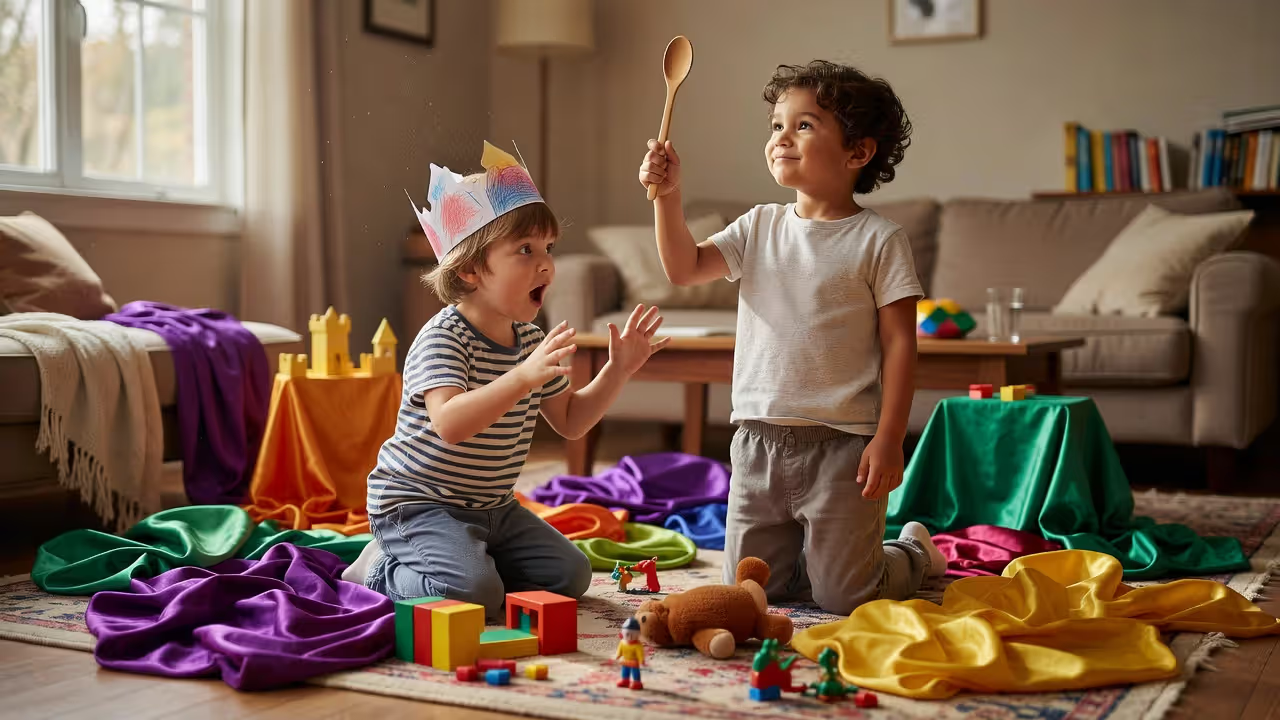
One counterintuitive point: kids this age don't need realistic toys to engage in imaginative play. In fact, open-ended objects — a cardboard tube, a blanket, a pile of blocks — often spark richer play than highly detailed plastic replicas. Simpler is usually better.
Ages 4–6 Years: Complex Imaginative Scenarios
By age four, pretend play becomes genuinely elaborate. Children negotiate roles, create storylines, and sustain play over extended periods — sometimes returning to the same story across multiple days.
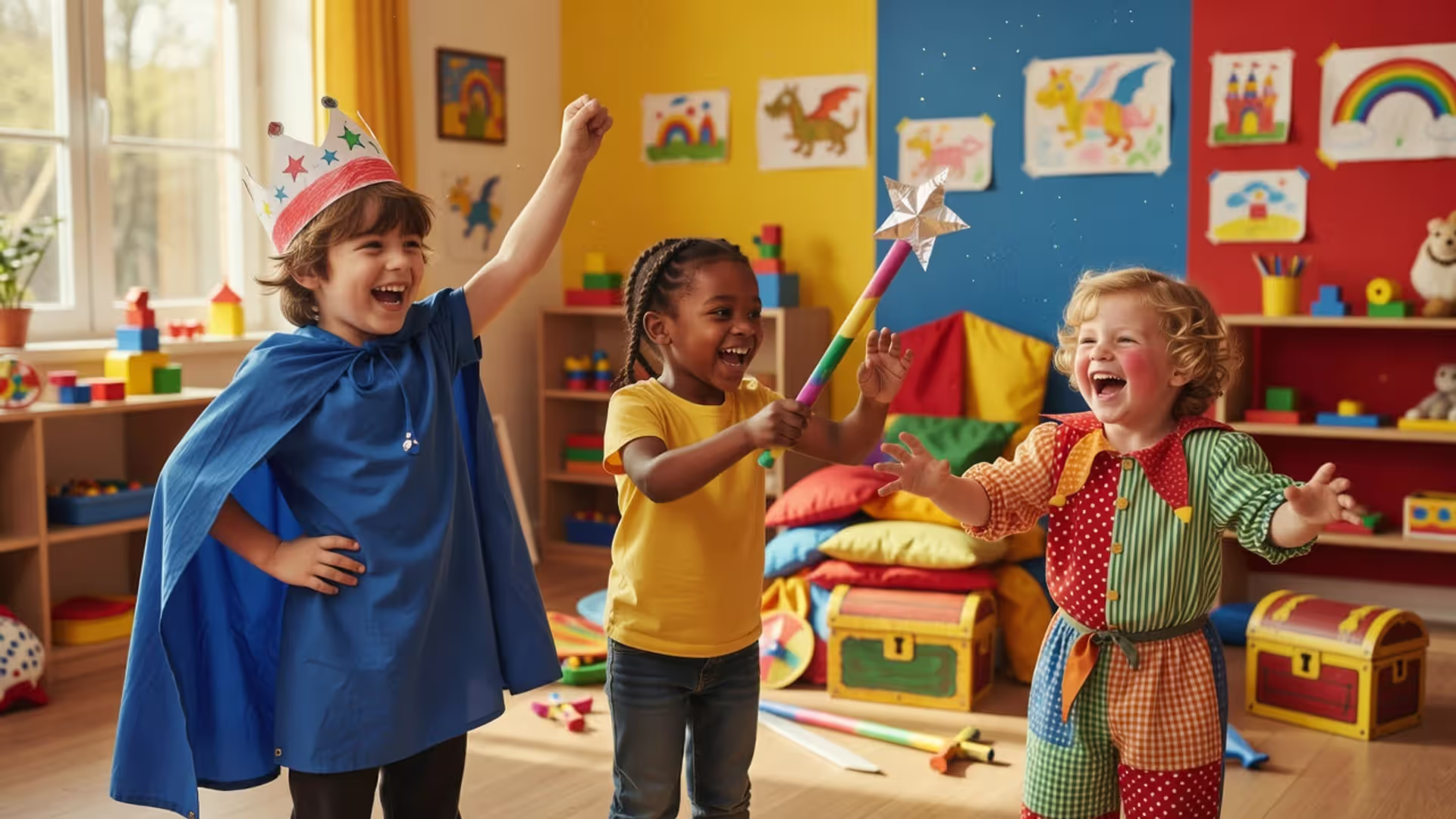
They also start playing with peers in coordinated ways. This is sociodramatic play: shared imaginative scenarios where kids assign parts, set rules, and manage conflict. "You can't be the queen because I'm already the queen" is a social negotiation happening inside a fictional frame.
Author: Madeline Ashcroft;
Source: colorfulpagescoalition.org
By age six, many children can sustain detailed fantasy worlds that blend real and imagined elements. This is peak imaginative play development for most kids.
Why Pretend Play Matters for Child Development
The importance of pretend play isn't just about creativity. It reaches into nearly every domain of development.
Cognitive growth. Pretend play requires planning, sequencing, and abstract thinking. When a child sets up a pretend restaurant, they're organizing a mental script: customers arrive, orders are taken, food is prepared, bills are paid. That's executive function in action.
Language development. Children use more complex vocabulary and longer sentences during pretend play than in almost any other context. They practice words they've heard but don't yet use in real conversation. A child who rarely says "perhaps" in daily life might use it while playing a character.
Emotional regulation. Play lets children rehearse difficult emotions safely. A child who's anxious about a doctor's visit might play "doctor" dozens of times beforehand. That's not avoidance — it's processing. Research from developmental psychologists consistently links rich pretend play to better emotional coping skills.
Social skills. Shared pretend play teaches turn-taking, perspective-taking, and negotiation. These aren't soft skills. They're the foundation of functional relationships.
The pretend play benefits extend to academic readiness too. Children who engage in more imaginative play tend to show stronger early literacy and numeracy skills — partly because the same symbolic thinking that drives pretend play also drives reading and math.
Author: Madeline Ashcroft;
Source: colorfulpagescoalition.org
Common Pretend Play Examples at Home and in School
It helps to know what to look for. The pattern I see most often is parents not recognizing play as pretend because it looks so ordinary.
At home:
- A toddler putting a doll to bed and whispering "shh, baby sleeping"
- A 3-year-old using a hairbrush as a microphone and performing a concert
- Two siblings running a "grocery store" with canned goods from the pantry
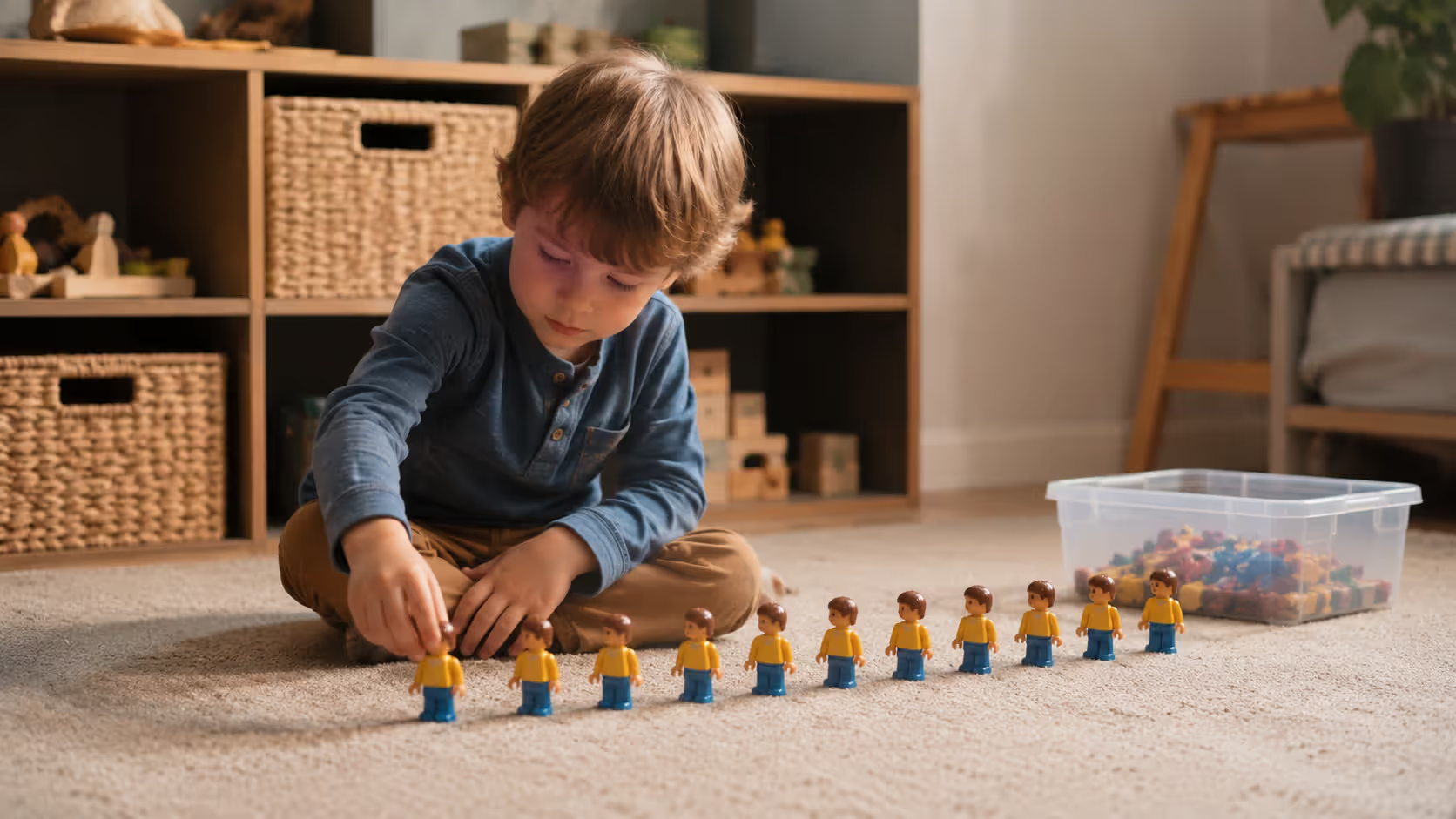
- A child narrating an elaborate adventure while moving toy figures across the floor
At school or in childcare:
- Dress-up corners where children become firefighters, chefs, or doctors
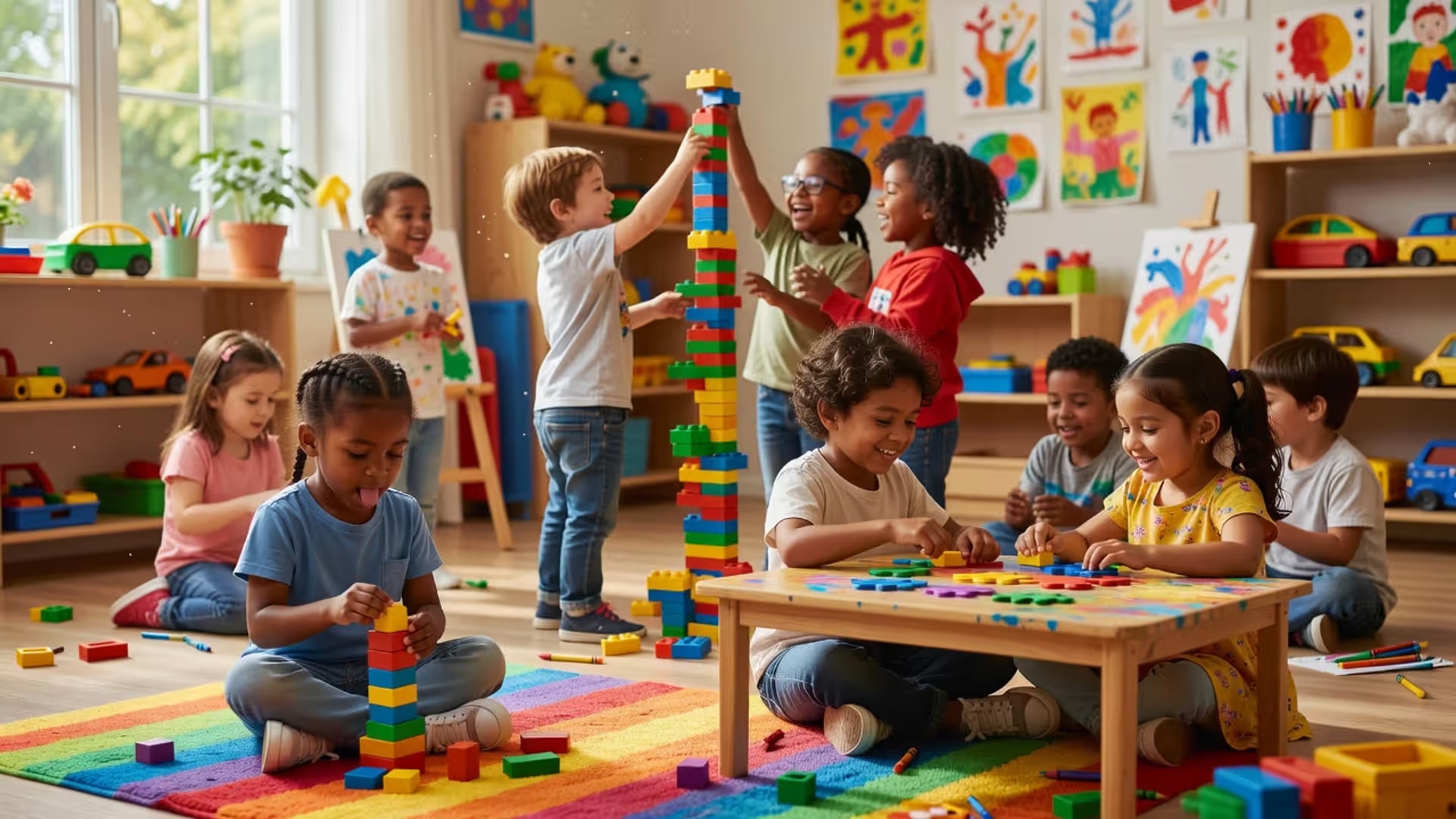
- Block play that becomes a city with neighborhoods and traffic rules
- Sandbox scenarios involving buried treasure and imaginary pirates
- Puppet shows where children voice multiple characters with distinct personalities
These are all pretend play examples that reflect healthy imaginative play development. The settings differ, but the underlying process is the same: children are using symbols, taking perspectives, and constructing narratives.
A common mistake educators make is over-structuring this time. The moment an adult turns pretend play into a directed activity with a "right" outcome, much of the developmental benefit disappears. Guided discovery beats scripted instruction here.
How Adults Can Support Imaginative Play Development
You don't need to buy expensive toys or follow a curriculum. Supporting imaginative play development is mostly about creating the right conditions.
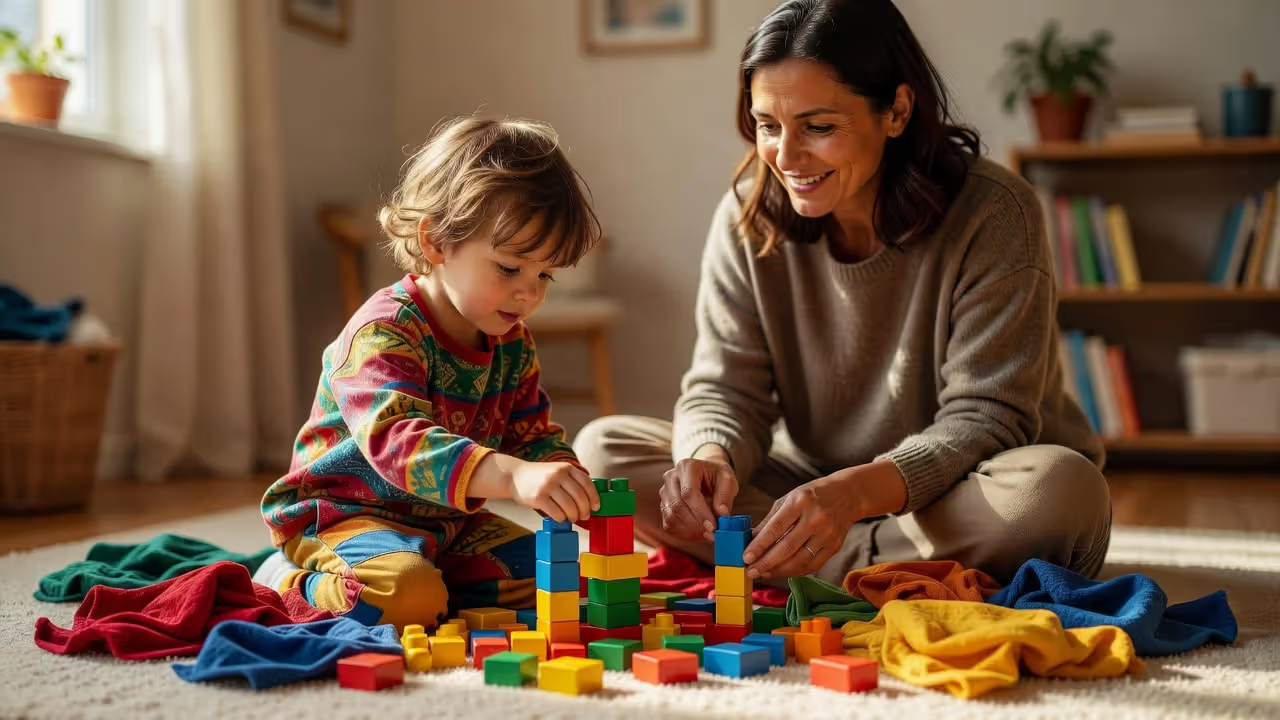
Set up an environment that invites play. Open-ended materials matter more than themed playsets. Scarves, cardboard boxes, wooden blocks, old clothes for dress-up — these spark more creativity than a single-purpose toy ever will.
Follow the child's lead. If you join in, take a supporting role. Ask questions that extend the story rather than redirect it. "What happens next?" works better than "Let's make the dragon friendly now."
Protect unstructured time. Children need stretches of time with no agenda. Boredom is often the doorway to imaginative play. A child who says "I'm bored" and isn't immediately handed a screen or activity will often find their way into pretend play within minutes.
Don't correct the logic. If a child says the moon is made of cheese in their story, don't fact-check it. The fictional frame is where the learning happens. Interrupting it to teach accuracy kills the play.
Author: Madeline Ashcroft;
Source: colorfulpagescoalition.org
And don't worry if your child sometimes prefers solo play. Solitary pretend play is completely normal and developmentally valuable, especially before age three.
Signs That Pretend Play May Be Delayed
Most children follow a similar arc through the pretend play stages. But some don't, and it's worth knowing what to watch for.
Potential signs of delay:
- No evidence of symbolic play by 18 months (not pretending to eat, sleep, or use objects functionally)
- Limited or no pretend play by age two
- No interest in role-playing or taking on characters by age three
- Difficulty engaging in shared pretend play with peers by age four or five
- Play that's highly repetitive and rigid, with no narrative or symbolic substitution
These signs don't automatically mean something is wrong. Context matters. A child who's been in limited social environments may just need more exposure. A child going through a major transition might temporarily pull back from play.
But if you're seeing multiple signs together, or if pretend play development seems significantly behind peers, it's worth raising with a pediatrician or early childhood specialist. Delays in pretend play can sometimes be an early indicator of language delays, developmental differences, or conditions like autism spectrum disorder — all of which benefit from early support.
The goal isn't to alarm you. It's to give you information so you can act early if needed.
Author: Madeline Ashcroft;
Source: colorfulpagescoalition.org
Pretend Play Stages at a Glance
| Age Range | Typical Play Behavior | Developmental Milestone Supported | Example Activity |
| 12–18 months | Self-directed pretend (pretending to eat, sleep) | Symbolic thinking begins | Pretending to drink from an empty cup |
| 18–24 months | Extends pretend to others and objects | Object permanence, early empathy | Feeding a stuffed animal |
| 2–3 years | Object substitution, simple role-taking | Language expansion, identity awareness | Using a block as a car; "I'm the daddy" |
| 3–4 years | Sequential play scripts, basic narratives | Executive function, narrative thinking | Playing "doctor" with a toy kit |
| 4–6 years | Complex sociodramatic play with peers | Social negotiation, perspective-taking | Running a pretend school or restaurant with friends |
In play a child always behaves beyond his average age, above his daily behavior; in play it is as though he were a head taller than himself.
— Vygotsky Lev
Frequently Asked Questions About Pretend Play Development
Play isn't a break from learning. For young children, it is the learning. Understanding how pretend play develops — and what supports it — gives parents and educators a real advantage in those early years. You don't need a perfect setup or a schedule. You mostly need to get out of the way, offer open-ended materials, and trust that a child with time and space will find their way into imaginative worlds that are building something real.
Related Stories
Read more
Read more

The content on this website is provided for general informational and educational purposes only. It is intended to explain concepts related to parenting, child development, family caregiving, adoption, fostering, and child safety.
All information on this website, including articles, guides, and examples, is presented for general educational purposes. Outcomes may vary depending on individual family circumstances.
This website does not provide professional medical, psychological, or legal advice, and the information presented should not be used as a substitute for consultation with qualified pediatricians, child psychologists, or family counselors.
The website and its authors are not responsible for any errors or omissions, or for any outcomes resulting from decisions made based on the information provided on this website.