
Understanding the Slow to Warm Up Temperament in Children
Understanding the Slow to Warm Up Temperament in Children

Content
Content
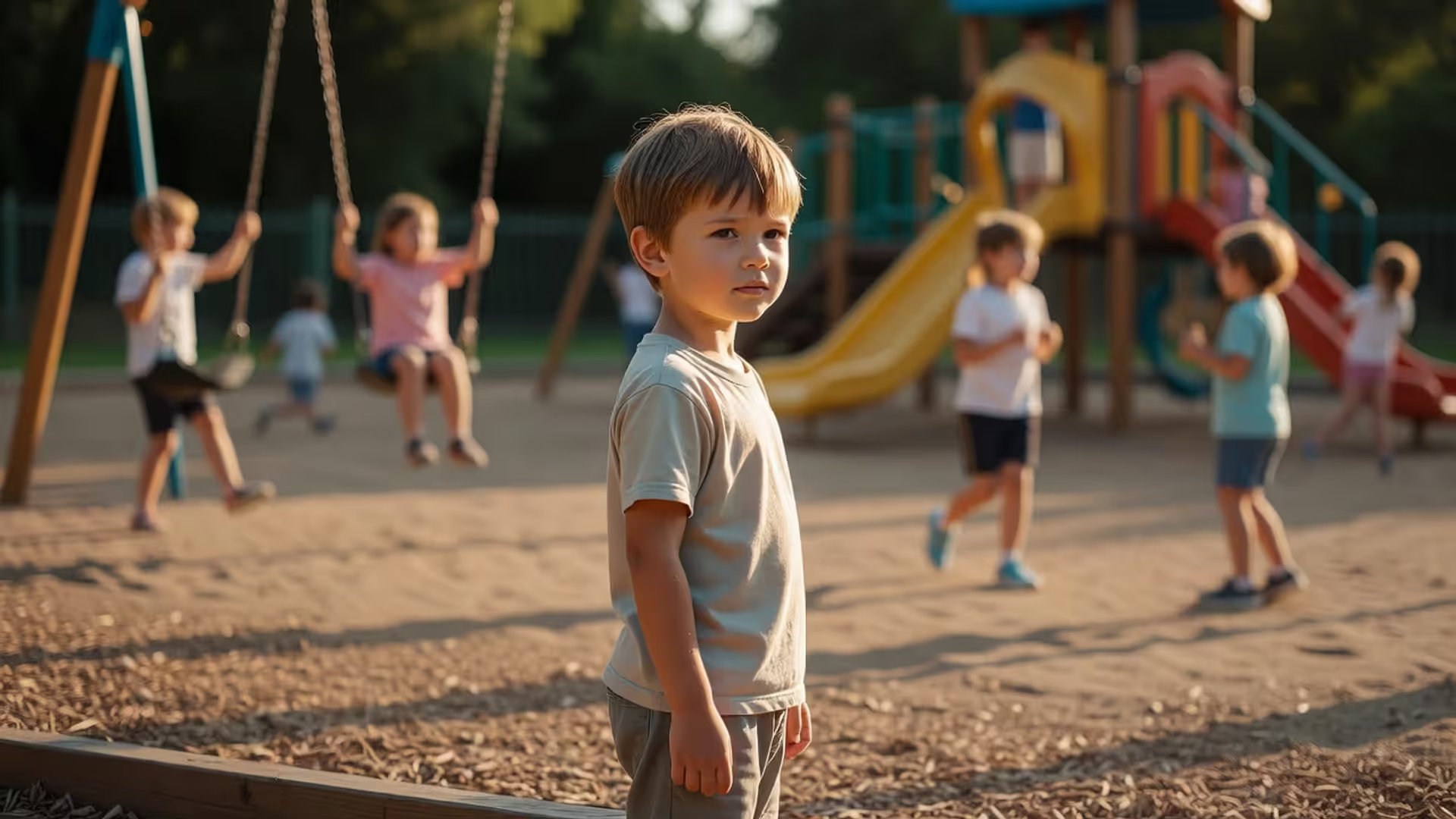
Some children walk into a birthday party and immediately join the chaos. Others hang back near the door, watching, waiting — and that's perfectly okay. The slow to warm up temperament is one of the most misread patterns in early childhood, often mistaken for shyness, anxiety, or even defiance. But it's none of those things. It's a stable, biologically rooted way of engaging with the world, and once you understand it, a lot of your child's behavior will start to make complete sense.
What "Slow to Warm Up" Actually Means
The term comes directly from the landmark New York Longitudinal Study, a decades-long research project led by psychiatrists Stella Chess and Alexander Thomas beginning in the 1950s. They identified nine core temperament dimensions — things like activity level, distractibility, and adaptability — and used them to group children into three broad temperament types in children: easy, difficult, and slow to warm up.
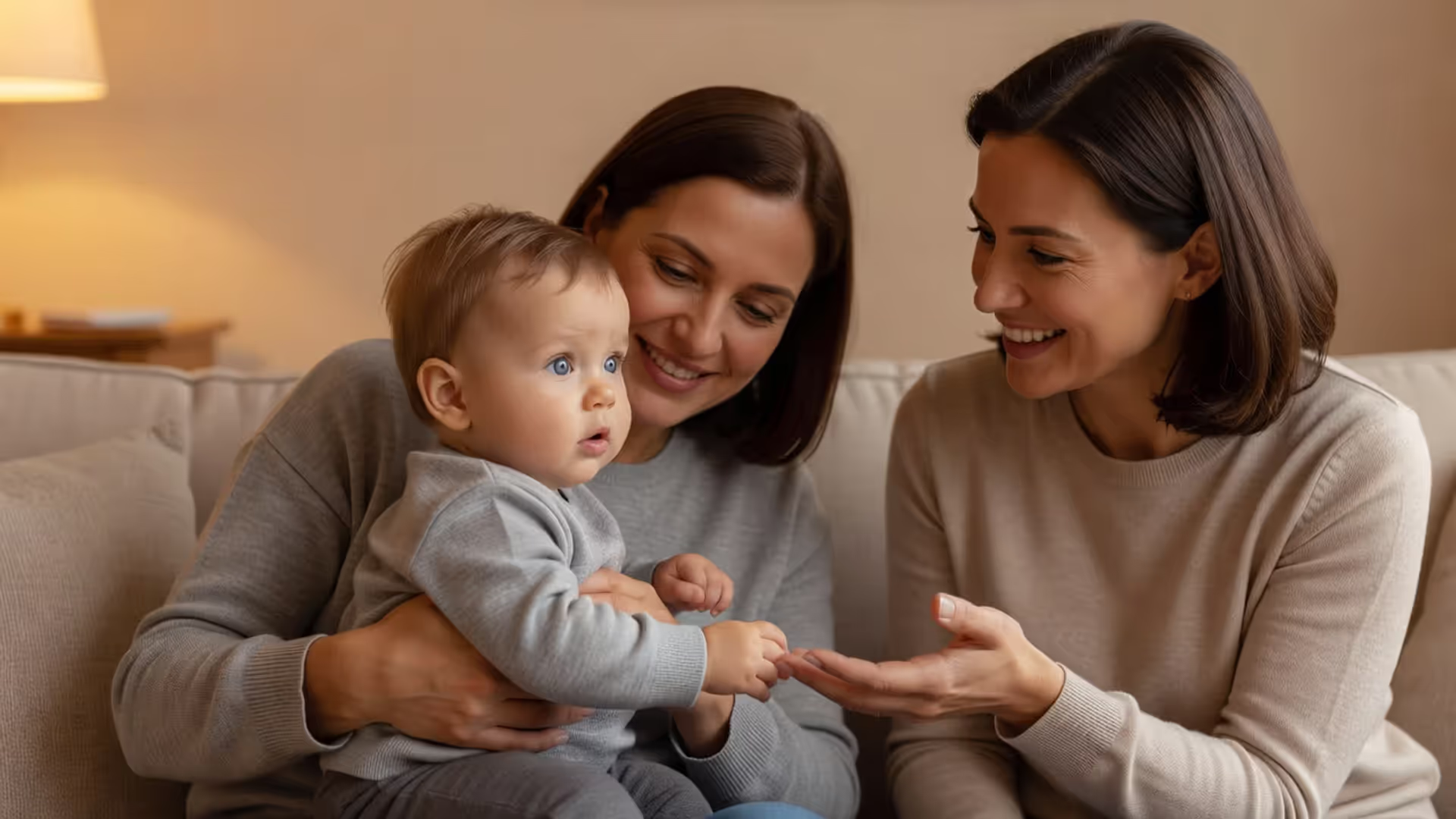
The slow to warm up category describes roughly 15% of children. These kids don't refuse new situations outright, and they're not chronically anxious. They just need more time. They observe before they participate. They pull back initially, then gradually engage once they've had a chance to assess what's happening around them.
Understanding child temperament starts with accepting that these patterns aren't choices. Your child isn't being difficult or rude when they won't hug a relative they haven't seen in six months. They're doing exactly what their nervous system is wired to do.
The slow-to-warm-up child is not a problem child. The problem arises only when adults fail to recognize the child's need for time and instead label the behavior as abnormal.
— Thomas Alexander
How It Differs From Shyness or Anxiety
This is where a lot of parents get tripped up. Shyness is a social trait — it involves discomfort and self-consciousness around others. Anxiety is a clinical concern that often involves worry, avoidance, and distress that interferes with daily functioning. The slow to warm up temperament is neither.
The key difference? Given enough time and low pressure, these children do engage. A shy child may never feel comfortable at that birthday party. An anxious child might spiral into distress. But a slow-to-warm-up child? By the second hour, they're often playing right alongside everyone else. The trajectory is different.
Key Traits Parents and Teachers Tend to Notice
There's a recognizable pattern to these kids. You've probably seen it — or lived it. The child temperament traits that show up most consistently in slow to warm up children include initial withdrawal from new people or places, low-to-moderate adaptability, mild rather than intense emotional reactions, and a predictable need for transition time.
A few specifics worth knowing:
Initial withdrawal doesn't mean they're unhappy. They're processing. It's quiet, not distressed.
Mood intensity tends to be low. These kids often don't throw tantrums when frustrated — they go quiet or clingy instead. That can actually make it harder for adults to notice they're struggling.
They're typically regular in their routines. Sleep schedules, mealtimes — these kids often thrive on predictability, and disruptions hit harder than they would for an "easy" temperament child.
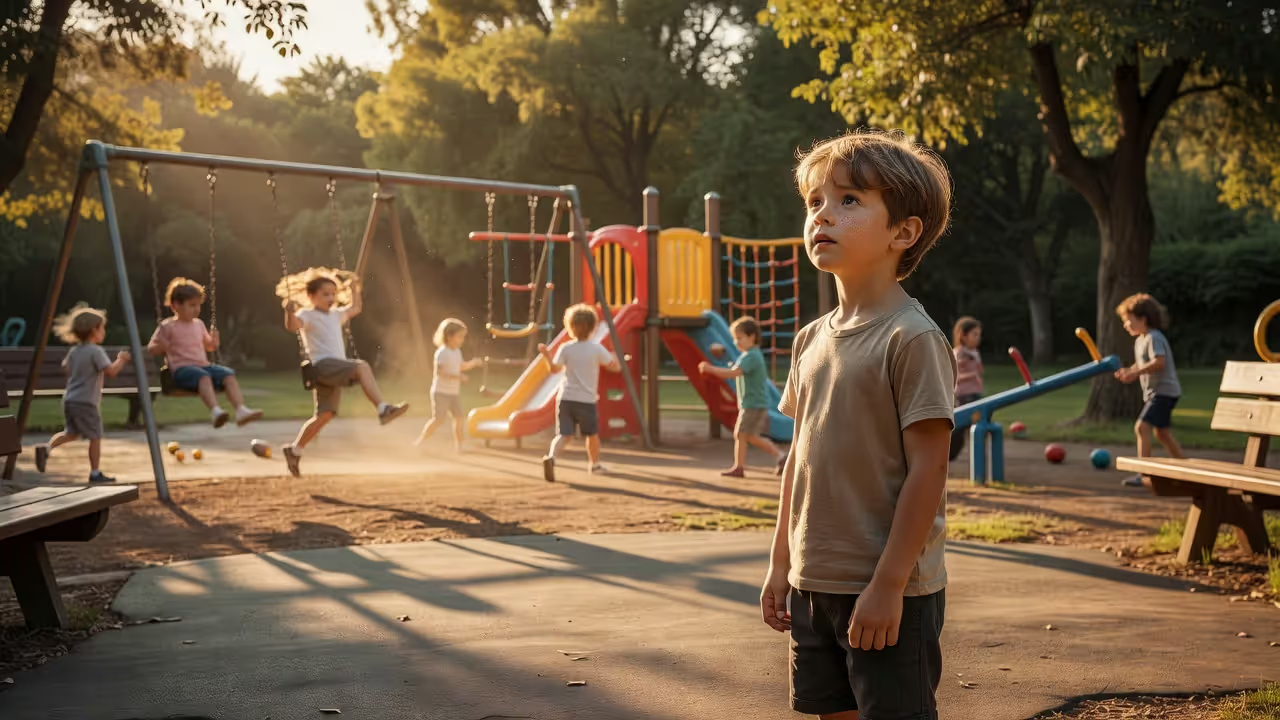
The common mistake I see most often is adults interpreting the withdrawal as rejection or opposition. A teacher might read a child's reluctance to join group time as defiance. A grandparent might feel hurt when the child won't engage. But it's not personal — it's temperamental.
Author: Olivia Brackenridge;
Source: colorfulpagescoalition.org
One more thing: slow to warm up children often do best when they can watch an activity before joining it. Forcing early participation usually backfires. Letting them observe first almost always leads to better outcomes.
Slow to Warm Up vs. Easy and Difficult Temperament Types
Chess and Thomas described three broad temperament categories. Understanding how they compare helps clarify what's actually going on with your child — and why the easy vs. difficult temperament framing misses some nuance.
| Dimension | Easy | Difficult | Slow to Warm Up |
| Adaptability | High — adjusts quickly | Low — resists change | Moderate — adjusts slowly but eventually |
| Mood Intensity | Mild to positive | Intense, often negative | Mild, muted reactions |
| Reaction to New Situations | Approaches readily | Withdraws or protests loudly | Withdraws quietly, then warms |
| Activity Level | Moderate | Often high | Low to moderate |
| Regularity of Routines | Predictable | Irregular | Fairly predictable |
The easy temperament child is the one who adapts, smiles, and rolls with transitions. About 40% of children fall here. The difficult temperament child — roughly 10% — tends toward intense reactions, irregular patterns, and strong resistance to change. The slow to warm up child sits in a different lane entirely.
And here's the counterintuitive part: slow to warm up children are sometimes harder to parent than "difficult" children, not because their behavior is more extreme, but because their needs are easy to overlook. Their distress is quiet. Their withdrawal is subtle. Adults can miss it entirely.

Author: Olivia Brackenridge;
Source: colorfulpagescoalition.org
Real-Life Slow to Warm Up Temperament Examples
Abstract descriptions only go so far. Here's what the slow to warm up temperament actually looks like in daily life.
School drop-off. Every morning, Maya clings to her dad at the classroom door. She doesn't cry — she just freezes. Her teacher reports that within ten minutes of dad leaving, Maya is engaged and participating normally. That's a textbook slow to warm up pattern. The transition is the hard part, not the situation itself.
Playdates. A slow to warm up child invited to a new friend's house might spend the first 30 to 45 minutes sitting close to the parent, watching the other child play. By the end of two hours, they may be laughing and chasing each other around the yard. The warm-up period is real — and it works.
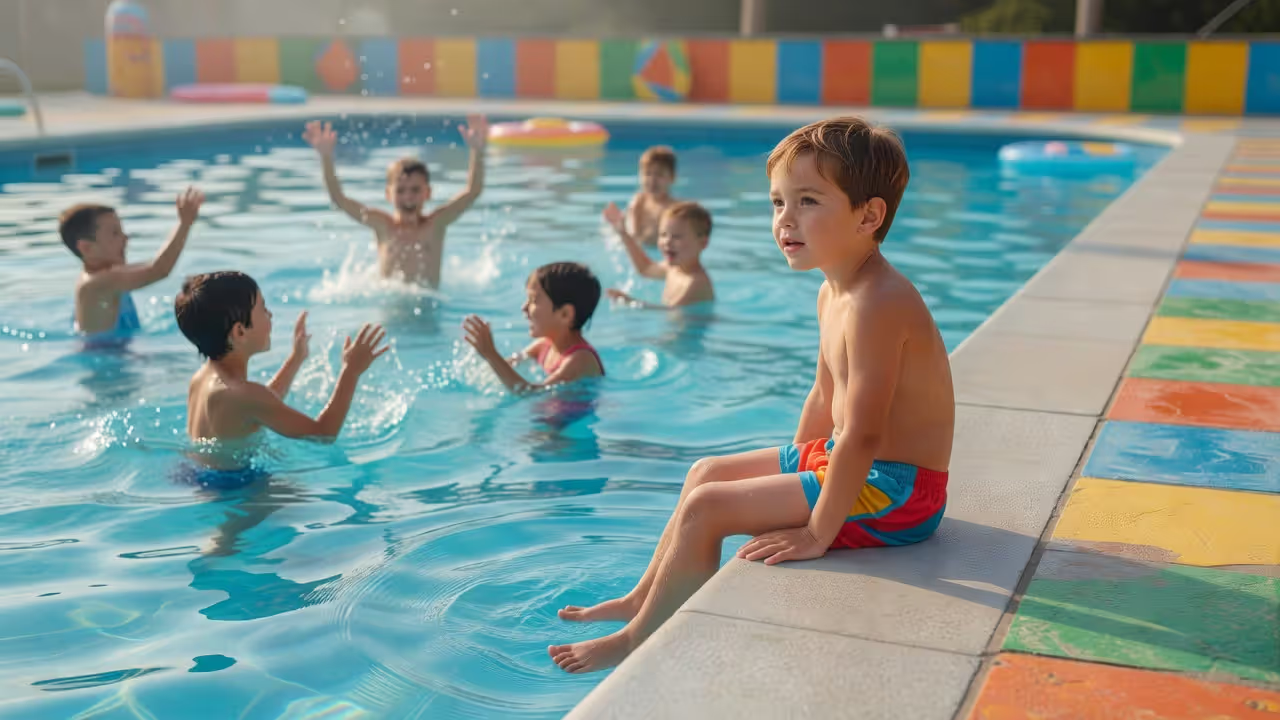
New activities. Put a slow to warm up child in a new swim class and they'll likely stand at the edge of the pool while other kids splash in. Give them two or three sessions without pressure, and most will start participating. Pull them out after one session because "they didn't like it" — and you've misread the situation.
Before/after comparison: Before understanding temperament, one parent I read about would sign her son up for activities, watch him refuse to participate, and pull him out early — cycling through soccer, art class, and karate in a single year. After learning about the slow to warm up pattern, she started giving him three sessions before making any decisions. He finished the full soccer season.
Author: Olivia Brackenridge;
Source: colorfulpagescoalition.org
How to Support a Slow to Warm Up Child at Home and School
The most effective strategies focus on two things: reducing surprise and building in transition time. Generic advice like "be patient" doesn't cut it. Here's what actually helps.
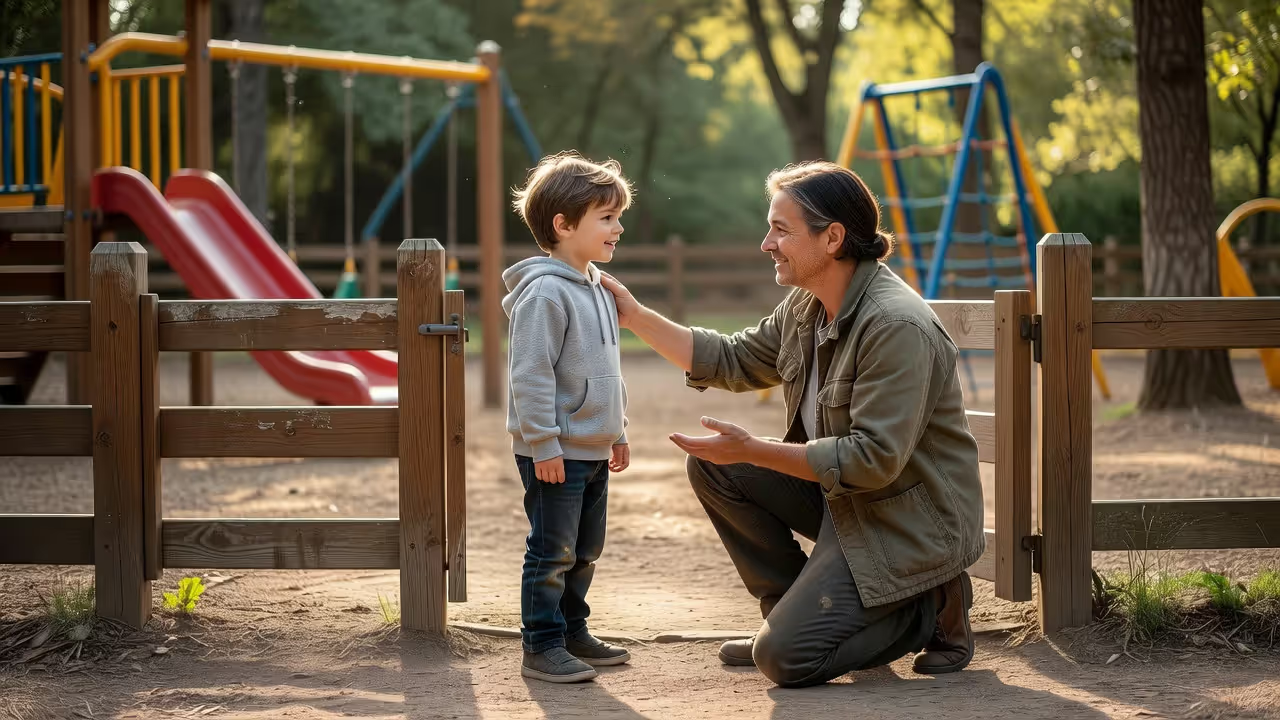
Preview new situations. Before a birthday party, describe who'll be there, what the space looks like, and what will happen. Even a quick verbal walkthrough lowers the novelty load significantly.
Arrive early. Getting to a new place before it fills up gives your slow to warm up child time to acclimate without the pressure of an audience. An empty classroom is much less overwhelming than a full one.
Don't force early participation. Let them watch. Watching is not failure — it's their process. Pushing them to engage before they're ready usually extends the warm-up period rather than shortening it.
Talk to teachers directly. Share that your child needs a few minutes to observe before joining group activities. Most teachers, once they understand, will naturally give the child that space. Without context, they might misread the behavior as disengagement.
Repeat exposure matters. New environments feel less new the second time. And the third time. Consistency and repetition are your best tools.
One practical note: avoid over-explaining the child's temperament to the child in ways that could feel like a label. "You're just shy" or "you always take forever to warm up" can stick in unhelpful ways. Keep the framing neutral and forward-looking.
Author: Olivia Brackenridge;
Source: colorfulpagescoalition.org
When to Talk to a Pediatrician About Your Child's Temperament
Most of the time, the slow to warm up temperament is just that — a temperament. Not a disorder, not a problem. But there are situations where a conversation with your pediatrician makes sense.
If your child's withdrawal is escalating rather than improving over time, that's worth flagging. A child who used to warm up within 20 minutes but now refuses to enter new situations entirely may be showing signs of anxiety that go beyond temperament.
Watch for distress that's out of proportion to the situation. Mild reluctance at drop-off is typical. Panic, vomiting, or physical symptoms that persist well into the school day are different.
Also pay attention to whether the child ever warms up at all. A slow to warm up child eventually engages. If your child consistently avoids, never participates, and shows distress across all settings over months — not just days — that pattern deserves professional attention.
Temperament types in children exist on a spectrum, and the line between a strong temperament and a clinical concern isn't always obvious. Your pediatrician can help you figure out where your child falls and whether any additional support would help.
FAQ: Slow to Warm Up Temperament Questions Answered
If your child takes a little longer to find their footing in new situations, that's not a flaw in them — and it's not a failure on your part. The slow to warm up temperament is one of the most workable patterns in childhood development. Once you stop trying to speed up their timeline and start building environments that respect it, you'll likely be surprised by how much they're capable of. They just need the runway.
Related Stories
Read more
Read more

The content on this website is provided for general informational and educational purposes only. It is intended to explain concepts related to parenting, child development, family caregiving, adoption, fostering, and child safety.
All information on this website, including articles, guides, and examples, is presented for general educational purposes. Outcomes may vary depending on individual family circumstances.
This website does not provide professional medical, psychological, or legal advice, and the information presented should not be used as a substitute for consultation with qualified pediatricians, child psychologists, or family counselors.
The website and its authors are not responsible for any errors or omissions, or for any outcomes resulting from decisions made based on the information provided on this website.