
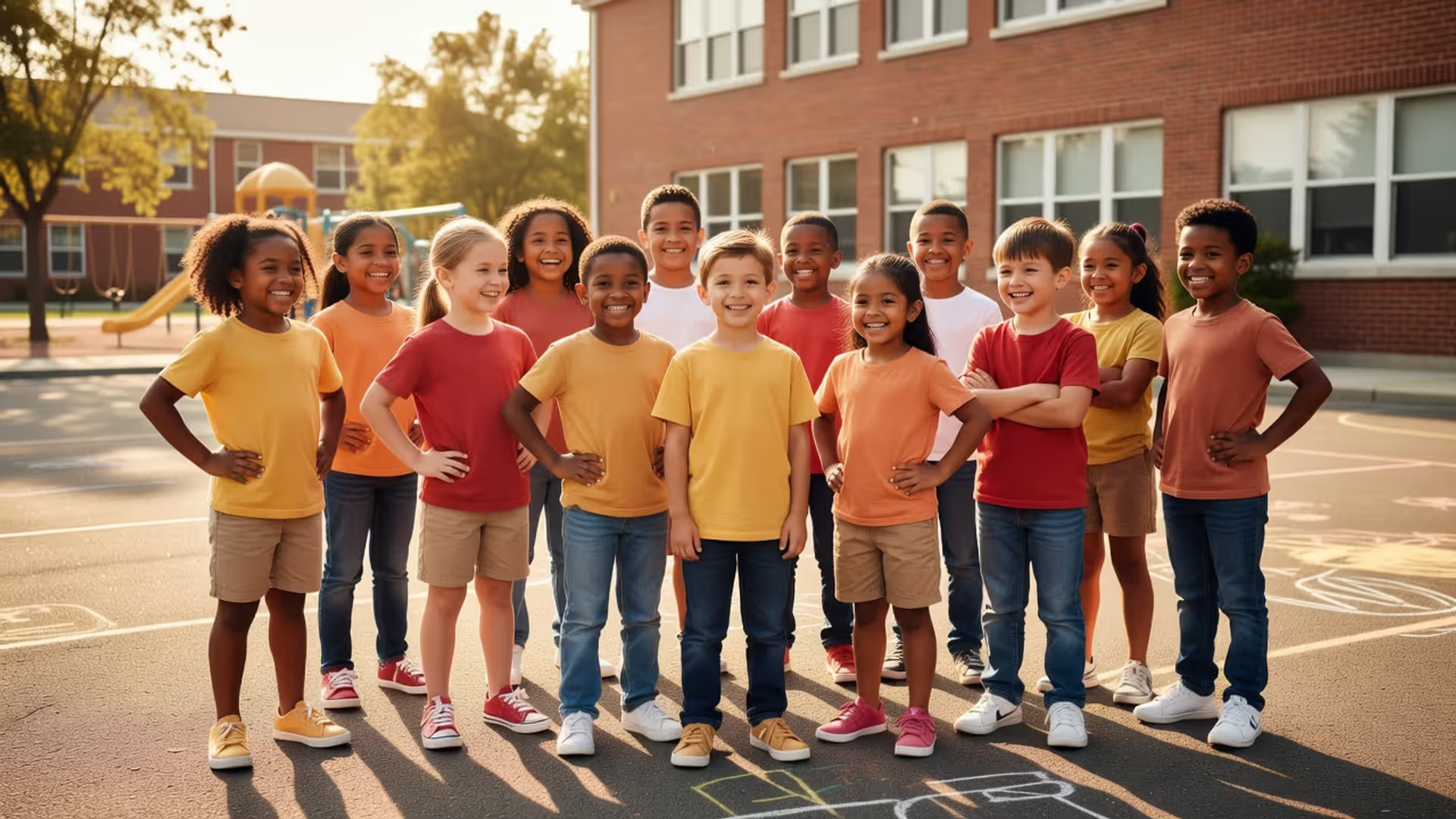
Ways to Prevent Bullying at School and at Home
Ways to Prevent Bullying at School and at Home
Bullying affects millions of children across the US every year. According to the National Center for Education Statistics, roughly 1 in 5 students reports being bullied at school. That number hasn't budged much over the past decade, which tells us that awareness campaigns alone aren't enough. What actually works is a combination of consistent adult action, school-wide systems, and honest conversations at home. This guide covers practical, evidence-backed ways to prevent bullying — for parents, teachers, and anyone who cares about a child's safety.
Why Bullying Happens and What Makes Kids Vulnerable
Bullying isn't random. It tends to follow predictable patterns tied to power imbalances, social hierarchies, and peer dynamics. Kids who are perceived as different — whether because of their size, learning differences, race, gender expression, or family situation — face higher risk. So do children who are socially isolated or who lack close friendships at school.
Age matters too. Bullying typically peaks in middle school, around ages 11 to 14, when social status feels like everything and kids are still learning how to manage conflict. That doesn't mean elementary school is safe — it's where patterns often start forming. High schoolers deal with it too, but by then, social dynamics tend to shift toward exclusion and cyberbullying rather than physical confrontation.
A common misconception is that kids who bully are always the "tough" ones with no friends. Research shows that some children who bully actually have high social status and use aggression to maintain it. That's a different problem than a kid acting out of insecurity — and it requires a different response.
Understanding these dynamics is the first step in knowing how to prevent bullying before it escalates.
How to Prevent Bullying in School Settings
Schools are where most bullying happens, which means they're also where the most effective prevention can take place. Preventing bullying in schools requires both classroom-level habits and broader institutional policies working together.
Classroom Strategies Teachers Can Use Daily
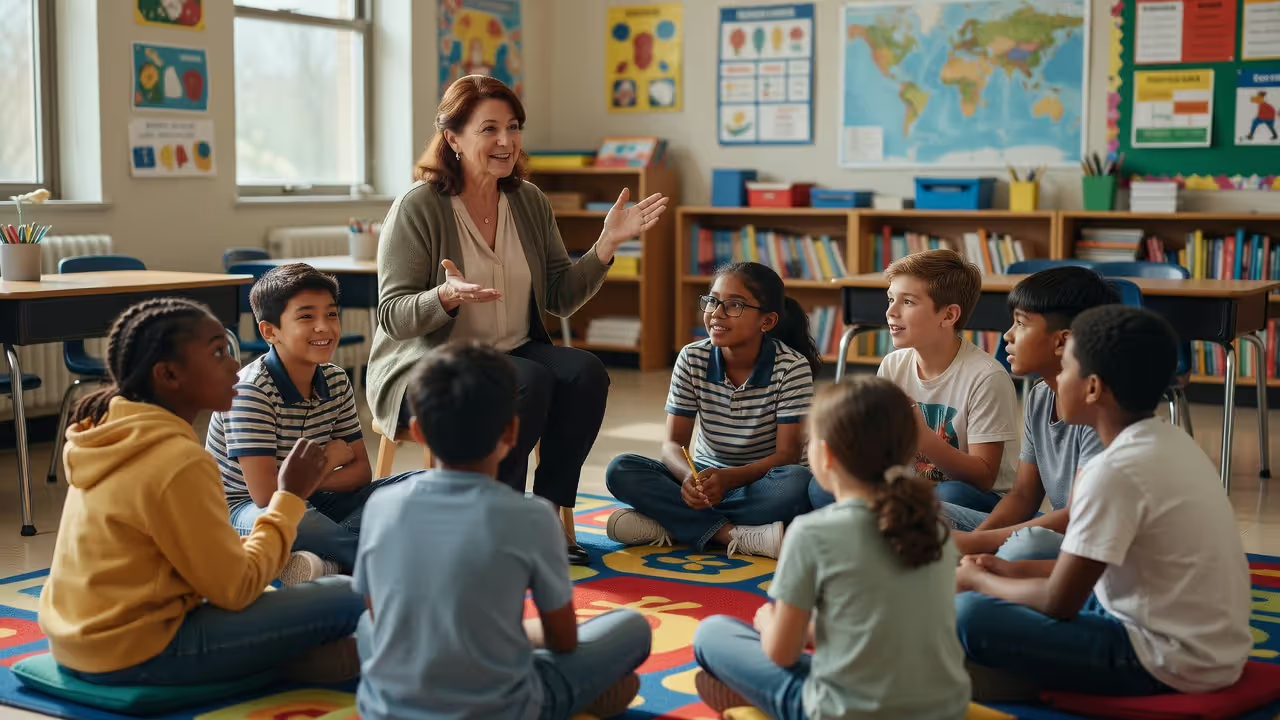
The classroom environment shapes behavior more than most teachers realize. A room where students feel respected and heard is one where bullying has less room to grow.
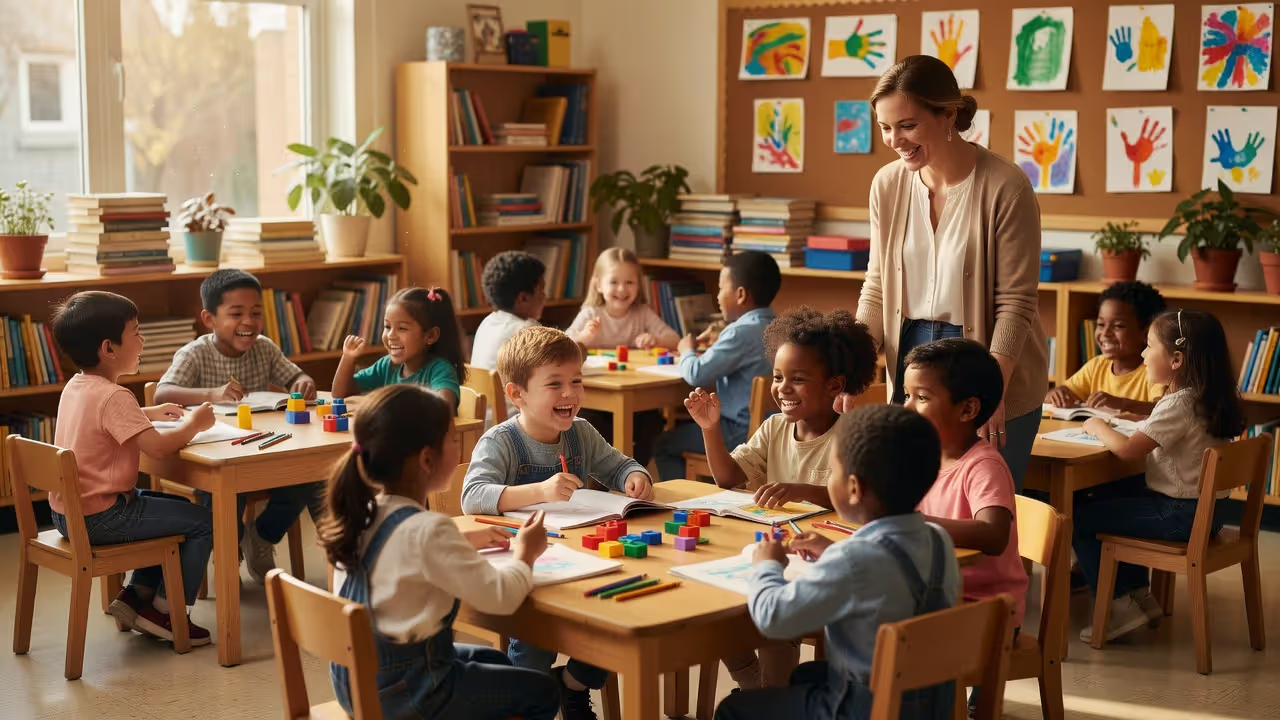
One of the most effective stop bullying strategies at the classroom level is structured cooperative learning. When students regularly work in mixed groups toward shared goals, they build relationships across social lines. A 2022 review of school-based interventions found that cooperative learning reduced peer aggression in grades 3 through 8 by measurable margins.
Author: Olivia Brackenridge;
Source: colorfulpagescoalition.org
Teachers can also:
- Use morning meetings or check-ins to build classroom community
- Address name-calling and exclusion immediately — not later, not privately when it needs to be public
- Teach conflict resolution skills explicitly, not just as a reaction to incidents
- Model respectful disagreement themselves
The pattern I see most often is teachers waiting to address low-level unkindness because it doesn't feel "serious enough." That's a mistake. Small moments of disrespect, left uncorrected, normalize the behavior.
School-Wide Policies That Actually Reduce Incidents
Individual teachers can only do so much. Anti-bullying strategies need institutional backing to stick.
Effective school-wide approaches include:
- Clear reporting systems that students actually trust. If kids don't believe reporting will help — or fear retaliation — they won't report.
- Consistent consequences applied fairly across all students, regardless of athletic or academic status.
- Staff training on recognizing bullying vs. conflict (these are different things) and on how to respond without escalating.
- Supervision in high-risk areas — hallways, cafeterias, bathrooms, and the first 10 minutes after school are where most incidents happen.
Schools that treat bullying prevention as a climate issue — not just a discipline issue — tend to see better outcomes. That means measuring school climate, collecting student feedback, and adjusting policies based on what students actually report.
What Parents Can Do at Home to Stop Bullying
Home is where kids develop their baseline understanding of how relationships work. That makes parents powerful — in both directions.
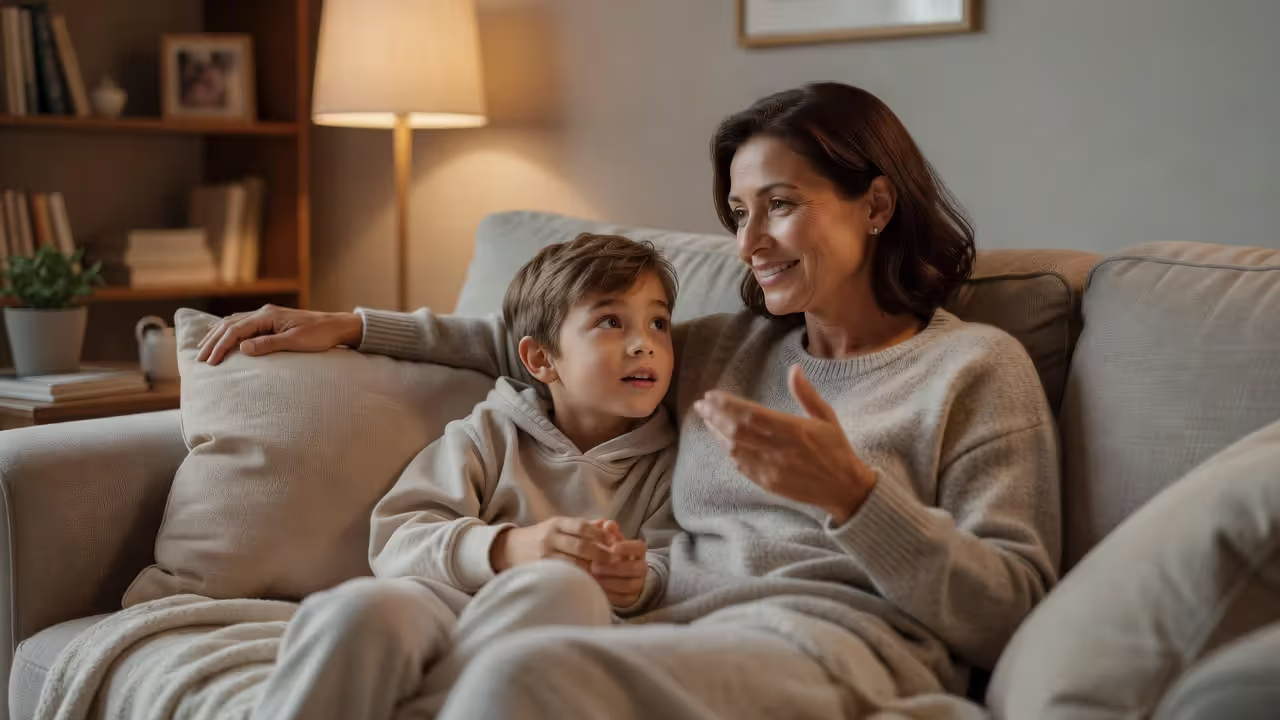
Start with open, regular conversations about social life. Not interrogations. Just genuine curiosity: "Who did you hang out with today?" or "Was there anything weird or uncomfortable at lunch?" Kids who feel they can talk to parents without judgment are more likely to report problems early.
Bullying prevention tips for parents often focus on the child being bullied, but it's equally important to watch for signs that your child might be bullying others. Aggressive behavior at home, a sudden new friend group, or dismissive talk about certain classmates can all be signals worth paying attention to.
Author: Olivia Brackenridge;
Source: colorfulpagescoalition.org
Building confidence is one of the most durable ways to prevent bullying. Kids with strong self-esteem and at least one or two close friendships are significantly less likely to be targeted — and less likely to target others. Extracurricular activities, sports, arts programs, and clubs all help. Not because they're magic, but because they give kids a sense of competence and belonging outside of the social minefield of the main school hallway.
One thing parents often get wrong: coaching kids to "just ignore it." Ignoring rarely works and can leave a child feeling abandoned. Better advice is to help them practice confident, calm responses — and to know when to walk away versus when to speak up.
How to Recognize When a Child Is Being Bullied
Kids don't always say "I'm being bullied." More often, you'll notice changes before you hear words.
Watch for:
- Reluctance to go to school, especially on specific days
- Unexplained physical complaints — stomachaches, headaches — on school mornings
- Coming home hungry (lunch money taken or avoided the cafeteria)
- Withdrawal from friends or activities they used to enjoy
- Changes in mood after using devices (a sign of cyberbullying)
- Damaged belongings or missing items with vague explanations
These signs don't always mean bullying — they can indicate other stress. But they're worth asking about directly. "I've noticed you seem unhappy on Monday mornings. Is something going on at school?" is a better opener than "Are you being bullied?" — which kids often deny out of shame or fear.
Helping a child who is bullied starts with believing them. Children who report bullying and aren't believed — or are told to handle it themselves — are less likely to seek help again.
Helping a Child Who Is Being Bullied Right Now
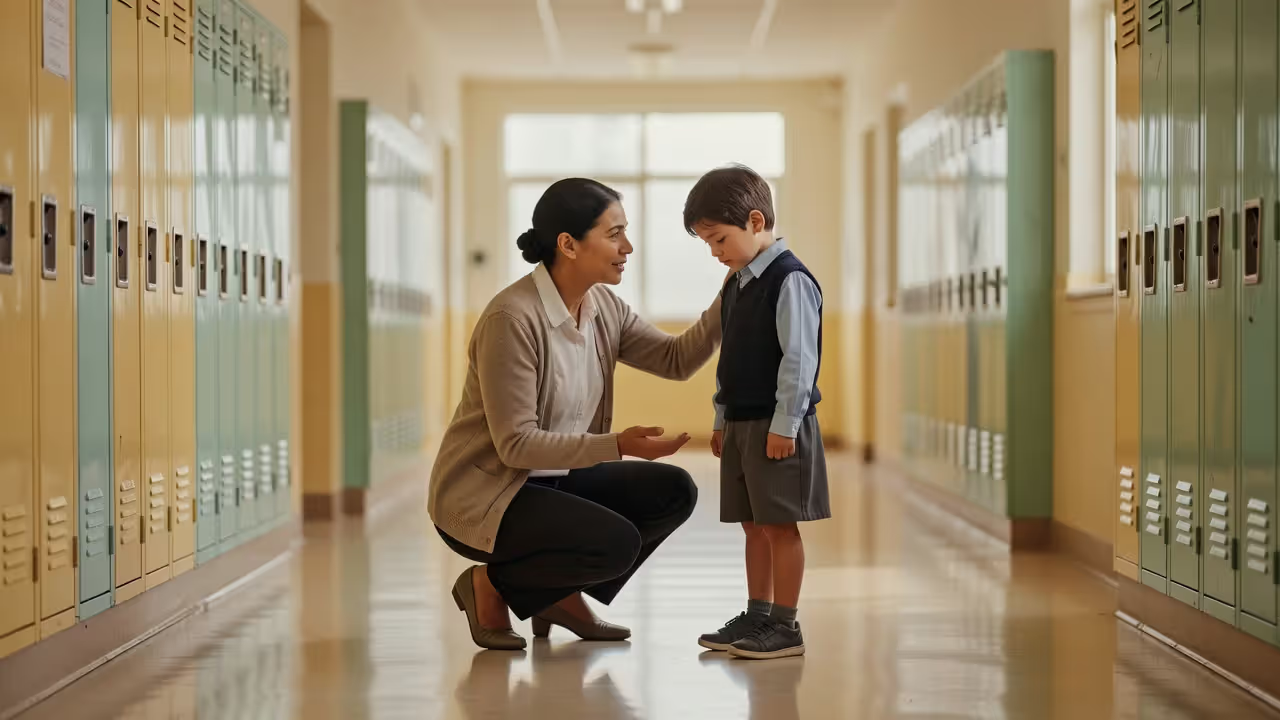
If your child is being bullied right now, the first priority is safety and emotional support — not problem-solving mode.
Sit with them. Listen without jumping to fix it. Acknowledge that what's happening is real and unfair. Then, once they feel heard, move into action together.
Author: Olivia Brackenridge;
Source: colorfulpagescoalition.org
Practical steps:
- Document everything. Dates, what was said or done, who witnessed it. This matters if you need to escalate.
- Contact the school. Request a meeting with the teacher and, if needed, the principal or counselor. Don't just send an email — follow up.
- Work with your child on responses. Role-play calm, confident replies. Bullies often lose interest when they don't get the reaction they want.
- Don't push confrontation. Telling a child to "fight back" can escalate the situation and get them in trouble.
- Consider outside support. If the bullying is severe or ongoing, a counselor or therapist can help your child process it.
Anti-bullying strategies at the individual level are most effective when the child feels agency — like they're doing something, not just waiting for adults to fix it.
Anti-Bullying Programs That Have Shown Results
Author: Olivia Brackenridge;
Source: colorfulpagescoalition.org
Not all programs are created equal. Some schools adopt programs based on brand recognition rather than evidence. Here's a look at programs with documented outcomes in US schools:
| Program Name | Target Age Group | Key Approach | Reported Effectiveness | Availability |
| Olweus Bullying Prevention Program | Grades K–12 | School climate, classroom rules, individual intervention | 20–70% reduction in bullying reported in studies | Licensed (fee-based) |
| Second Step | PreK–Grade 8 | Social-emotional learning, empathy building | Reduced aggression, improved peer relationships | Licensed (fee-based) |
| Steps to Respect | Grades 3–6 | Bystander behavior, school norms | Reduced bullying and playground aggression | Licensed (fee-based) |
| KiVa | Grades 1–9 | Bystander-focused, online components | 40% reduction in victimization in Finnish trials; US pilots show promise | Licensed |
| Positive Behavioral Interventions and Supports (PBIS) | K–12 | School-wide behavior systems, data-driven | Reduced disciplinary incidents; widely adopted in US | Free (federally supported) |
PBIS is worth highlighting because it's free and federally supported — making it accessible to under-resourced schools. The Olweus program has the longest research track record in the US and is often the benchmark others are compared against.
School climate is the single most powerful lever we have for reducing bullying. When students feel connected, respected, and safe, the conditions that allow bullying to thrive simply don't take hold.
— Espelage Dorothy
FAQ: Bullying Prevention Questions Answered
Bullying doesn't disappear on its own. It shrinks when adults take consistent action, when schools build cultures of respect, and when kids feel safe enough to speak up. None of that happens overnight — but every conversation, every corrected moment, and every child who feels believed moves things in the right direction. Start where you are, with what you have.
Related Stories
Read more

Read more

The content on this website is provided for general informational and educational purposes only. It is intended to explain concepts related to parenting, child development, family caregiving, adoption, fostering, and child safety.
All information on this website, including articles, guides, and examples, is presented for general educational purposes. Outcomes may vary depending on individual family circumstances.
This website does not provide professional medical, psychological, or legal advice, and the information presented should not be used as a substitute for consultation with qualified pediatricians, child psychologists, or family counselors.
The website and its authors are not responsible for any errors or omissions, or for any outcomes resulting from decisions made based on the information provided on this website.