
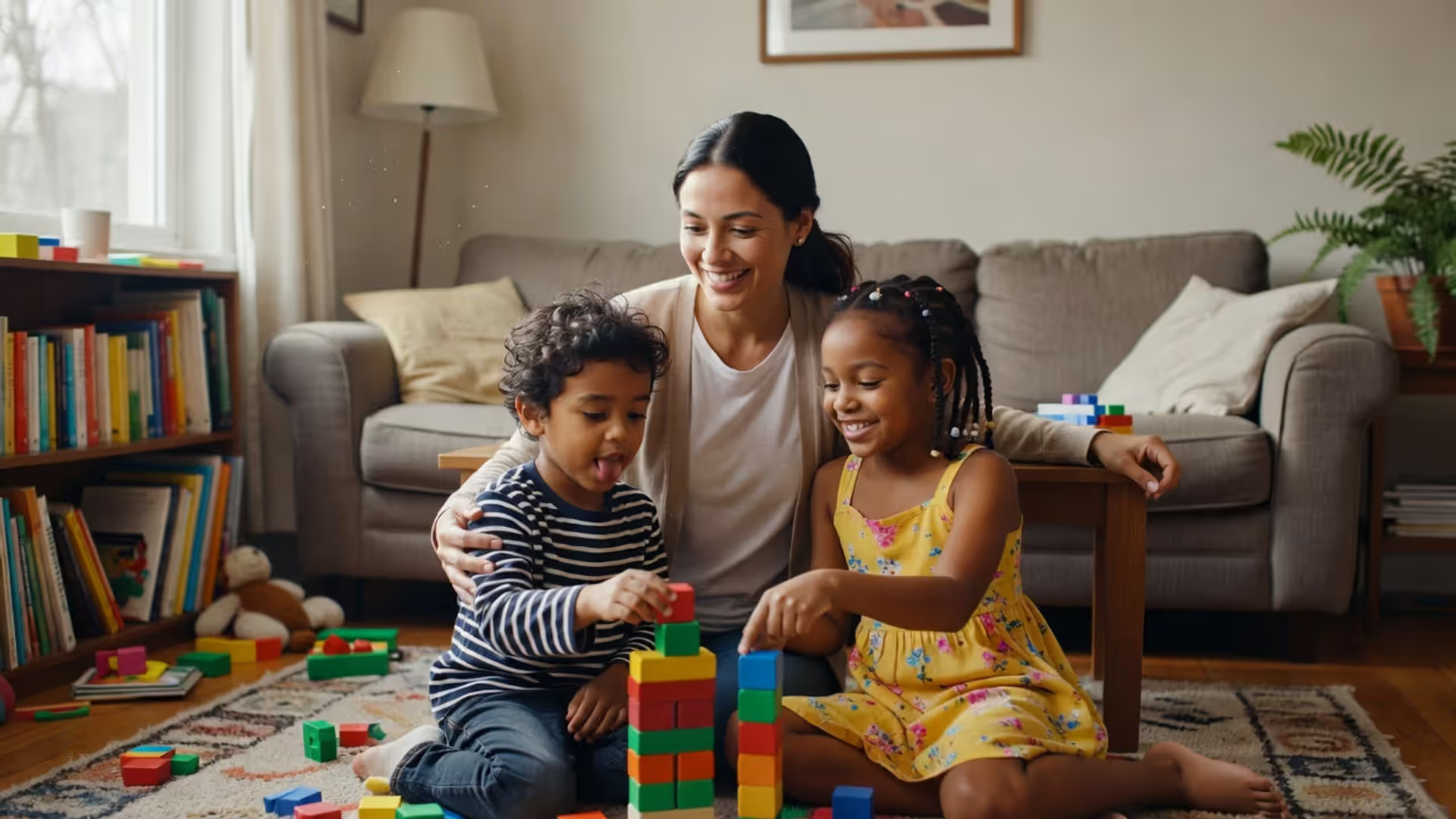
What Is a Single Parent Family Definition and Structure
What Is a Single Parent Family Definition and Structure?

Content
Content
A single parent family is one of the most common household types in the United States — and one of the least consistently defined. Ask a sociologist, a family court judge, and a census analyst the same question, and you might get three slightly different answers. That's not a flaw in the system. It reflects how complex real family life actually is. Whether you're a student writing a paper, a researcher pulling data, or someone trying to understand your own situation, getting a clear picture of what this family structure means — and what it doesn't — is the right place to start.
How a Single Parent Family Is Defined
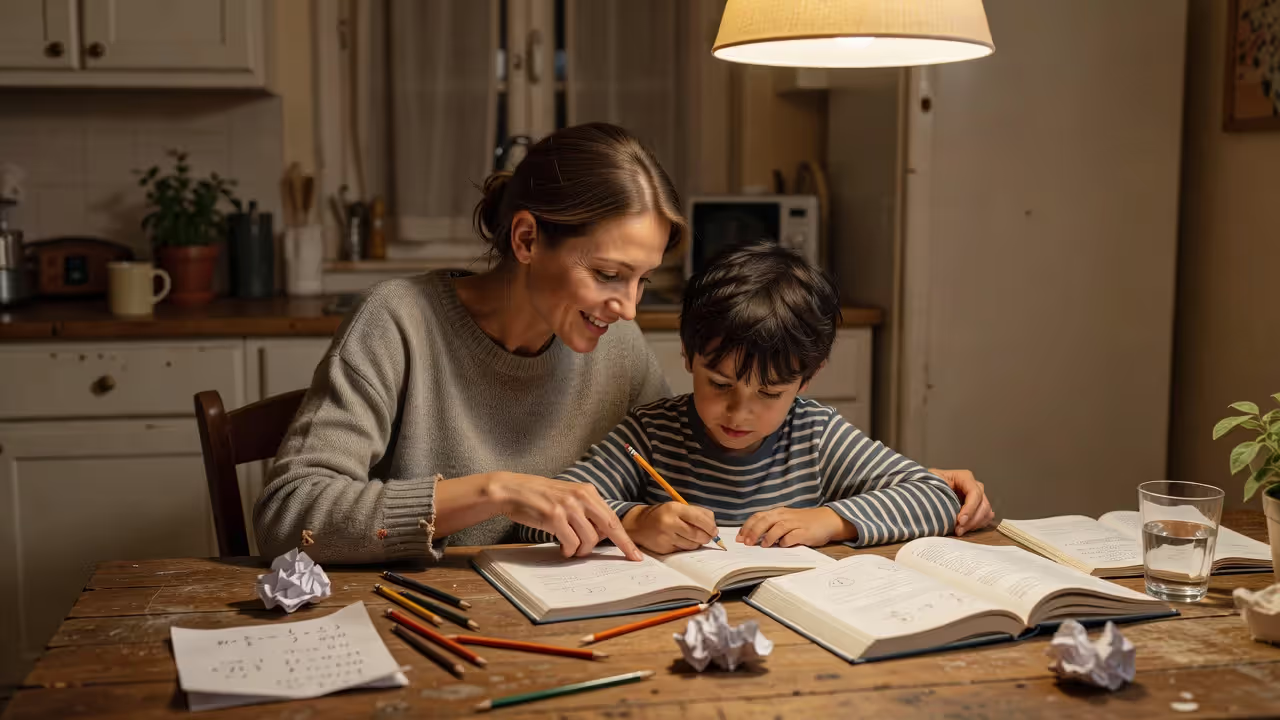
At its core, a single-parent family is a household in which one adult is raising one or more children without a co-residing partner. That's the working definition most researchers, government agencies, and social workers use. The adult — whether a mother or father — takes on the primary or sole caregiving role, and there's no spouse or domestic partner living in the home.
The single parent household definition used by the US Census Bureau focuses on residence. If the other parent pays child support but doesn't live in the home, the household is still classified as single-parent. Custody arrangements don't change that classification. Even if a child spends weekends with the other parent, the custodial household is what the data reflects.
What is a single parent family in everyday terms? It's a parent doing the work of two — managing income, childcare, school pickups, medical appointments, and emotional support, typically without a live-in partner sharing that load.
Legal vs. Sociological Definitions
Legally, single parenthood often ties to custody and marital status. A divorced parent with sole physical custody is legally a single parent. A never-married parent raising a child alone is too. Courts use these distinctions to assign child support obligations, determine tax filing status, and allocate parental rights.
Sociologically, the definition is broader. Researchers like those at the Urban Institute look at household composition, economic resources, and parenting capacity — not just legal paperwork. A parent technically married but functionally raising children alone (due to incarceration, military deployment, or abandonment) may be studied within the single-parent framework even if the legal status says otherwise.
That gap between legal and sociological definitions matters. It explains why the numbers vary depending on which source you're reading.
Author: Olivia Brackenridge;
Source: colorfulpagescoalition.org
Who Counts as a Single Parent
Single parent meaning shifts depending on the circumstances that created the household. There's no single path. A parent can become the sole caregiver through divorce, the death of a spouse, a relationship that ended before marriage, or a deliberate personal choice — like adopting as an unmarried individual.
Single parenthood explained simply: it's about who's physically present and responsible in the home, not about what caused the situation. A widowed father raising three kids is a single parent. So is a 28-year-old woman who chose to have a child through a sperm donor. So is someone whose partner is incarcerated.
One counterintuitive point worth flagging: cohabiting couples where one partner isn't the child's biological parent don't always count as two-parent households in every research framework. Some studies treat the non-biological partner as a separate household member rather than a co-parent. So the line isn't always where people expect it to be.
Common Paths to Single Parenthood
Divorce is the most widely recognized route. In the US, roughly 40–50% of marriages still end in divorce, and in most cases, children end up in the primary custody of one parent — most often the mother, though father-led single-parent households have grown steadily over the past two decades.
Death of a spouse creates single-parent households too, though it's a less common cause today than it was a century ago. Widowed parents face a distinct set of challenges: grief layered on top of the practical demands of solo parenting, often without the legal and financial structures that divorce proceedings provide.
Never-married parenthood is now the fastest-growing category. As of the most recent Census data, about 40% of all births in the US occur outside of marriage. Some of those parents go on to co-parent together, but many raise children in separate single-parent homes.
And then there's deliberate single parenthood — people who choose to have or adopt children without a partner. This path has become more visible and more accepted over the past decade, particularly among people in their 30s and 40s who have financial stability but haven't found a partner they want to raise children with.

Author: Olivia Brackenridge;
Source: colorfulpagescoalition.org
Key Characteristics of Single Parent Families
Single parent family structure tends to look different from two-parent households in a few consistent ways. The most obvious is resource concentration — one adult is responsible for everything. Income, time, emotional energy, and decision-making all flow through a single person.
Household income is typically lower. The median income for single-mother households in the US sits significantly below that of married-couple families — often less than half, depending on the data source. Single-father households fare somewhat better financially but still trail two-parent homes by a wide margin.
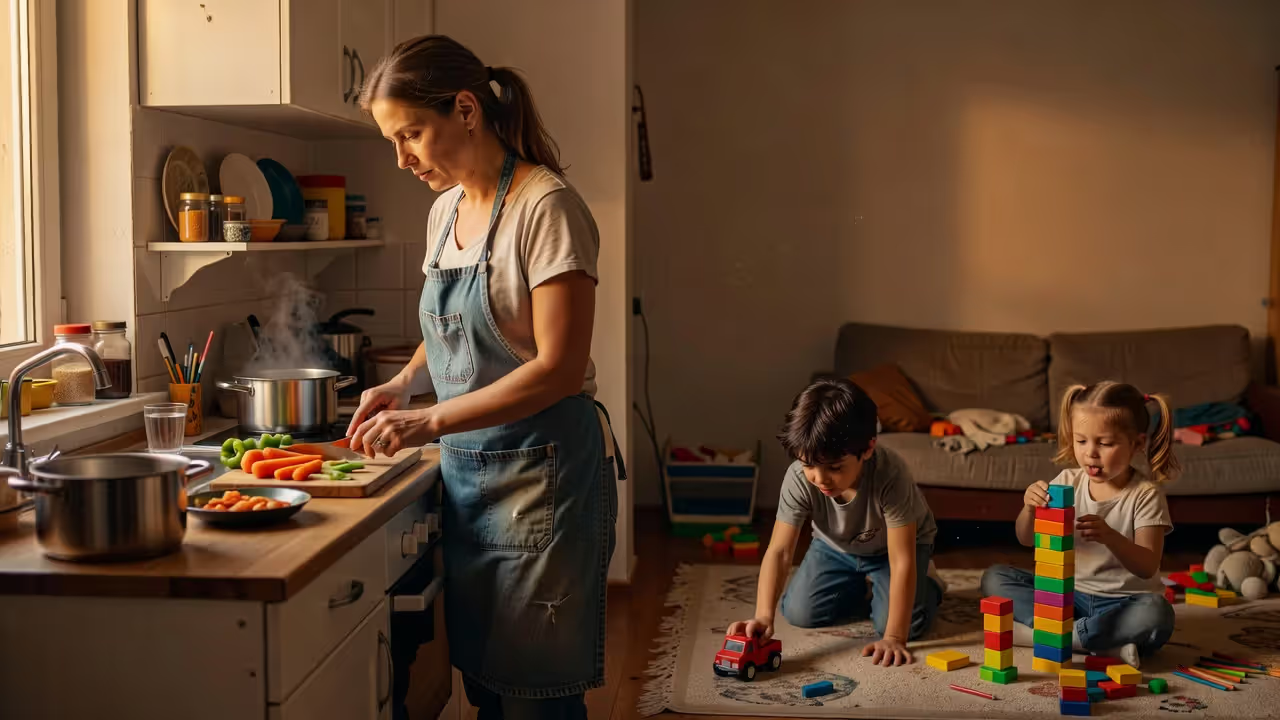
Time is the other major constraint. A single parent can't divide tasks the way two parents can. One parent working full-time, managing school schedules, handling medical appointments, cooking, cleaning, and still trying to be emotionally present — that's a real daily pressure that shapes everything from sleep to social life.
The pattern I see most often in the research is that single parents aren't struggling because of poor choices. They're managing a structural imbalance — doing two jobs with the bandwidth of one.
Emotional and Financial Responsibilities
The emotional load in a single-parent household often goes underreported. Children look to the one present parent for comfort, discipline, guidance, and fun. That's a lot of emotional bandwidth to sustain. Burnout is real, and it affects parenting quality — not because single parents care less, but because the system asks too much of one person.
Financially, single parents face challenges that compound quickly. Childcare costs can consume 20–30% of a single parent's income. Without a second income to buffer job loss or medical bills, financial shocks hit harder. Many single parents rely on government assistance programs, family networks, or both.
| Situation | Legal Status | Custody Arrangement | Common Financial Challenges | Prevalence in the US |
| Divorced | Legally single after divorce | Sole or shared custody, often formalized by court | Child support gaps, legal fees, two-household costs | ~30% of single parents |
| Widowed | Legally single after death of spouse | Full custody by default | Loss of dual income, no child support offset | ~5% of single parents |
| Never married | Single (never legally married) | Informal or court-ordered; varies widely | No guaranteed child support, less legal protection | ~45% of single parents |
| Separated | Still legally married | Informal or temporary court order | Financial entanglement, no finalized support order | ~20% of single parents |
Children who grow up in a household with only one biological parent are worse off, on average, than children who grow up in a household with both of their biological parents, regardless of the parents' race or educational background.
— McLanahan Sara
Single Parent Household by the Numbers in the US
The scale of single-parent households in the US is hard to overstate. As of the most recent Census Bureau data, about 27% of all children under 18 live with a single parent. That's roughly 21 million kids.
Single-mother households make up the majority — around 80% of all single-parent homes. Single-father households account for the remaining 20%, though that share has grown from under 10% in the 1970s. The shift reflects changing attitudes about gender and parenting, as well as evolving court practices around custody.
Racial and ethnic breakdowns show significant variation. Black children are most likely to live in single-parent households (about 64%), followed by Hispanic children (about 42%) and white non-Hispanic children (about 24%). Asian American children have the lowest rate, around 15%. These disparities reflect a mix of economic, historical, and structural factors — not cultural deficits.
Author: Olivia Brackenridge;
Source: colorfulpagescoalition.org
How Single Parent Family Structure Affects Children and Daily Life
Single parent family structure shapes daily routines in ways that ripple outward. Childcare is often the first pressure point. Without a partner to cover pickups or stay home when a child is sick, single parents depend heavily on extended family, paid childcare, or flexible employers — and not everyone has access to all three.
School involvement can suffer, not because single parents don't care, but because there's only so many hours in a day. Research consistently shows that children in single-parent homes have slightly lower academic outcomes on average — but that finding is heavily mediated by income. When income is controlled for, the gap narrows significantly. Poverty, not family structure alone, is often the real driver.
Before and after framing helps here: a child in a single-parent household with a stable income, consistent routines, and strong community support can thrive just as well as a child in a two-parent household. The risk factors increase when financial stress, housing instability, and social isolation stack up — not simply because there's one parent.
Children in single-parent homes often develop strong independence and resilience. They may take on more responsibility earlier, which has both costs and benefits. Some research suggests they develop stronger problem-solving skills and empathy — though those gains don't offset the documented stressors when resources are thin.
Author: Olivia Brackenridge;
Source: colorfulpagescoalition.org
Social life for single parents is also constrained. Dating, maintaining friendships, and finding personal time all compete with caregiving demands. The social isolation that can come with single parenthood is a real mental health risk — one that doesn't get enough attention in policy conversations.
FAQ: Single Parent Family Questions Answered
Understanding what a single parent family actually is — beyond the surface label — matters for how we talk about policy, education, and support systems. The definition is more nuanced than most people assume, and the reality of single parenthood is more varied than any single statistic captures. Whether you're researching the topic or living it, the clearest takeaway is this: structure doesn't determine outcome. Resources, stability, and support do.
Related Stories
Read more

Read more



The content on this website is provided for general informational and educational purposes only. It is intended to explain concepts related to parenting, child development, family caregiving, adoption, fostering, and child safety.
All information on this website, including articles, guides, and examples, is presented for general educational purposes. Outcomes may vary depending on individual family circumstances.
This website does not provide professional medical, psychological, or legal advice, and the information presented should not be used as a substitute for consultation with qualified pediatricians, child psychologists, or family counselors.
The website and its authors are not responsible for any errors or omissions, or for any outcomes resulting from decisions made based on the information provided on this website.