
What Is Open Ended Play and Why It Matters for Kids
What Is Open Ended Play and Why It Matters for Kids?

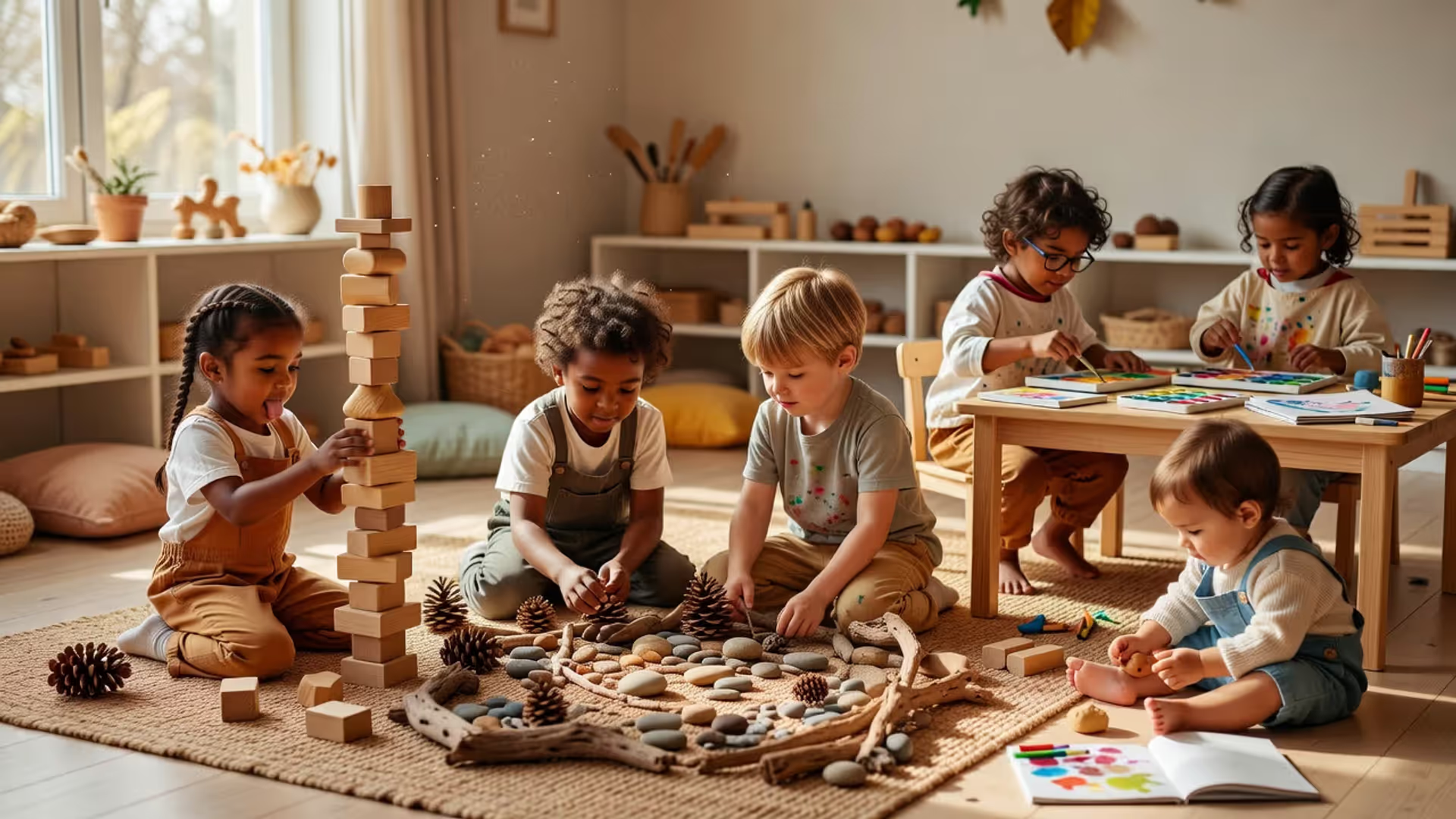
Kids don't need a script to play well. Give a child a cardboard box, a handful of rocks, or a pile of fabric scraps, and watch what happens. They'll build a spaceship, sort the rocks by color, wrap themselves in a cape — and none of it was planned by an adult. That's open ended play in its most natural form, and it's one of the most powerful things a child can do for their own development.
Open Ended Play Meaning Explained
Open ended play is any play activity that has no fixed outcome, no single correct answer, and no predetermined rules set by an adult. The child decides what to do, how to do it, and when they're done. The play can go in any direction.
The open ended play meaning becomes clearer when you contrast it with structured or directed play. Structured play has rules and goals — think board games, organized sports, or a craft kit with step-by-step instructions. Those activities have real value, but they don't leave much room for a child to invent or discover on their own terms.
Open ended play flips that. There's no wrong move. A set of wooden blocks isn't just a tower — it's a castle, a road, a zoo enclosure, or a pretend birthday cake. The material stays the same; the meaning changes every time.
This type of play is sometimes called child-led play or unstructured play. The terms overlap, though they're not always identical. What they share is the core idea: the child is in charge of the experience.
How Open Ended Play Supports Child Development
The benefits of open ended play show up across every domain of child development — cognitive, social, emotional, and creative. When a child plays without a script, they're constantly making decisions, solving problems, and regulating their own experience. That's a lot of mental work disguised as fun.
Cognitively, open ended play builds flexible thinking. A child who's used to figuring things out on their own is better equipped to handle novel problems later. Socially, when kids play together without an adult directing the scene, they negotiate, compromise, and repair conflicts. Those are real skills.
Emotionally, this kind of play gives children a safe space to process experiences. A child playing "doctor" after a scary medical visit is doing genuine emotional work. And creatively, the absence of rules is exactly what makes imagination grow.
What Research Says About Unstructured Play
The research is consistent and has been building for decades. The American Academy of Pediatrics has repeatedly emphasized that play — especially child-directed, unstructured play — is not a luxury. It's a biological need. Their reports link play deprivation to increased stress, reduced executive function, and lower social competence in children.
One widely cited study from the University of Colorado found that children who had more unstructured time showed stronger self-directed executive function — the ability to set goals, manage attention, and regulate behavior — compared to peers with heavily scheduled days.
Author: Garrett Willowmere;
Source: colorfulpagescoalition.org
How It Differs by Age Group
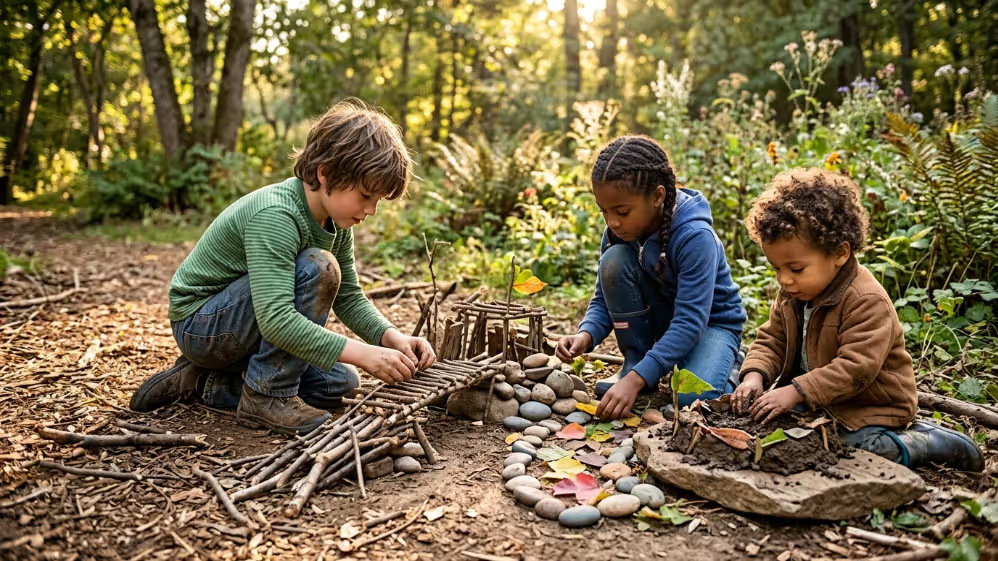
The way open ended play looks changes a lot depending on the child's age. Infants and toddlers explore through their senses — mouthing objects, stacking and knocking over, pouring and filling. That's open ended play at its earliest stage.
Preschoolers (ages 3–5) tend toward dramatic and imaginative play. They assign roles, build narratives, and sustain pretend scenarios for surprisingly long stretches. School-age children (6–10) often layer in more complex rules they invent themselves — which is still open ended, because the rules came from them, not an adult.
Teenagers can engage in open ended play too, though it often looks like tinkering, making music, writing stories, or building things without a kit. The drive to create and explore doesn't disappear at age 10.
Benefits of Open Ended Play at Home and in School
For parents, the appeal of open ended play is partly practical. It doesn't require expensive equipment or a lot of setup. A bin of sand, a set of wooden blocks, or a box of old fabric can occupy a child for an hour. The simpler option usually wins here.
But the benefits go well beyond convenience. Children who regularly engage in this kind of play tend to show stronger problem-solving skills, better emotional regulation, and more creative thinking. They're also better at entertaining themselves — which matters a lot in a household with busy adults.
In school settings, educators who build open ended play into the day report that children are more engaged, more willing to take risks, and more collaborative. Reggio Emilia schools and Waldorf programs have built entire curricula around this approach, and the outcomes consistently support it.
One counterintuitive point: children in more play-rich environments often outperform peers on academic readiness measures by kindergarten, even without formal academic drilling. Play isn't the opposite of learning. It's one of the most efficient ways children learn.
Author: Garrett Willowmere;
Source: colorfulpagescoalition.org
Open Ended Play Materials Worth Having
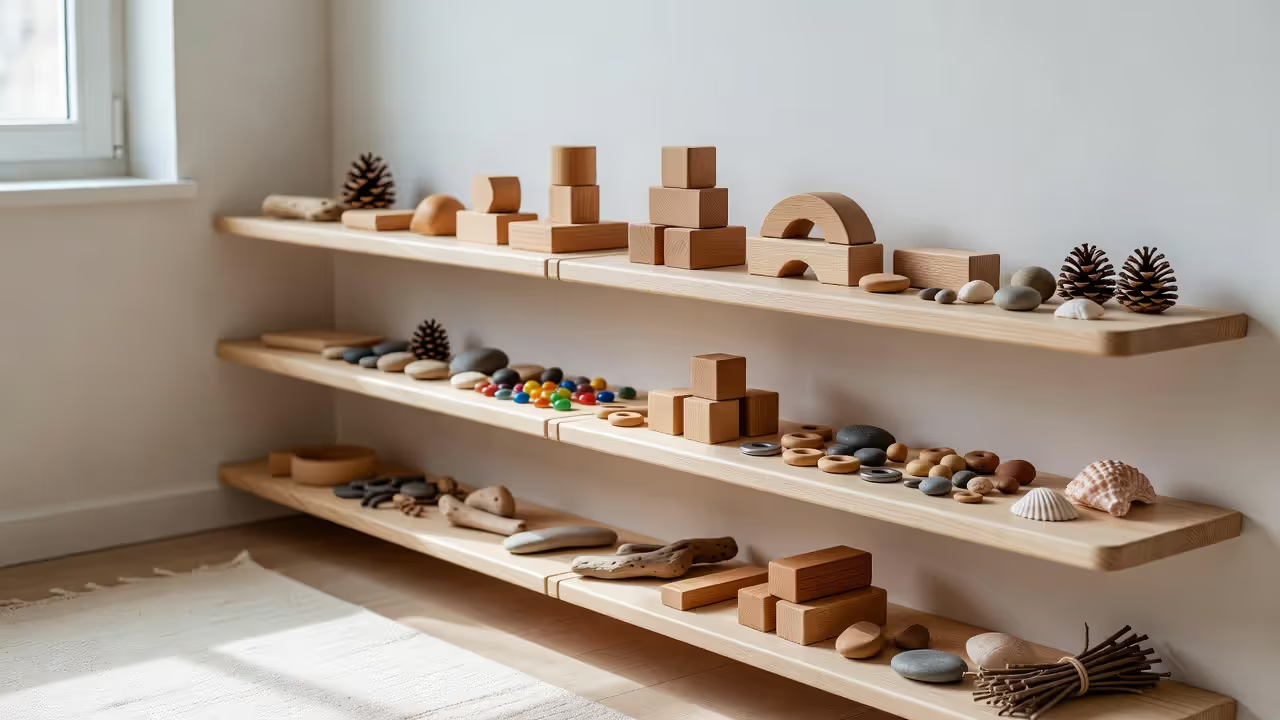
Not all toys are created equal. A toy with one function — press the button, it plays a song — doesn't leave room for a child's imagination. Open ended play materials are the opposite: they can become anything.
Here's a comparison to make that concrete:
| Material Type | Open Ended or Closed Ended | Example Items | Development Area Supported |
| Wooden unit blocks | Open Ended | Plain wooden blocks, KAPLA planks | Spatial reasoning, creativity, math concepts |
| Battery-operated toy | Closed Ended | Talking learning tablet, push-button toy | Limited; mostly passive response |
| Loose parts | Open Ended | Pebbles, shells, corks, fabric scraps | Sorting, counting, imaginative play |
| Puzzle with one solution | Closed Ended | Jigsaw puzzle, shape sorter | Problem-solving (limited variation) |
| Art supplies | Open Ended | Watercolors, clay, blank paper | Fine motor, self-expression, creativity |
| Dress-up clothes | Open Ended | Scarves, hats, old adult clothing | Dramatic play, social skills, identity |
| Single-use craft kit | Closed Ended | Follow-the-steps bead kit | Fine motor (limited creative input) |
The best open ended play materials share a few traits: they're simple in design, durable, and can be used in multiple ways by children of different ages.
Play is the purest expression of love that nature has invented. It is how we develop our capacity to trust, to be intimate, and to find joy.
— Brown Stuart
Low-Cost and Everyday Household Options
You don't need to spend much. Some of the best open ended play materials are already in your home or easy to find for free. Cardboard boxes in any size. Empty containers and lids. Wooden spoons and mixing bowls. Fabric scraps. Pinecones, sticks, and smooth stones from outside.
The pattern I see most often is parents spending money on elaborate toys while the child plays with the packaging. That's not a failure — it's a signal. Kids are naturally drawn to materials with potential.
Open Ended Play Activities and Ideas by Age
Here are practical open ended play ideas organized by age group. These aren't scripts — they're starting points.
Ages 0–2: Sensory bins filled with dried oats, water, or sand. Stacking cups with no correct order. Fabric squares in different textures. Banging pots and pans. Simple cause-and-effect exploration — drop it, pick it up, drop it again.
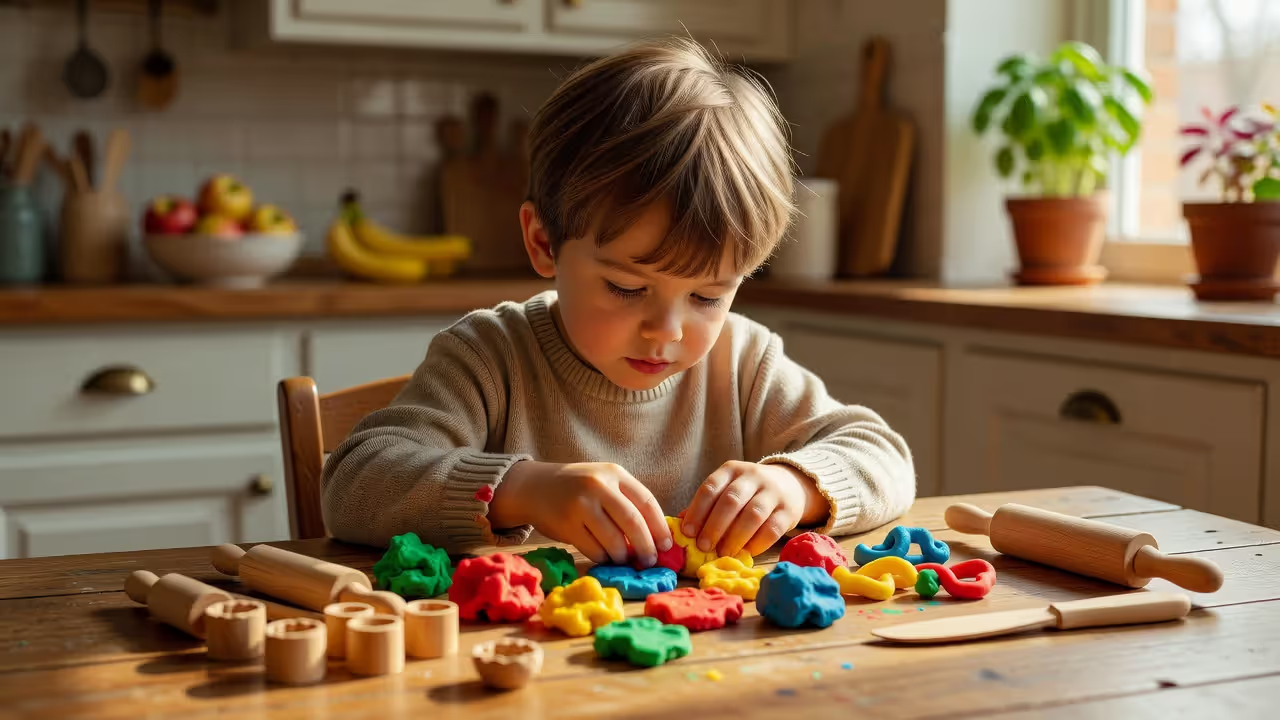
Ages 3–5: Dramatic play with a "yes, and" setup — a blanket fort with no instructions. Playdough with tools but no template. Watercolor painting on large paper. Building with blocks and loose parts together. Mud kitchen play outdoors.
Ages 6–9: Open ended building with recycled materials (cardboard, tape, rubber bands). Loose parts art — arranging natural objects into patterns or scenes. Storytelling with puppets or figurines. Gardening with real tools and real choices. Simple woodworking with supervision.
Ages 10+: Journaling or sketchbooks with no prompts. Learning an instrument without a formal lesson structure. DIY projects — building a birdhouse, sewing a bag. Open ended coding or game design. Photography or filmmaking with a basic device.
Author: Garrett Willowmere;
Source: colorfulpagescoalition.org
The key across all ages: don't set up the activity and then hover. Set it up and step back. Let the child take it somewhere unexpected.
Common Mistakes That Limit Open Ended Play
The biggest mistake adults make is redirecting too quickly. A child stacking blocks "wrong" or mixing playdough colors into brown isn't making an error — they're experimenting. Jumping in to correct or improve the play shuts down the very process you're trying to support.
Over-scheduling is another common issue. Children need long, uninterrupted blocks of time to get into deep play. Fifteen minutes between structured activities isn't enough. Research suggests children need at least 45–60 minutes of uninterrupted free play to reach the deeper, more imaginative stages.
Choosing closed-ended toys by default is easy to do, especially with gift-giving. A toy that does one thing might entertain briefly, but it doesn't grow with the child or invite creative use. Before buying, ask: can this be used in more than three different ways? If not, it's probably closed-ended.
One more mistake worth naming: confusing "open ended" with "no boundaries." Structure and safety matter. The difference is that the boundaries are about physical safety and basic respect — not about how the play unfolds.
FAQ: Open Ended Play Questions Answered
Play doesn't need to be complicated to be powerful. The most meaningful thing you can do — whether you're a parent, a teacher, or a caregiver — is create space for children to follow their own curiosity without an adult steering the outcome. Give them time, give them simple materials, and get out of the way. What they build from there will surprise you.
Related Stories
Read more
Read more

The content on this website is provided for general informational and educational purposes only. It is intended to explain concepts related to parenting, child development, family caregiving, adoption, fostering, and child safety.
All information on this website, including articles, guides, and examples, is presented for general educational purposes. Outcomes may vary depending on individual family circumstances.
This website does not provide professional medical, psychological, or legal advice, and the information presented should not be used as a substitute for consultation with qualified pediatricians, child psychologists, or family counselors.
The website and its authors are not responsible for any errors or omissions, or for any outcomes resulting from decisions made based on the information provided on this website.