
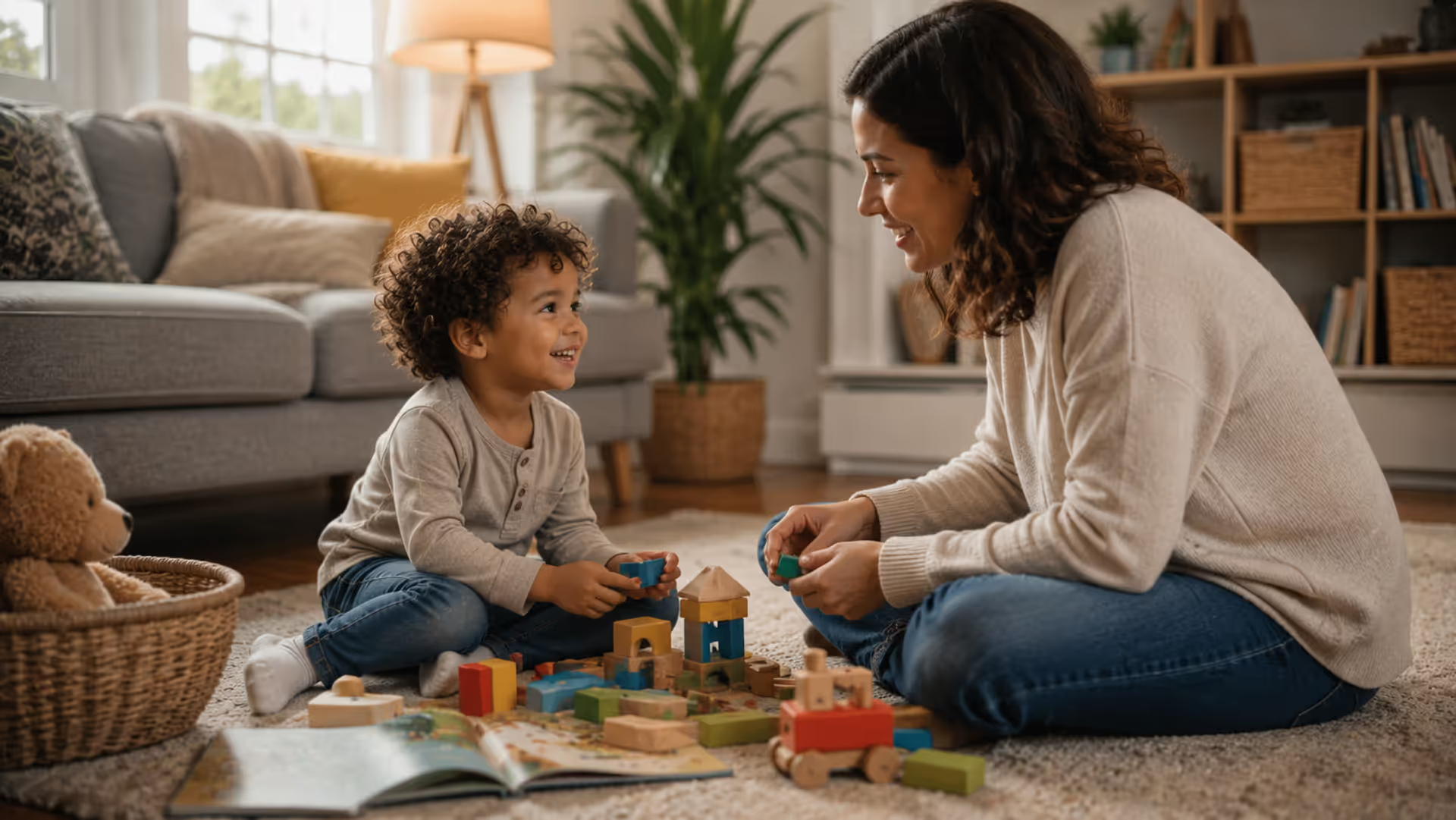
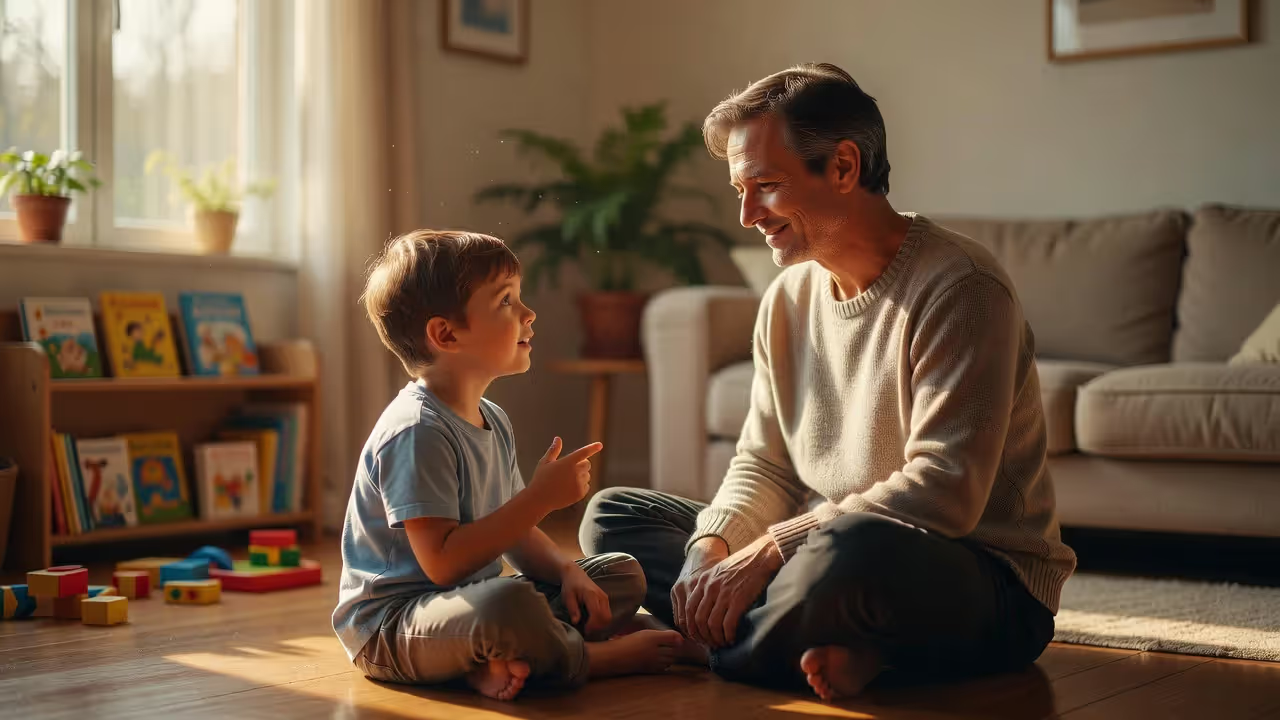
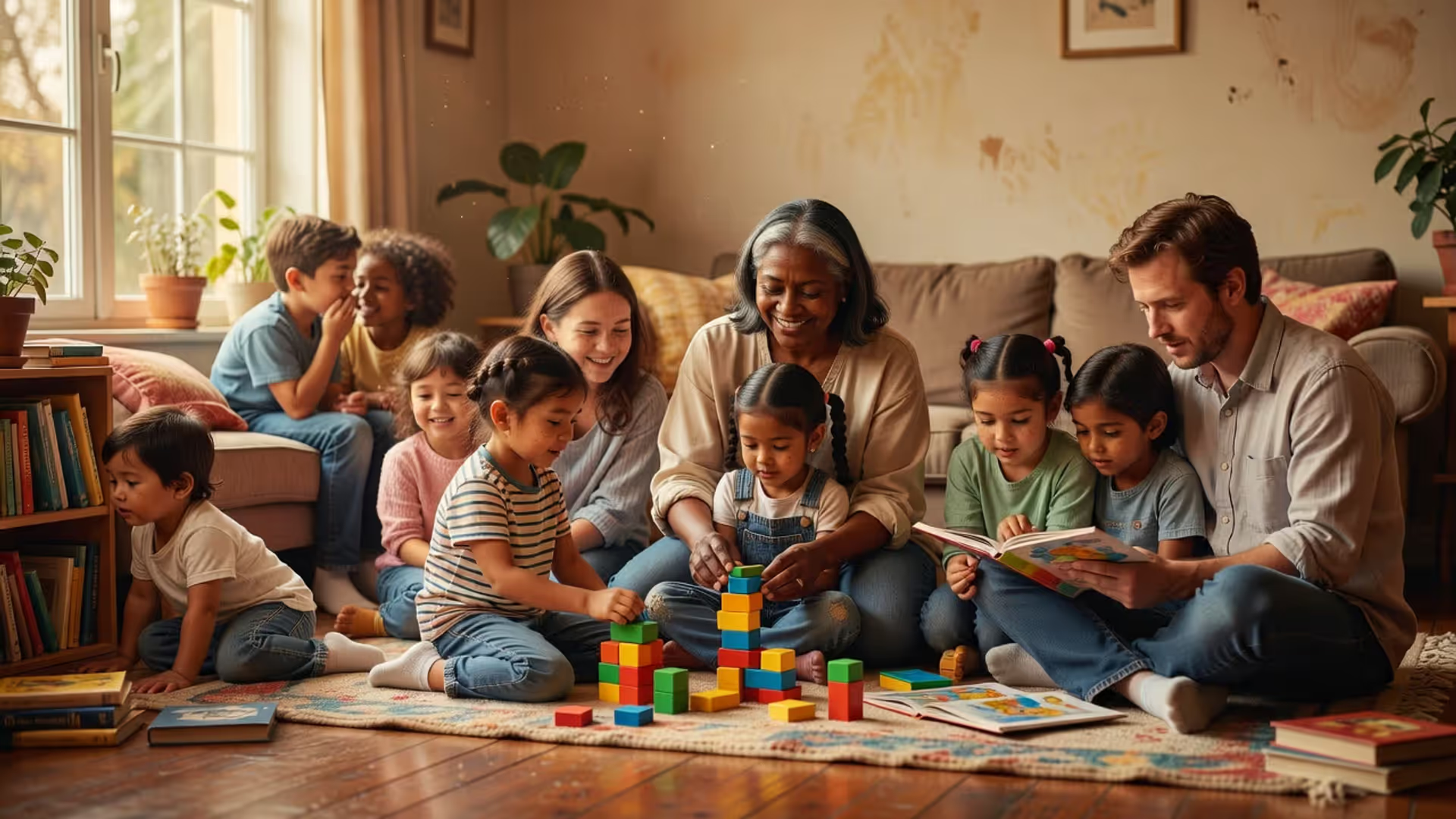
Parent and young child building emotional connection through play
What Is Social Emotional Development in Children?

Social emotional development is one of those topics that sounds clinical until you realize it explains almost everything about how your child gets along in the world. It's the reason a four-year-old can share a toy one day and melt down over it the next. It's why some kids make friends easily while others struggle to enter a conversation. And it's why the habits formed in early childhood tend to follow a person well into adulthood.
At its core, social emotional development refers to the process through which children learn to understand their own emotions, manage their behavior, build relationships, and navigate social situations. It's not a single skill. It's a layered set of abilities that develop gradually, shaped by biology, relationships, and environment. Parents, caregivers, and educators all play a role — sometimes without realizing it.
Why Social Emotional Development Matters Early On
The research is clear: the first five years of life are the most formative period for social and emotional development in early childhood. Brain architecture is being built rapidly, and the emotional patterns children learn during this window tend to stick.
A landmark study from Penn State found that kindergartners with stronger social skills were significantly more likely to graduate high school and hold full-time employment by age 25. That's not a small finding. It suggests that teaching a child how to handle frustration or cooperate with peers isn't just "soft skills" work — it's foundational to long-term outcomes.
The connection to mental health is just as strong. Children who develop solid emotional regulation skills early are less likely to experience anxiety disorders, depression, or behavioral problems in adolescence. And it cuts the other way too: kids who struggle with these skills before age six are at measurably higher risk for academic difficulties and social isolation down the road.
So the stakes are real. But the good news is that social emotional growth is responsive to the environment. You can influence it.
Author: Rebecca Thornfield;
Source: colorfulpagescoalition.org
Social Emotional Milestones by Age Group
Development doesn't happen on a fixed schedule, but there are general patterns that hold across most children. Here's what typically shows up at different ages — and what might signal a need for support.
Infants and Toddlers (0–3 Years)
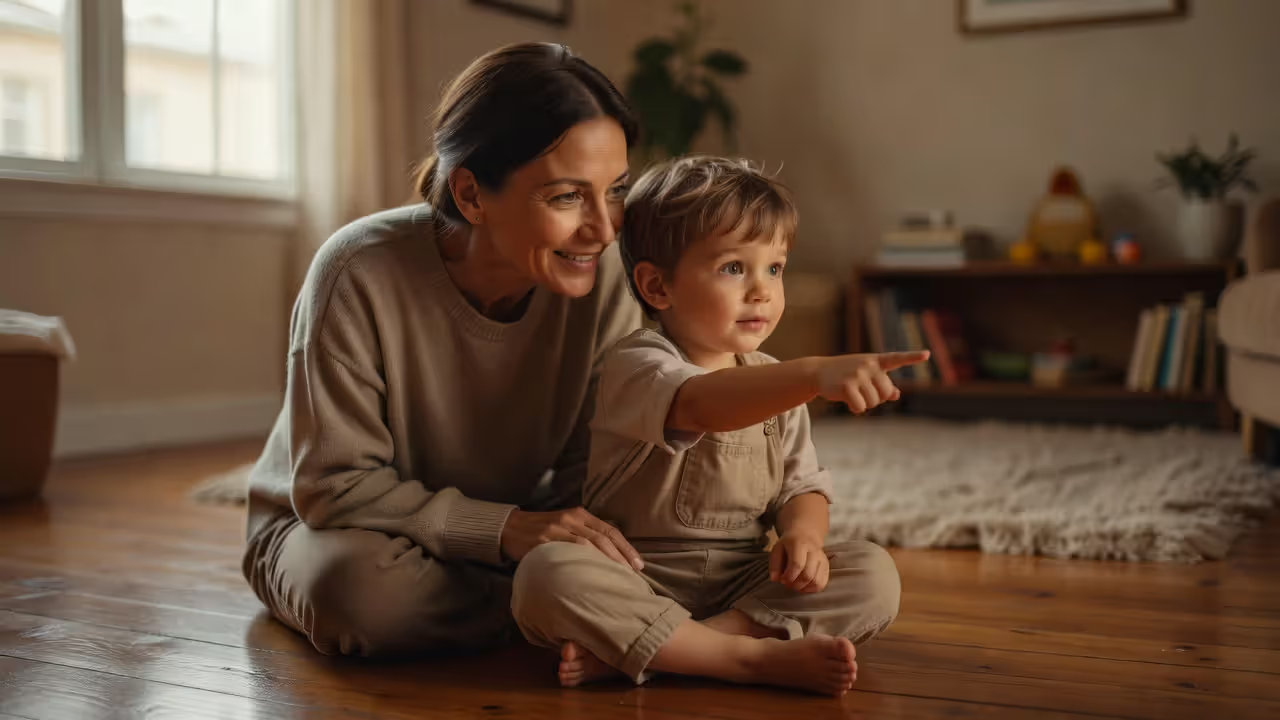
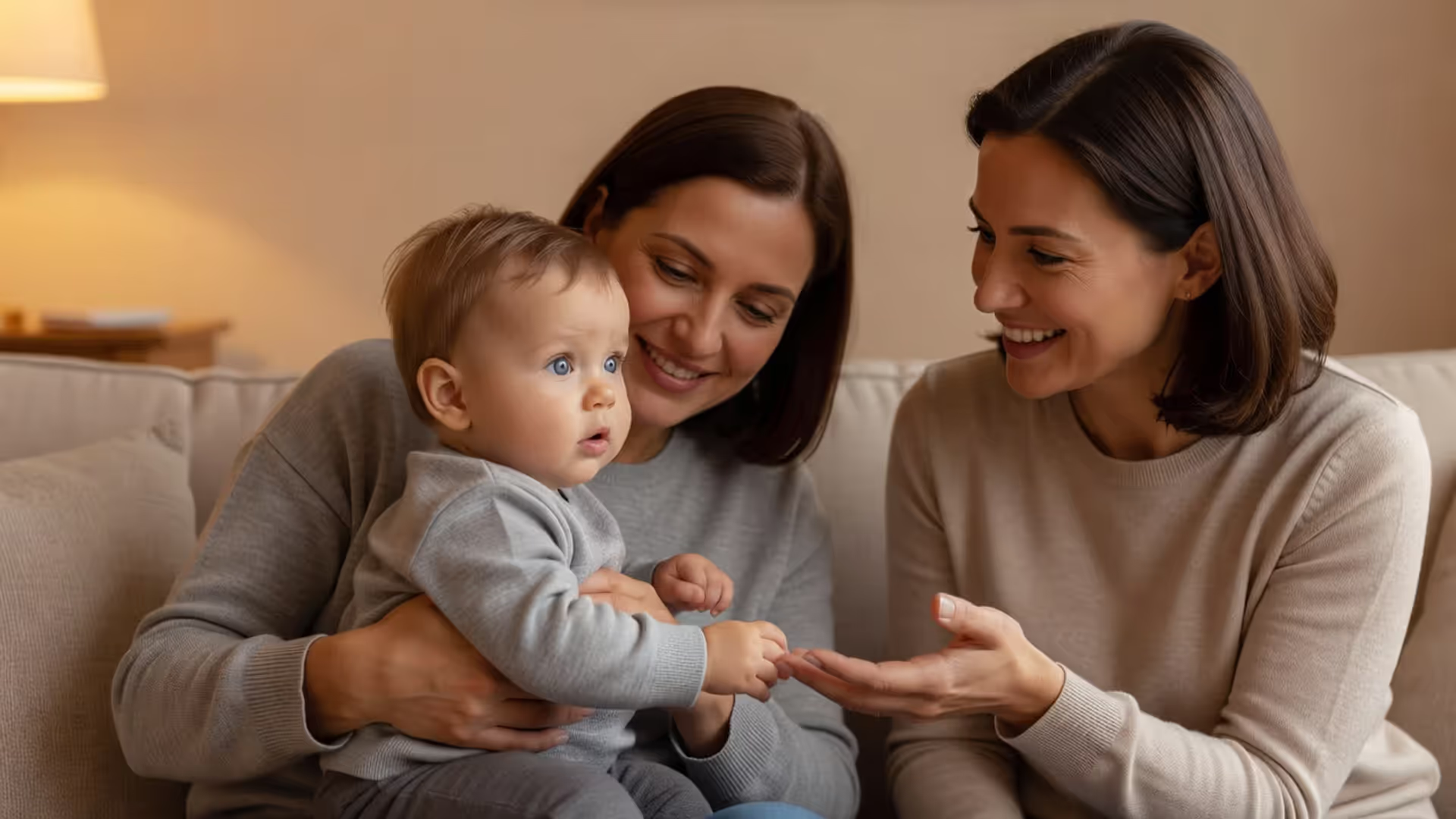
This is where it all begins. Even newborns show early social awareness — they prefer their caregiver's voice and face over strangers'. By two months, most babies smile responsively. By 12 months, they're using gestures to communicate, pointing at objects to share interest.
Toddlers, though, are notoriously emotional. That's normal. Their prefrontal cortex — the part of the brain responsible for impulse control — is barely online yet. Tantrums aren't defiance. They're a developmental stage.
Preschool Age (3–5 Years)
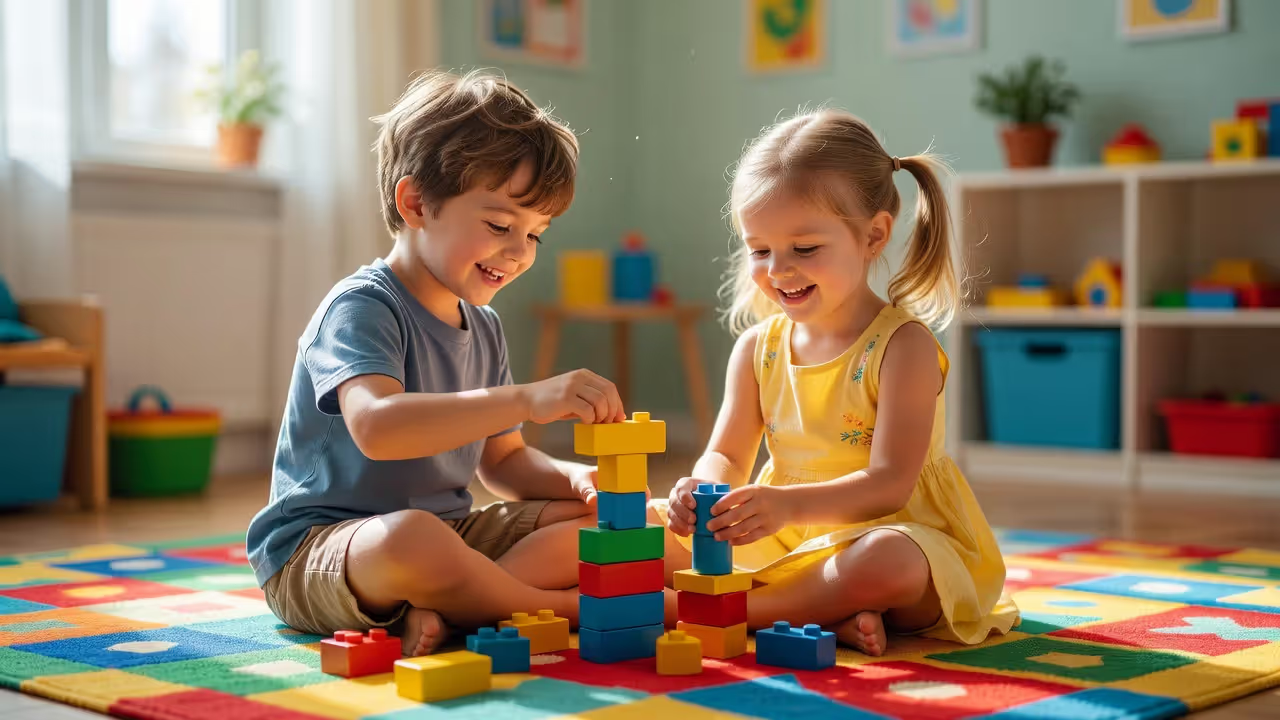
This is when kids start playing cooperatively (not just alongside each other), develop friendships, and begin to understand that other people have thoughts and feelings different from their own. This is called theory of mind, and it's a big deal.
Empathy starts showing up in recognizable ways. A five-year-old might notice a friend is sad and try to comfort them. They're also starting to regulate emotions with some prompting — though they still need a lot of adult support.
Early School Age (6–10 Years)
By this stage, children are navigating complex social dynamics: group friendships, peer pressure, fairness, and competition. They're developing a clearer sense of self and comparing themselves to others. Emotional regulation becomes more internal — they're starting to use strategies on their own, not just when an adult steps in.
| Age Range | Key Social Emotional Milestones | Typical Behaviors Observed | Red Flags to Watch For |
| 0–3 Years | Attachment to caregivers, basic emotional expression, early empathy | Smiling, crying to communicate, parallel play | No eye contact by 6 months, no gestures by 12 months, extreme separation anxiety |
| 3–5 Years | Cooperative play, theory of mind, emotion labeling | Taking turns, pretend play, expressing feelings with words | Persistent aggression, inability to separate from caregivers, no interest in peers |
| 6–10 Years | Peer relationships, self-concept, internal regulation | Group play, negotiating rules, handling competition | Chronic social withdrawal, frequent emotional outbursts, bullying behavior |
What Social Emotional Skills Actually Look Like in Real Life
The term "social emotional skills" can feel abstract. Let's make it concrete.
Imagine two seven-year-olds at recess. One child gets bumped by another and immediately escalates — shoving back, yelling. The other child gets bumped, pauses, decides it was an accident, and moves on. That pause? That's emotional regulation in action. It's a skill, not a personality trait. And it can be developed.
Other real-world social emotional development examples include:
- A toddler handing a toy to a crying friend (early empathy)
- A six-year-old saying "I'm frustrated" instead of hitting (emotion labeling + impulse control)
- A nine-year-old noticing that a classmate looks upset and asking if they're okay (social awareness)
- A five-year-old waiting their turn in a game without being reminded (self-regulation)
The pattern I see most often is that parents underestimate how much modeling matters. Children don't just learn these skills from being corrected. They absorb them by watching how the adults around them handle conflict, disappointment, and connection.
Author: Rebecca Thornfield;
Source: colorfulpagescoalition.org
How Caregivers Support Social Emotional Growth at Home
You don't need a curriculum. You need consistency and presence.
The most powerful thing you can do is respond to your child's emotions — not fix them, just acknowledge them. "You're really upset right now. That makes sense." That kind of response teaches children that emotions are safe to feel and express. It builds the foundation for emotional regulation.
Daily routines matter more than most parents realize. Predictable schedules reduce anxiety, which frees up mental space for social learning. Bedtime routines, family meals, consistent transitions — these aren't just logistics. They're scaffolding for emotional security.
Modeling is the other big lever. If you handle a frustrating moment by taking a breath and naming your feeling out loud, your child is watching. If you repair after losing your temper — "I was too harsh earlier, and I'm sorry" — you're teaching them that mistakes are survivable and relationships can recover.
Responsive communication is different from permissive parenting. You can validate a feeling without accepting bad behavior. "I understand you're angry, and hitting isn't okay" holds both things at once. That's the balance that actually works.
The Collaborative for Academic, Social, and Emotional Learning (CASEL) offers frameworks and tools that parents can explore alongside educators — their resources are grounded in decades of research on social-emotional learning (SEL) and are freely available.
Social Emotional Development Activities for Different Ages
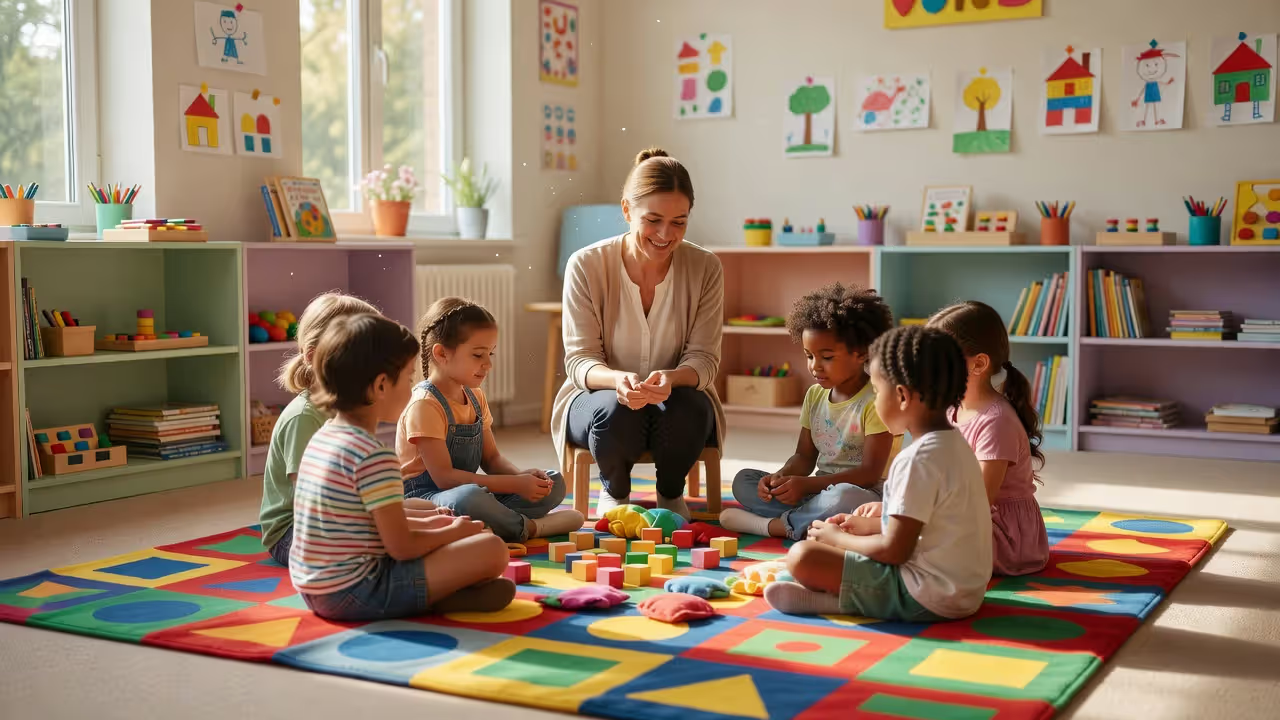
Good activities aren't just fun — they're targeted. Each one should connect to a specific skill.
Author: Rebecca Thornfield;
Source: colorfulpagescoalition.org
For infants and toddlers:
- Face-making games (builds emotional recognition)
- Peek-a-boo (teaches object permanence and trust)
- Naming emotions during picture book reading: "Look, she's sad. What do you think happened?"
For preschoolers:
- Pretend play and role-playing scenarios (builds empathy and perspective-taking)
- Simple board games with turn-taking rules (builds self-regulation and frustration tolerance)
- Feeling check-ins at the start of the day using an emotion chart
For early school-age children:
- Journaling or drawing about their day (builds self-awareness)
- Group projects that require negotiation (builds collaboration and conflict resolution)
- Problem-solving conversations: "What could you do differently next time?"
One counterintuitive point: less structured free play is often more valuable than organized activities. Unstructured time with peers forces children to negotiate, resolve conflict, and manage boredom — all without adult intervention. Don't over-schedule it out.
Common Mistakes That Slow Social Emotional Progress
Even well-meaning caregivers make these. And they're worth knowing.
Author: Rebecca Thornfield;
Source: colorfulpagescoalition.org
Dismissing emotions. "You're fine, it's not a big deal" shuts down the conversation before it starts. Children don't learn to manage emotions by having them minimized — they learn by having them acknowledged and worked through. Dismissal teaches kids to suppress, not regulate.
Over-correcting behavior without addressing the emotion underneath. If a child hits because they're overwhelmed and you focus only on the hitting, you've missed the root. You might stop that specific behavior in that moment, but the underlying skill gap remains.
Inconsistent boundaries. This one's underrated. Children need predictability to feel safe. When rules shift depending on your mood or energy level, kids spend emotional resources on uncertainty rather than on developing social skills. Consistent expectations — even imperfect ones — do more good than perfect rules applied randomly.
Rushing through conflict. It's tempting to just end the argument and move on. But the resolution process is where the real learning happens. Slowing down and walking through what happened, how each person felt, and what could go differently — that's the actual lesson.
Connection is the foundation. When children feel seen and safe, their brains can actually integrate — bringing together emotion and reason in a way that makes regulation possible.
— Siegel Daniel
Frequently Asked Questions About Social Emotional Development
Social emotional development isn't a box to check or a milestone to hit and move past. It's an ongoing process, and every interaction you have with a child is part of it. The good news is you don't have to be perfect. You just have to be present, consistent, and willing to repair when things go sideways — because that's actually part of the lesson too.
Related Stories
Read more
Read more

The content on this website is provided for general informational and educational purposes only. It is intended to explain concepts related to parenting, child development, family caregiving, adoption, fostering, and child safety.
All information on this website, including articles, guides, and examples, is presented for general educational purposes. Outcomes may vary depending on individual family circumstances.
This website does not provide professional medical, psychological, or legal advice, and the information presented should not be used as a substitute for consultation with qualified pediatricians, child psychologists, or family counselors.
The website and its authors are not responsible for any errors or omissions, or for any outcomes resulting from decisions made based on the information provided on this website.