
Why Parents Shouldn't Take Away Phones at Night
Why Parents Shouldn't Take Away Phones at Night?

Content
Content
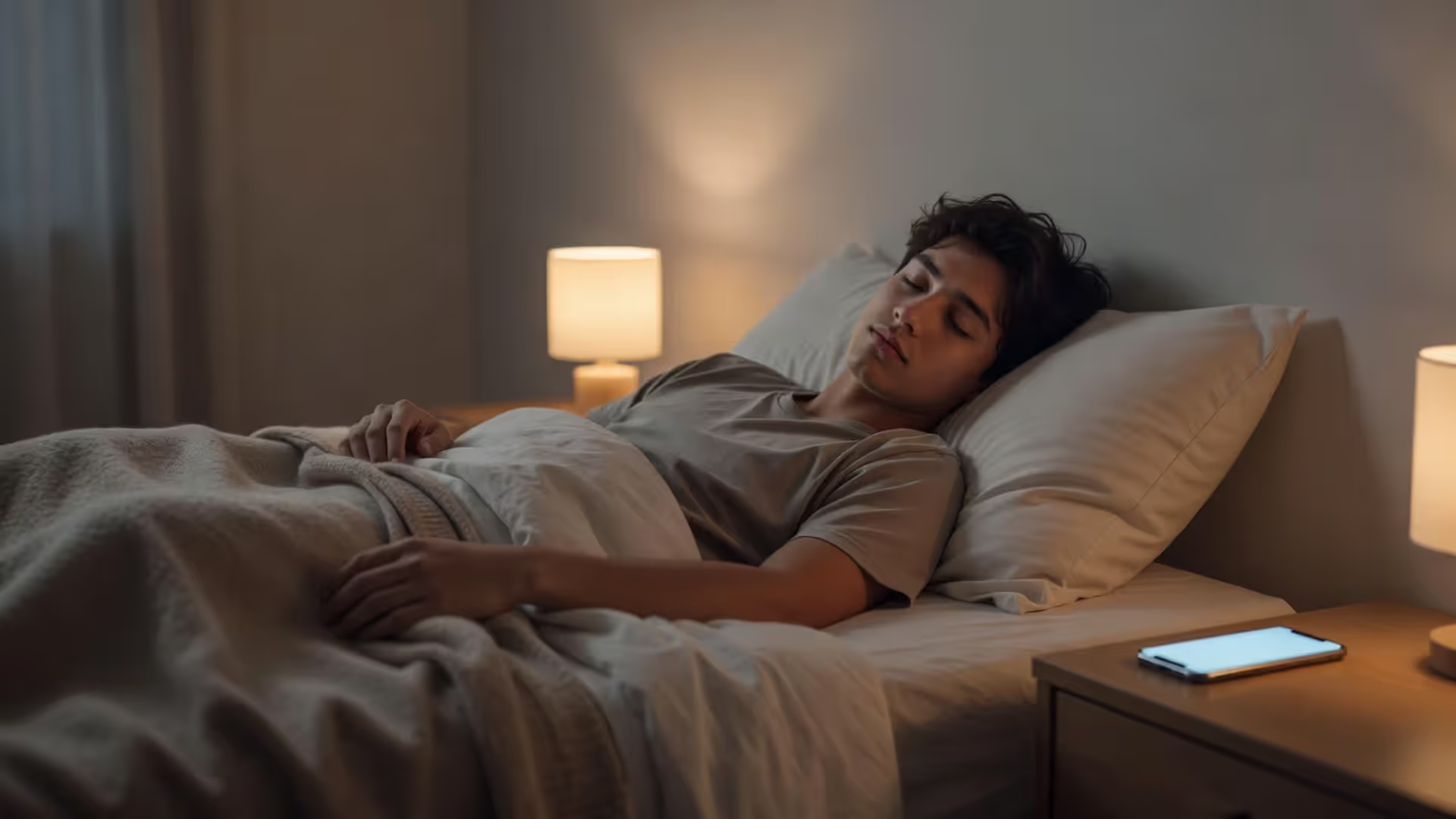
Most parents have stood in that doorway at 10 PM, watching the blue glow flicker under their teenager's door, and felt the pull to just take the phone. It feels like the responsible move. But the instinct to confiscate — while completely understandable — may actually create more problems than it solves. The research is more complicated than "phones bad, sleep good," and the conversation around nighttime phone rules for teens has shifted a lot in recent years. Before you make a hard rule, it's worth understanding what you might be trading away.
What the Research Actually Says About Teens and Phones at Bedtime
Sleep researchers have been studying adolescent sleep for decades, and the findings are genuinely mixed. Yes, studies show that heavy phone use near bedtime correlates with later sleep onset and shorter sleep duration. That part's real. But correlation isn't the full story.
A 2023 study published in Sleep Medicine found that the relationship between phones in the bedroom at night and poor sleep was heavily mediated by what teens were doing on those phones — not simply that a device was present. Teens who used their phones for passive, low-stimulation activities (like listening to playlists or reading) showed sleep outcomes much closer to teens with no phone access than to teens who were actively scrolling social media.
Screen time before bed is a real concern, but the blanket fear around it often outpaces the evidence. Blue light exposure does suppress melatonin, and the brain's arousal response to emotionally charged content (like social media arguments or alarming news) is a documented sleep disruptor. But a teenager reading a novel on their phone at 9:30 PM isn't the same as a teenager doom-scrolling TikTok until 1 AM. Treating those two behaviors identically is where a lot of parenting strategies go sideways.
Teens and phones at bedtime is a nuanced issue. The American Academy of Pediatrics has moved away from blanket screen-time limits for teenagers in favor of context-dependent guidance — recognizing that age, content type, and individual sleep needs all matter.
Author: Garrett Willowmere;
Source: colorfulpagescoalition.org
How Taking Away a Phone Can Backfire
Here's the part that doesn't get enough airtime: forced phone removal often damages trust without fixing the underlying behavior.
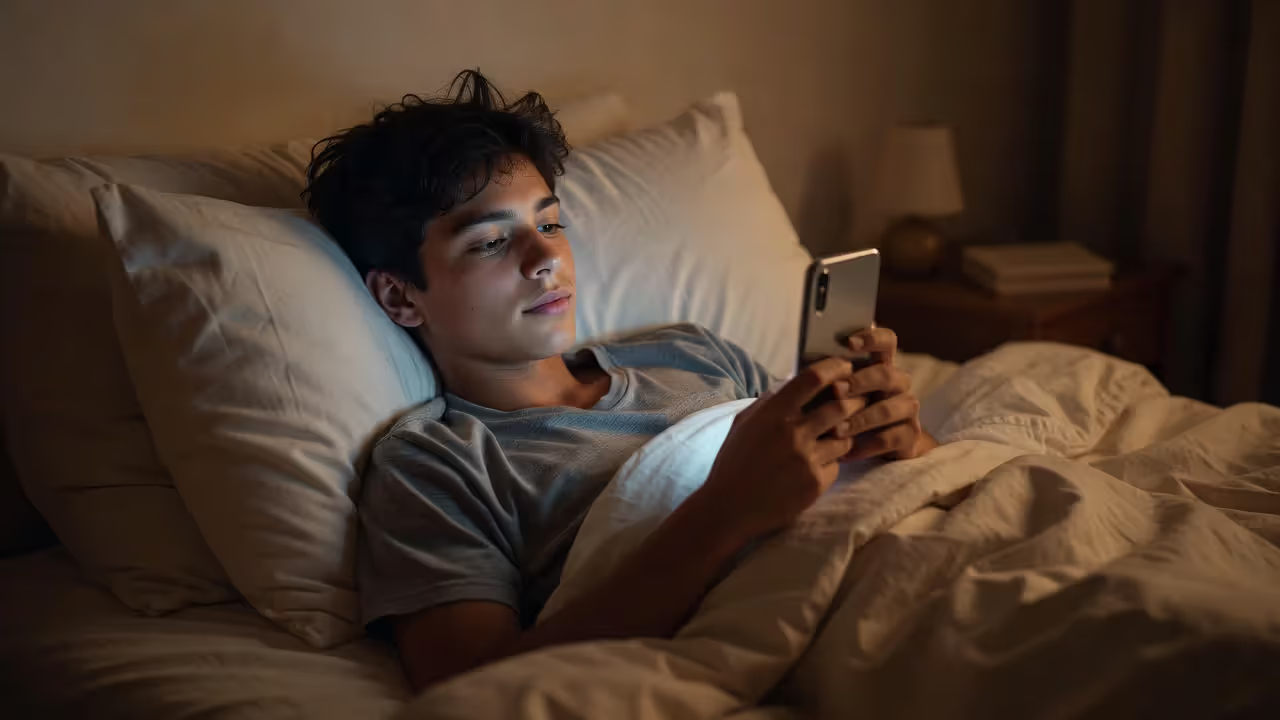
When a parent takes a phone away at night without explanation or negotiation, a teenager doesn't think "they're right, I should sleep more." They think "I need to hide this better." The pattern I see most often is that teens simply find workarounds — a second device, a friend's old phone, a tablet tucked under the mattress. The behavior continues; the parent just loses visibility into it.
There's also a real anxiety component. Many teens — especially those with social anxiety or who are navigating difficult friendships — use their phones as a safety net at night. Knowing they can text a friend if they're upset, even if they don't, is genuinely calming. Removing that option abruptly can increase nighttime anxiety, not reduce it. For teens who've experienced bullying or social exclusion, the phone isn't a distraction — it's a lifeline.
Should kids have phones at night? The honest answer is: it depends on the kid. A 14-year-old who's struggling socially and uses their phone to stay connected to a supportive friend group is in a very different situation than a 16-year-old who's been averaging four hours of sleep because of late-night gaming. One-size rules don't fit one-size situations.
Confiscation also sends an implicit message: "I don't trust you." For teenagers who are developmentally wired to push for autonomy, that message tends to push back — hard. Research on authoritative (vs. authoritarian) parenting consistently shows that collaborative rule-setting produces better long-term compliance than top-down enforcement.
What Teens Actually Use Their Phones for at Night
Assume the worst and you'll design rules for the wrong problem. Most teens aren't staying up until 3 AM doing something dangerous. Here's what phones in the bedroom at night actually look like for the majority of teenagers:
Alarms. Most teens use their phone as their alarm clock. Taking it away means either buying a separate alarm or accepting that your teen might oversleep.
Homework reminders and last-minute check-ins. A quick look at Google Classroom or a group chat about tomorrow's project isn't the same as a two-hour scroll session. It's often genuinely productive.
Anxiety management. Apps like Calm, Headspace, or even just a YouTube sleep meditation video are legitimate tools. Teens with anxiety disorders often use these intentionally.
Low-key social connection. A brief goodnight text exchange with a close friend is, for many teens, the equivalent of a phone call was for previous generations. It's social bonding, not pathological screen dependency.
Music and white noise. A huge percentage of teenagers fall asleep to music or ambient sound through their phones. This is low-stimulation use with minimal sleep disruption.
Should kids have phones at night? For these use cases, yes — with boundaries, not bans.
Author: Garrett Willowmere;
Source: colorfulpagescoalition.org
Screen Time Before Bed vs. How the Phone Is Used
Not all screen time before bed is the same. This is probably the most counterintuitive point in this whole conversation — and the one most parents miss.
The brain doesn't respond to "phone" as a single stimulus. It responds to content and arousal level. A teenager watching a fast-paced action video at high volume at midnight is getting a very different neurological experience than one listening to lo-fi music with the screen dimmed. Both involve "screen time before bed." Only one is likely to delay sleep significantly.
Teens and phones at bedtime need to be evaluated on a spectrum, not a binary.
Types of Nighttime Phone Use and Their Sleep Impact
| Activity Type | Estimated Sleep Impact | Notes for Parents |
| Social media scrolling (TikTok, Instagram) | High | Fast-paced content, emotional triggers, bright visuals — most disruptive to sleep onset |
| Watching video (YouTube, Netflix) | Moderate–High | Depends on content intensity and volume; autoplay is a real trap |
| Texting / messaging friends | Moderate | Low stimulation if winding down; high if emotionally charged conversations |
| Listening to music or podcasts | Low | Screen can be off; minimal melatonin disruption if volume is reasonable |
| Reading e-books or articles | Low | Similar to reading a print book; blue light is the main concern, manageable with night mode |
Adolescents are biologically wired to stay up later, and blaming the phone alone oversimplifies a complex sleep equation.
— Carskadon Mary
The table above is a useful starting point for conversations with your teen. Instead of "no phones after 9," you might say "no social media after 9, but music and reading are fine." That's a rule grounded in actual sleep science — and it's one a teenager is far more likely to accept because it makes logical sense.
Phone Rules That Work Better Than Full Removal
A device curfew for teens doesn't have to mean total confiscation. In fact, the simpler and more targeted the rule, the better it tends to work.
Here are approaches that actually hold up in practice:
Agreed-upon quiet hours. Set a time — say, 9:30 PM — when notifications go silent. The phone stays in the room, but the social feed stops demanding attention. Most teens will accept this because it doesn't feel punitive.
Do Not Disturb scheduling. iPhones and Android devices both allow automatic DND activation at set times. Set it up together. This makes the rule feel like a system, not surveillance.
App-specific limits. Screen Time (iOS) and Digital Wellbeing (Android) let you limit specific apps — Instagram gets 30 minutes after 8 PM, then locks. The phone itself stays available for alarms, music, and messages.
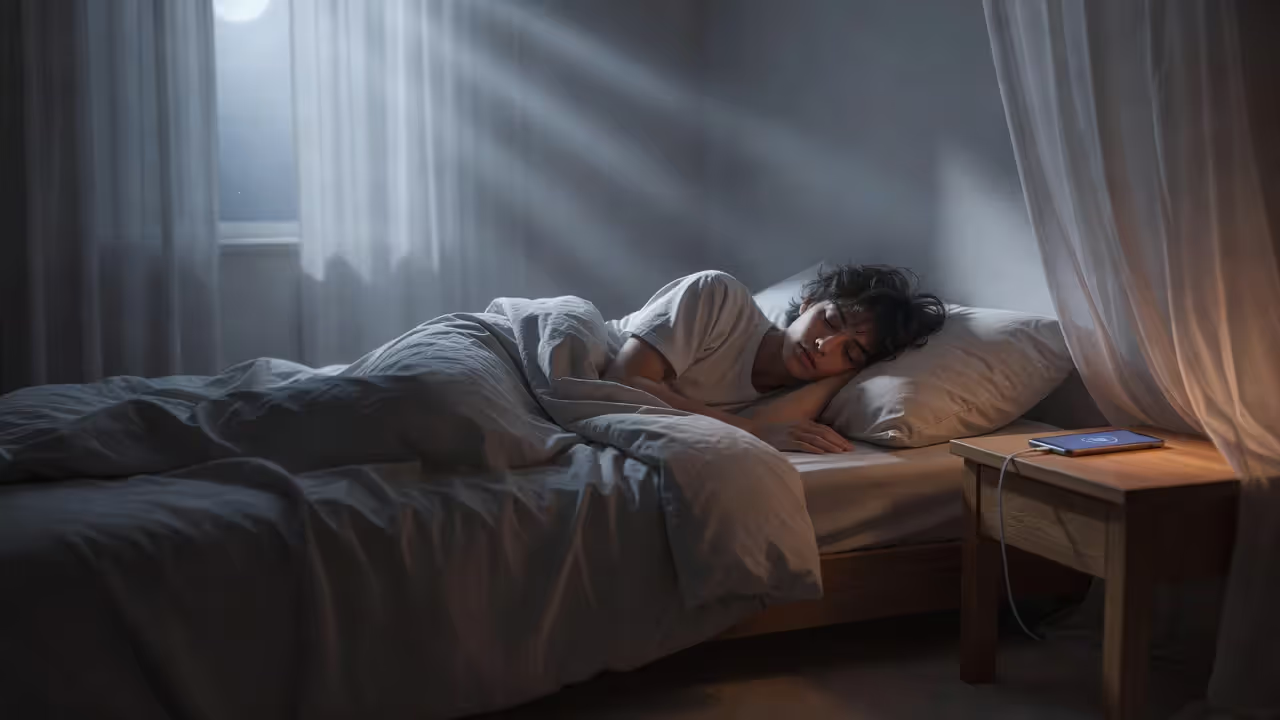
Charging location compromise. If sleep is genuinely suffering, a middle-ground option is charging the phone on the nightstand rather than in bed. It's still accessible for alarms and emergencies but removes the tactile temptation of having it under the pillow.
Nighttime phone rules for teens work best when they're proportional. If your teen is sleeping fine and functioning well, aggressive restrictions may be solving a problem that doesn't exist yet.
Author: Garrett Willowmere;
Source: colorfulpagescoalition.org
How to Talk to Your Teen About Nighttime Phone Boundaries
The conversation matters as much as the rule itself.
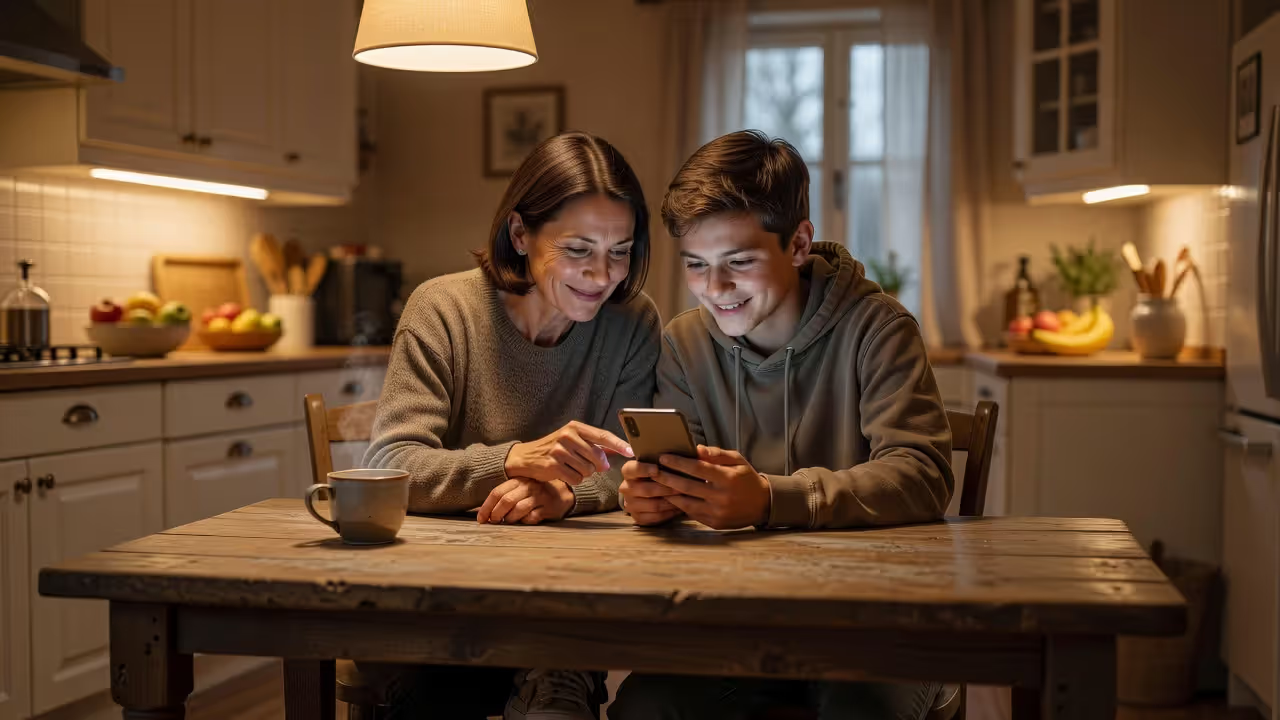
Start with curiosity, not accusation. "What do you usually do on your phone before bed?" is a better opener than "You need to stop being on your phone all night." You'll learn things. Maybe they're using it to manage anxiety. Maybe they genuinely don't realize how late they're staying up.
Collaborative rule-setting is more effective than top-down mandates — full stop. When teens help design the boundaries, they feel ownership over them. "What do you think is a reasonable cutoff for social media?" often gets you a more conservative answer than you'd expect. Teenagers frequently know they're overdoing it; they just don't want to be told.
A before/after framing helps too. Before implementing nighttime phone rules: your teen stays up until midnight scrolling, wakes up exhausted, and resents you for the vague sense that you're monitoring them. After a collaborative conversation: they've agreed to DND at 10 PM, they keep their phone for alarms and music, and they feel respected. The outcome is better sleep and a better relationship.
Device curfews for teens work when they're built around trust, not control. Frame the conversation around health and wellbeing, not punishment. "I want you to get enough sleep because I know how much better you feel when you do" lands very differently than "You're addicted to your phone and I'm taking it."
Author: Garrett Willowmere;
Source: colorfulpagescoalition.org
FAQ: Nighttime Phone Rules for Teens Questions Answered
The bottom line is that taking a phone away at night might feel like a solution, but it's often a shortcut that skips the harder and more productive work: understanding what your teen actually needs at night, and building rules together that respect both their sleep and their autonomy. That approach takes more effort upfront. But it tends to stick.
Related Stories

Read more

Read more



The content on this website is provided for general informational and educational purposes only. It is intended to explain concepts related to parenting, child development, family caregiving, adoption, fostering, and child safety.
All information on this website, including articles, guides, and examples, is presented for general educational purposes. Outcomes may vary depending on individual family circumstances.
This website does not provide professional medical, psychological, or legal advice, and the information presented should not be used as a substitute for consultation with qualified pediatricians, child psychologists, or family counselors.
The website and its authors are not responsible for any errors or omissions, or for any outcomes resulting from decisions made based on the information provided on this website.